

Researchers highlight the experiences of workers across Canada whose livelihoods and communities have been impacted by climate change.
Articles on Oceans
Displaying 101 - 120 of 926 articles
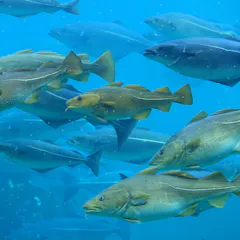
Our modelling of European fish species shows a patchwork of winners and losers as sea temperatures rise.
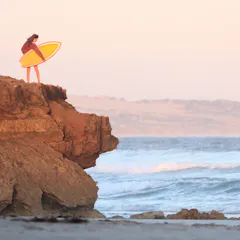
South Australia’s algal bloom is stopping people from swimming, surfing and fishing in their usual spots – and the impact on mental health can be profound.
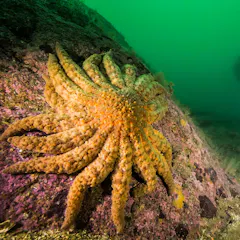
Sea stars are vital to ocean ecosystems; however, a pathogen has been killing them in large numbers, rendering some species critically endangered.
The multi-year heat wave nicknamed ‘The Blob’ impacted thousands of kilometres of marine ecosystems from Alaska to Baja California.
Farming seaweed, changing ocean chemistry, breeding corals and restoring mangroves could help fight climate change – if assessed and managed responsibly.
The exhibition was shaped by deep collaboration with scientists, artists, ecologists, activists and coastal communities.

As oceans warm, tropical fish are on the move, heading south into cooler waters. New research reveals how they are getting on with the fish they encounter there.
Satellite technology that can track ships even when they ‘go dark’ finds that those protected areas that fully ban industrial fishing are succeeding, even if others aren’t.
The artworks in Sea Inside offer ways of engaging with the existential threats facing our oceans that are emotive, imaginative and often very funny.
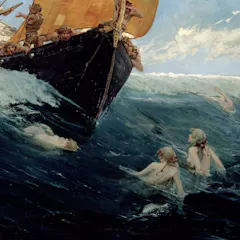
Whistling on a ship was taboo in the 18th century as it was believed to stir the winds.
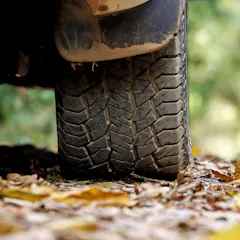
Rain storms wash those tire shards into streams and ultimately into lakes and oceans. That’s bad news for fish and other aquatic life.
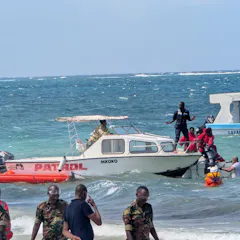
A security specialist in the Western Indian Ocean sees how countries work together to counter the threat of a massive oil spill.

Researchers found that photos of restored reefs were rated just as beautiful as those of healthy reefs.
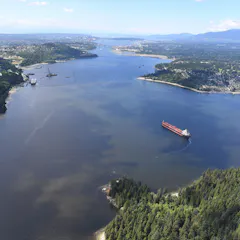
Community-based research led by the Tsleil-Waututh Nation offers insight into how colonization has impacted the waters around Vancouver.

Current science communications in Cape Town are not serving the public well.
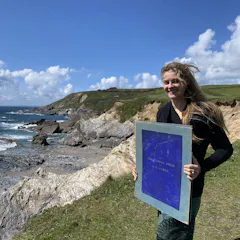
Historical maps and records from across Europe show just how much oyster beds and other marine habitats have changed over the centuries.

The ocean needs help – overfishing, pollution and climate change are serious problems. Individuals can take action to help.
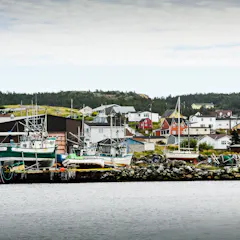
Policymaking on managing Canada’s fisheries could be improved by including provincial authorities and Indigenous stakeholders in more decision-making.
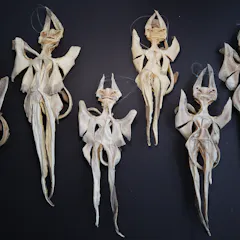
They look like devils and hence are called pez diablo in Spanish, but these demonic objects are dried and mutilated versions of living rays known as guitarfish.
Top contributors
-

Professor, School of the Environment, The University of Queensland
-
Harold T. Stearns Professor of Earth Science, Wesleyan University
-
Distinguished Scholar, National Center for Atmospheric Research; Affiliate Faculty, University of Auckland, Waipapa Taumata Rau
-
Director of the ARC Centre of Excellence for Our Future Oceans and Scientia Professor in Oceanography, UNSW
-
Distinguished Professor of Marine Science, King Abdullah University of Science and Technology
-
Research Scientist, Stanford University
-
Senior Principal Research Scientist, Environment, CSIRO
-
Faculty Research Associate in Marine Biology, Arizona State University
-
Professor of Marine Botany, The University of Western Australia
-
Chief Research Scientist - Environment, CSIRO
-
Professor of Biology, Department of Biology, University of Victoria
-
Professor and Deputy Vice-Chancellor (Research), University of Sydney
-
CSIRO Fellow, CSIRO
-
Professor of Complex Systems and Environmental Policy, Bournemouth University
-
Associate Professor in Marine Biology, Swansea University