
Using our oceans as carbon sinks could help achieve climate goals set in the most recent IPCC report.
Articles on Oceans
Displaying 381 - 400 of 926 articles

Researchers have discovered that great white sharks are more social than previously thought. Using specialized tags, they tracked six sharks and found that some stay close to each other when hunting.
Forming tightly woven populations, these bush-like corals offer a refuge to a myriad of marine species.
If fossil fuel burning stopped, emerging research suggests air temperatures could level off sooner than expected. But that doesn’t mean the damage stops.
A new report shed light on the migratory routes of 1,000 whales worldwide.
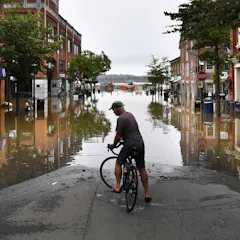
A sea level scientist explains the two main ways climate change is threatening the coasts.

Clean-up operations after a spill can miss large quantities of the oil, with severe risks for marine habitats, fish and birds.
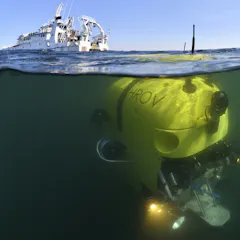
For the opening of the One Ocean Summit in Brest from February 9 to 11, 2022, France’s marine research institute looks at promising avenues of research to protect the planet’s largest ecosystem.

All nations must ramp up efforts to preserve and restore their coastal regions – and the time to start is right now.

Winters are getting warmer, yet Bostonians were digging out from nearly 2 feet of snow from a historic blizzard in late January. Why is the Northeast seeing more big snowstorms like this?

The fossil of a gigantic ichthyosaur was recently discovered in the UK. It wasn’t the only creature lurking in the Jurassic oceans.
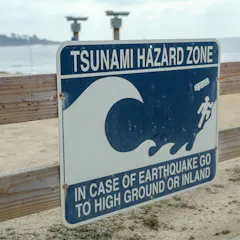
Tsunamis aren’t just bigger-than-average waves. Triggered by undersea earthquakes or volcanic eruptions like the one in Tonga, they are fast, massive and potentially destructive. Here’s why.

While it may be possible to teach young infants basic motor skills in water, infants cannot, and should not, be expected to know how to swim or to be able to react appropriately in emergencies.
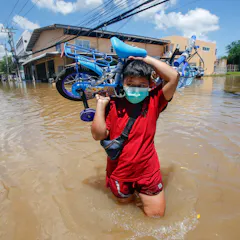
While surface temperatures were about the 6th warmest on record in 2021, the upper oceans were at their hottest – and they’re a stronger indicator of global warming. A top climate scientist explains.
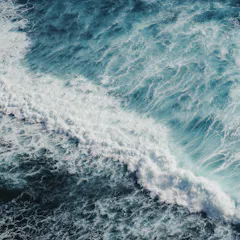
We depend on the oceans yet they have no dedicated place in democratic discussion.
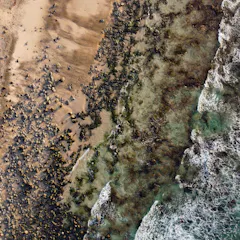
Australia’s coastline spans more than 33,000km – and there are myriad marvellous marine animals we share this space with.
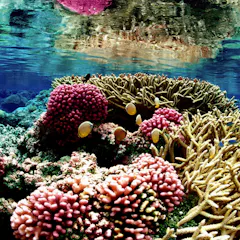
The ocean is naturally noisy. Here’s what all the buzz is about.
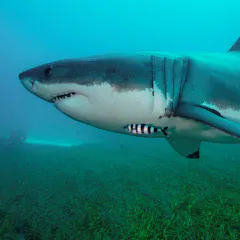
No country has a higher diversity of sharks than Australia. That means we have a special responsibility to protect them.
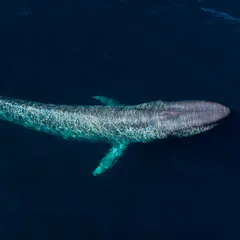
The world needs to protect 30% of the ocean by 2030. We won’t achieve this goal without using new technology to patrol and preserve marine protected areas.
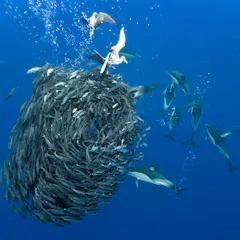
There are some important issues to consider to best help marine species such as Atlantic puffins, bottlenose dolphins and orcas.
Top contributors
-

Professor, School of the Environment, The University of Queensland
-
Harold T. Stearns Professor of Earth Science, Wesleyan University
-
Distinguished Scholar, National Center for Atmospheric Research; Affiliate Faculty, University of Auckland, Waipapa Taumata Rau
-
Director of the ARC Centre of Excellence for Our Future Oceans and Scientia Professor in Oceanography, UNSW
-
Distinguished Professor of Marine Science, King Abdullah University of Science and Technology
-
Research Scientist, Stanford University
-
Senior Principal Research Scientist, Environment, CSIRO
-
Faculty Research Associate in Marine Biology, Arizona State University
-
Professor of Marine Botany, The University of Western Australia
-
Chief Research Scientist - Environment, CSIRO
-
Professor of Biology, Department of Biology, University of Victoria
-
Professor and Deputy Vice-Chancellor (Research), University of Sydney
-
CSIRO Fellow, CSIRO
-
Professor of Complex Systems and Environmental Policy, Bournemouth University
-
Associate Professor in Marine Biology, Swansea University