
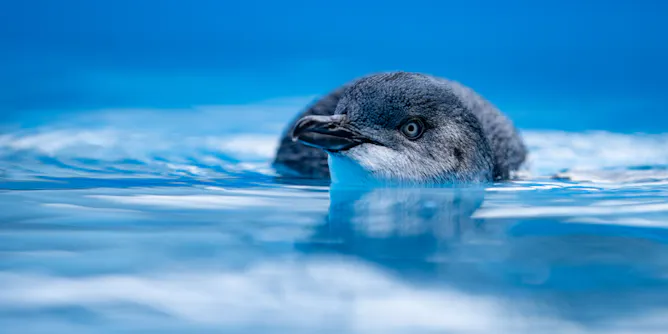
New research shows sea turtles, penguins and whales swim at optimal depths to minimise the energetic cost of travel.
Articles on Oceans
Displaying 161 - 180 of 926 articles
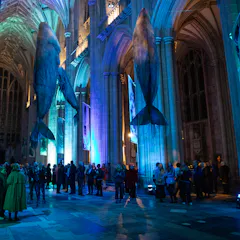
A new immersive art installation highlights the effects humans have on ocean ecosystems, and whales in particular.
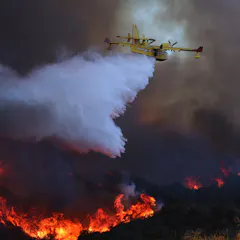
In emergencies, dumping ocean water on fires may be the best option. But seawater can have long-term effects on equipment and ecosystems, as a novel coastal experiment shows.

The Scottish Association for Marine Science wants to better consider how its research could affect the ocean.
The oceans have been much warmer than average for the past two years, and the planet just set another global heat record. What’s going on?
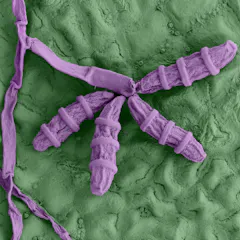
Despite being known to science for over a century thanks to a few early pioneering marine mycologists, most people have never heard of marine fungi.
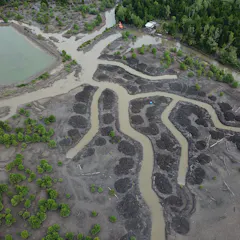
Experts are calling for the end of human-driven mangrove loss, a doubling of the area of mangroves with effective conservation status, and the restoration of half of recently lost mangroves.
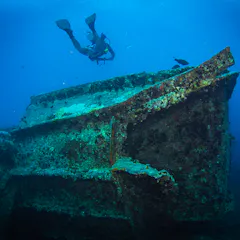
As their structures break down, the wrecks could release toxic substances into the environment.

The accumulation of micro- and nano-plastics in marine organisms, particularly fish, eventually makes its way onto our plates. What are the health risks?
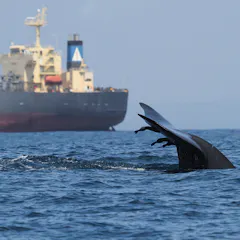
Colliding with ships is a top cause of whale deaths. A new study maps the areas of highest risk, showing where proven strategies such as speed limits and new shipping routes can reduce the toll.
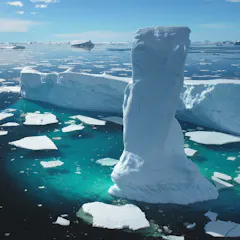
New research shows melting ice is causing the Atlantic Meridional Overturning Circulation (AMOC) to slow down, with widespread consequences for the world’s climate and ecosystems.
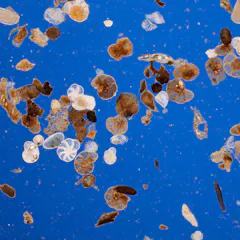
Scientists have compared data from the last ice age, around 21,000 years ago, and modern records to see what happened to plankton when the world has previously warmed.
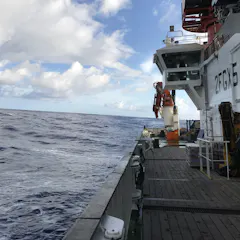
A thin layer at the ocean surface called the “ocean skin” increases CO₂ uptake by about 7%. That’s equivalent to the CO₂ absorbed by the entire Amazon rainforest each year.

Conservation measures can be designed in ways that improve nutrition and health of people.

Measuring the ‘ecosystem services’ that the ocean provides is difficult, but an essential step to understand how best to protect marine ecosystems.

Smellscapes of the sea are multi-layered - they are shaped by interactions between water, marine life and environmental conditions.
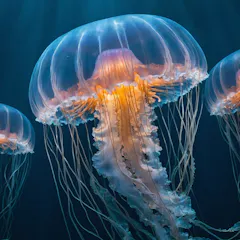
Since 2022, the network of global ocean-protected areas has grown by only 0.5% to 8.3%.
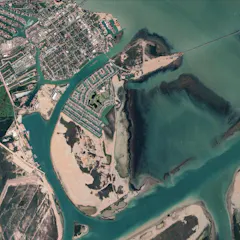
Some cities are building huge gates and barriers to counter the flood risk from estuary urbanization. But putting nature to work in a big way might be more effective.

These powerful ‘rivers in the sky’ provide a huge share of annual precipitation in many regions, including California. They can also melt sea ice, with global climate implications.
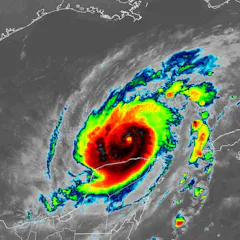
Milton’s fast spin-up in the Gulf of Mexico was one of the most rapid intensifications on record. Two scientists who study hurricanes explain why this happens and what’s changing.
Top contributors
-

Professor, School of the Environment, The University of Queensland
-
Harold T. Stearns Professor of Earth Science, Wesleyan University
-
Distinguished Scholar, National Center for Atmospheric Research; Affiliate Faculty, University of Auckland, Waipapa Taumata Rau
-
Director of the ARC Centre of Excellence for Our Future Oceans and Scientia Professor in Oceanography, UNSW
-
Distinguished Professor of Marine Science, King Abdullah University of Science and Technology
-
Research Scientist, Stanford University
-
Senior Principal Research Scientist, Environment, CSIRO
-
Faculty Research Associate in Marine Biology, Arizona State University
-
Professor of Marine Botany, The University of Western Australia
-
Chief Research Scientist - Environment, CSIRO
-
Professor of Biology, Department of Biology, University of Victoria
-
Professor and Deputy Vice-Chancellor (Research), University of Sydney
-
CSIRO Fellow, CSIRO
-
Professor of Complex Systems and Environmental Policy, Bournemouth University
-
Associate Professor in Marine Biology, Swansea University