
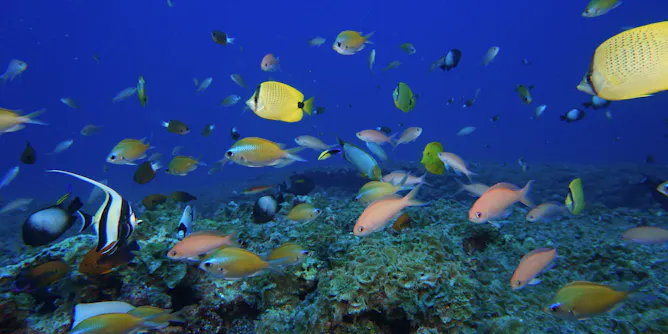
What have global efforts to protect oceans actually achieved? Our study of nearly 2,600 tropical coral reefs around the world is the first to answer that question.
Articles on Oceans
Displaying 181 - 200 of 926 articles

Sharks easily consumed large, spiky sea urchins – sometimes in just a few gulps. See it for yourself, in our new Footage from the Field Series.

Modern pharmaceuticals have revolutionised disease prevention and treatment. But eventually, the chemicals can end up in rivers, oceans and soils.
Tiny phytoplankton have an outsized influence on the entire ocean.
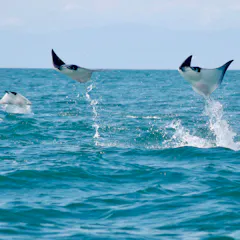
Breaching is one of the most spectacular behaviors among marine animals. A recent review shows that many shark and ray species breach, and identifies the most commonly hypothesized reasons.

Creating 3D computer models of entire reefs – sometimes known as digital twins – can help researchers monitor these precious ecosystems faster and more accurately than ever before.

Anna Turns sets sail from Plymouth Sound to explore the significance of blue carbon in marine habitats around the UK.
A new map collating important data could be used to introduce more robust protections for blue carbon in UK waters.
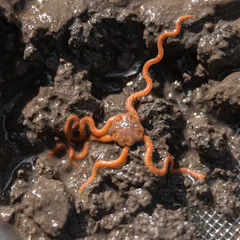
There is a diversity of life within our seabeds, capable of moving mountains of mud and slowing the effects of climate change.
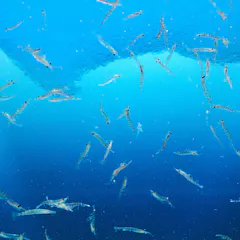
For the first time, we used a computer model of ocean currents to show that krill waste products don’t need to reach great depths to achieve carbon storage for at least 100 years.
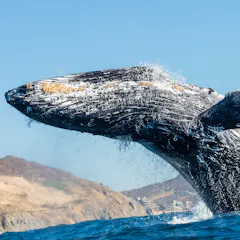
Baleen whales include the blue whale, the largest animal ever known.

Ocean therapy provides a lens to see, understand and experience the ocean as healing, restorative and health-enabling.
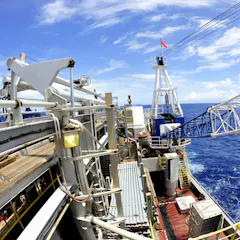
The National Science Foundation says that the JOIDES Resolution has become too costly to fund. But scientists say its $72 million annual budget pales compared with discoveries the ship has enabled.

Looking at, listening to, and immersing ourselves in inland and coastal waters can directly benefit our physical and mental health - here’s how the study of blue health has evolved.
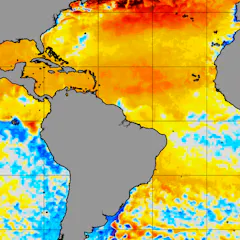
It’s rare to see both Nina’s at the same time, but both appeared to be developing in 2024. That could help soften hurricane season, but don’t bet on it.
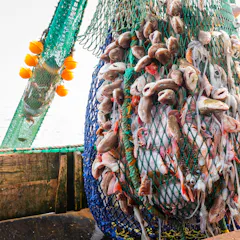
We studied 230 fisheries around the world, and found populations of many overfished species are in far worse condition than has been reported.

Underwater search and rescue teams have been working in challenging conditions off the coast of Sicily.

The rise of ‘pyrokaryotes’ could reduce the availability of fish humans eat, and hamper the ocean’s ability to absorb carbon emissions.
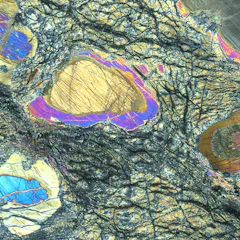
New research that offers valuable insights into the Earth’s mantle.
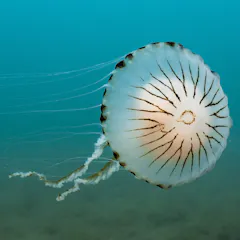
A new glossary of environmental science terms offers deaf people a new way to visualise and understand marine ecosystems.
Top contributors
-

Professor, School of the Environment, The University of Queensland
-
Harold T. Stearns Professor of Earth Science, Wesleyan University
-
Distinguished Scholar, National Center for Atmospheric Research; Affiliate Faculty, University of Auckland, Waipapa Taumata Rau
-
Director of the ARC Centre of Excellence for Our Future Oceans and Scientia Professor in Oceanography, UNSW
-
Distinguished Professor of Marine Science, King Abdullah University of Science and Technology
-
Research Scientist, Stanford University
-
Senior Principal Research Scientist, Environment, CSIRO
-
Faculty Research Associate in Marine Biology, Arizona State University
-
Professor of Marine Botany, The University of Western Australia
-
Chief Research Scientist - Environment, CSIRO
-
Professor of Biology, Department of Biology, University of Victoria
-
Professor and Deputy Vice-Chancellor (Research), University of Sydney
-
CSIRO Fellow, CSIRO
-
Professor of Complex Systems and Environmental Policy, Bournemouth University
-
Associate Professor in Marine Biology, Swansea University