

As sea ice melts, more of the Arctic Ocean opens up. A former ambassador explains how this treaty creates time for scientists to figure out what lives there.
Articles on Oceans
Displaying 21 - 40 of 926 articles
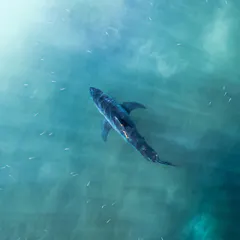
Culls are back on the table after a shark bit a woman at Coogee beach on Saturday.
El Niño can trigger intense periods of extreme ocean warming known as marine heat waves that can devastate marine life.

Chinese scientists have discovered hundreds of ancient whale carcasses deep in the Diamantina Zone off the coast of Western Australia.
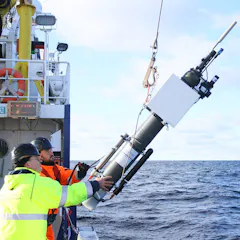
Defunding marine monitoring networks could jeopardise efforts to avoid losing track of the world’s oceans and their precious ecosystems, which drive the blue economy.
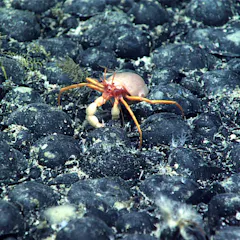
The deep sea holds vast mineral wealth. However, most valuable elements lie in international waters, outside any one country’s territory.

While many Indonesian reefs have remained surprisingly stable despite decades of ocean warming, this resilience has its limits.
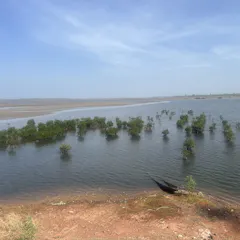
Nature-based solutions like mangrove restoration are key to climate action, but weak monitoring can overstate carbon storage, creating ‘ghost carbon’.

There is no shortage of global objectives and targets driving ocean conservation. However, protecting oceans depends on the communities that steward them.
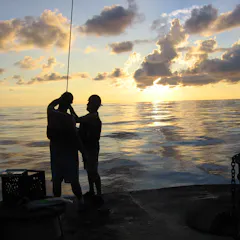
The Global Ocean Observing System informs weather forecasts and climate projections. But funding pressures could create data gaps leaving the world blind.

Twin cyclones helped trigger massive ocean warming in the Pacific. But whether that leads to a strong El Niño is still uncertain. Here’s what you need to know.
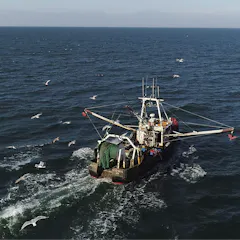
Bottom trawling operates by dragging large, weighted nets across the ocean floor, sweeping up most of the life they encounter along the way and destroying habitats.

Healthy coral reefs can significantly reduce hurricane damage for coastlines, yet many still face harms, including pollution and ship damage, that people have the power to stop.
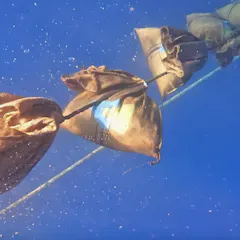
Ocean carbon removal is picking up, just as Microsoft pulls out as a major funder of carbon removal projects.
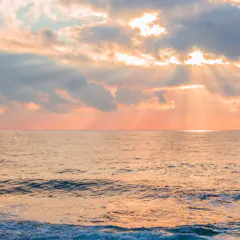
Scientists are taking to the seas with new equipment to measure how much carbon the oceans are storing.
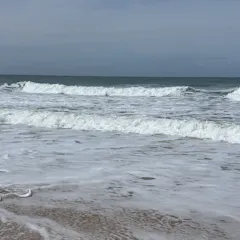
Colour, smell and duration of sea foam are all signs of local environmental health.
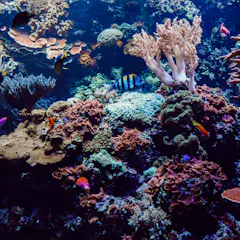
The Earth has already experienced three mass coral bleaching events over the last few decades, with a fourth happening now. Researchers are trying to find ways to make corals more adaptable to heat.
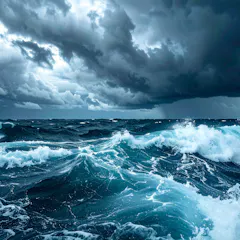
What the Atlantic Meridional Overturning Circulation (AMOC) does and how it shapes our climate.

Understanding why some faults creep rather than sticking and causing massive earthquakes is important for gauging the future risk of both earthquakes and tsunamis.
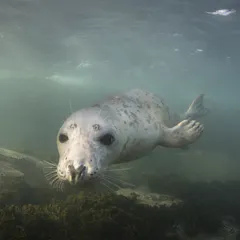
If we are serious about ocean recovery, we need to tackle root causes.
Top contributors
-

Professor, School of the Environment, The University of Queensland
-
Harold T. Stearns Professor of Earth Science, Wesleyan University
-
Distinguished Scholar, National Center for Atmospheric Research; Affiliate Faculty, University of Auckland, Waipapa Taumata Rau
-
Director of the ARC Centre of Excellence for Our Future Oceans and Scientia Professor in Oceanography, UNSW
-
Distinguished Professor of Marine Science, King Abdullah University of Science and Technology
-
Research Scientist, Stanford University
-
Senior Principal Research Scientist, Environment, CSIRO
-
Faculty Research Associate in Marine Biology, Arizona State University
-
Professor of Marine Botany, The University of Western Australia
-
Chief Research Scientist - Environment, CSIRO
-
Professor of Biology, Department of Biology, University of Victoria
-
Professor and Deputy Vice-Chancellor (Research), University of Sydney
-
CSIRO Fellow, CSIRO
-
Professor of Complex Systems and Environmental Policy, Bournemouth University
-
Associate Professor in Marine Biology, Swansea University