

Long-acting treatments could reduce missed doses and ease the burden of taking medicines every day, while giving patients more choice.
Articles on Antimicrobial resistance
Displaying 1 - 20 of 146 articles
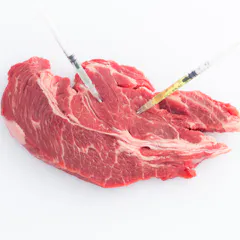
Antibiotic resistance is not only a hospital problem. Farming, food production and import standards also play a role.

After harmful bacteria are removed by water treatment, the genetic information that enables antimicrobial resistance can persist.

Deep oceans contain microbes with yet-to-be-discovered properties that could drive future innovations in biotechnology.
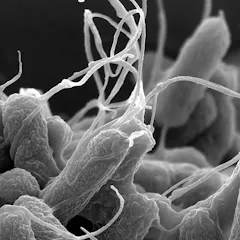
Scientists are using AI and physics-based simulations together to design new peptides that will kill previously drug-resistant bacteria.

The root of tormentil was used in Irish folklore and European traditional medicine to treat wounds, sore throats, diarrhoea and gum disease.

Intensive antibiotic use in farming has created the ideal conditions for resistant bacteria, viruses and fungi to develop.
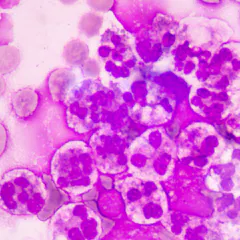
Doctors must treat sepsis quickly to prevent organ failure. But demographic change and drug-resistant infections are making the condition harder to manage.
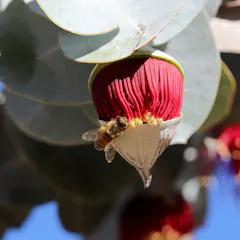
The next jar of Australian honey you buy may just be doing more good than you realise.
Antibiotic prescribing around the time of surgery and in aged care isn’t always appropriate, a new report shows. Here’s what else we learned.
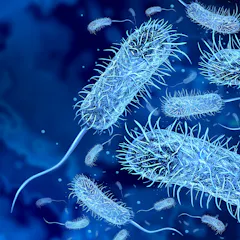
Five-thousand-year-old microbes reveal nature’s antibiotic arms race, and hold clues to both the threat of drug resistance and the cure.
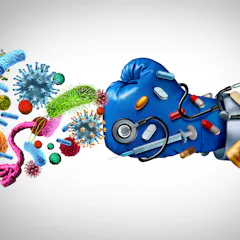
Antibiotics transformed health care for the better, but their diminishing effectiveness may soon be its undoing. Researchers are studying ways to fight back against resistance.

The disinfectants we trust to protect us from microbes may also inadvertently help those microbes evolve to become more resistant to them.
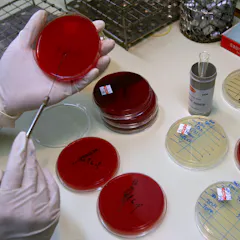
To make real progress, antimicrobial communication needs to be grounded in people’s lived experiences.

Lake Victoria’s aquaculture industry holds promise for improving food security and livelihoods in east Africa.
Over-subscription of a topical antibiotic likely led to the emergence of a superbug which is now the leading cause of resistant infections.
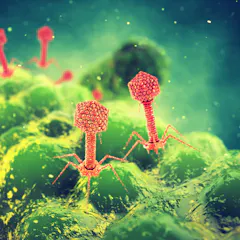
The viruses that kill bacteria may be our best bet against antibiotic resistance – if we can understand how they win.

Measles is a viral infection, so antibiotics don’t treat it directly. But it weakens the immune system, leading to bacterial infections like pneumonia or ear infections, which do require antibiotics.
The pace of investment to manage diseases transmissible from animals to humans is dangerously slow.
Scientists have described antimicrobial resistance as an overlooked pandemic. Improving surveillance can help prevent deadly outbreaks.
Top contributors
-

Senior Research Fellow, School of Medicine, The University of Western Australia
-
Prof. Institute for Molecular Bioscience, The University of Queensland
-
Professor of Biocchemistry and Biomedical Sciences, McMaster University
-
Dean of the College of Science, Professor of Biochemistry, Rochester Institute of Technology
-
Professor, The University of Queensland
-
Consultant Microbiologist, Beaumont Hospital, Dublin, Ireland and Professor and Head of Department, Clinical Microbiology, RCSI University of Medicine and Health Sciences
-
Senior Lecturer in School of Biological Sciences, Microbiology, Monash University
-
Lecturer in the History of Medicine, University College Dublin
-
Associate Professor in Microbiology, University of Technology Sydney
-
Professor of Public Health, Bond University
-
Science Communication Researcher, Stellenbosch University
-
Professor at ANU Medical School; Senior Staff Specialist Infectious Diseases; General Physician, Australian National University
-
Assistant Professor of Public Health, Bond University
-
Professor of Biochemistry and Biomedical Sciences, McMaster University
-
Professor of Infectious Diseases and Microbiology, Australian National University