
Genes that control blood type and are involved in inflammation have been associated with more severe disease.
Articles on DNA
Displaying 181 - 200 of 523 articles
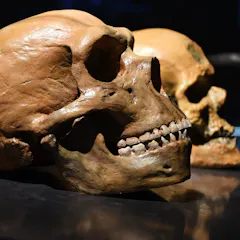
Neanderthal-human hybrid brains grown in the lab give fascinating insights into evolution.

With the vaccines now being administered at sites around the US, it is important to address misinformation surrounding the effort.
We propose five principles that could guide a proper ethical and legal framework for germline editing and similar technologies.
Using ‘base editing’, researchers have cured progeria in mice. This genetic syndrome causes premature ageing in humans – those with the disease usually don’t live past the age of 13.

The stench was once thought to originate from plants, but scientists have now pin-pointed its true origin.

Christine Jessop was murdered in 1984 and, 36 years later, DNA evidence finally identified her killer. But the police investigation’s use of genetic genealogical databases raised questions about privacy.

A thousand-year-old “mixing” event allowed African cattle - after spending thousands of years confined to certain regions - to diversify and spread.

Scientists are revealing the extent to which our behaviour is influenced by our genes, calling into question our capacity for free will. But there is still scope for change.
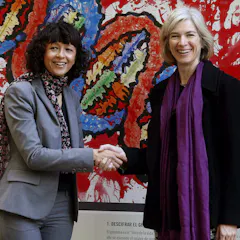
Jennifer Doudna and Emmanuelle Charpentier have been awarded the Nobel prize in Chemistry for their revolutionary work on ‘gene scissors’ that can edit DNA.
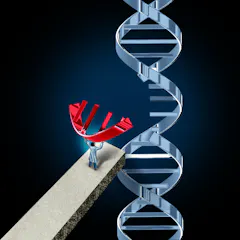
Most scientific discoveries these days aren’t easily ascribed to a single researcher. CRISPR is no different – and ongoing patent fights underscore how messy research can be.
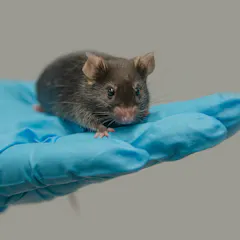
A new finding in mice rewrites the textbook explanation of the male sex-determining gene, Sry. It might also help us better understand how males and females come to be.
Our cells may be small, but they are mighty. And they are made of lots of amazing stuff, from the DNA that tells your body how to grow, to mini skeletons that let cells move around.
Miniaturized laboratory equipment is making it easier to identify airborne pathogens in the field, but there’s still work ahead to be able to instantly determine if a room is safe or contaminated.

Global long-term data simply doesn’t exist for jellyfish, so scientists struggle to predict, track and mitigate their potential effects.
COVID-19 tests rely on a process developed at a biotech company co-founded by a Canadian. Canada’s current testing expertise needs to be channelled to prepare for the next wave, and the next pandemic.

Franklin was born a century ago, and her X-ray crystallography work crucially contributed to determining the structure of DNA.

This decades-long study found that living in poorer communities changes how genes are regulated.
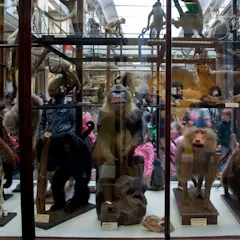
Genetic information that could help finger the next infectious threat is stored in museums around the world.

Vaccine development is usually a long process. The coronavirus pandemic is forcing researchers to innovate and test potential vaccines faster than ever before.
Top contributors
-

Chair, The Conversation Media Group
-
Distinguished Professor, Charles Sturt University
-
Jenny Graves is a Friend of The Conversation.
Distinguished Professor of Genetics and Vice Chancellor's Fellow, La Trobe University
-
Lecturer, Business School & Centre for Policy Futures, The University of Queensland
-
Research fellow, The University of Queensland
-
Author and Honorary Fellow, Centre for History and Philosophy of Science, University of Leeds
-
Professor in Molecular Archaeology, Department of Archaeology and Classical Studies, Stockholm University
-
Professor of Microbiology, School of Medicine, University of Washington
-
Head, Molecular Medicine Laboratory, WEHI (Walter and Eliza Hall Institute of Medical Research)
-
Deputy Director and ARC Future Fellow, Australian Centre for Ancient DNA, Adelaide University
-
Ethical, Legal & Social Adviser in Public Health Genomics, Monash University
-
Doctoral Student in Biochemistry, University of Washington
-
Senior Lecturer in Population, Medical and Evolutionary Genomics, Lund University
-
Professor of English, York University, Canada
-
Assistant Professor in Biomedical Ethics, National University of Singapore