
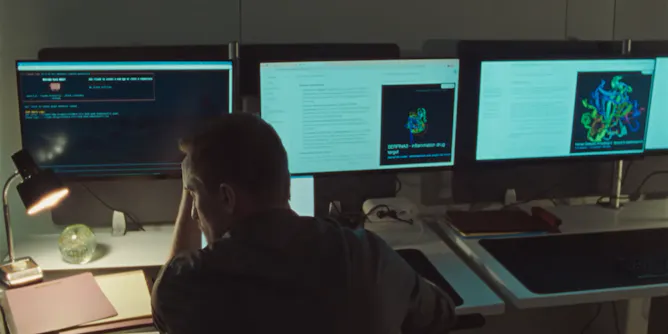
After coding, mathematics and chatbots, AI companies are setting their sights on the messy world of biology.
Articles on CRISPR
Displaying 1 - 20 of 131 articles

The convergence of AI and biotechnology blurs boundaries and challenges existing regulations designed to consider technologies separately.
Canada must decide what kind of country it wants to be: One that generates new scientific knowledge, or one that waits for other nations’ discoveries.

By identifying the genes that allow plants to pause growth during stress and restart, we can help ensure crops produce reliable harvests in a changing climate.

Gene editing could add genetic diversity that can revitalise species on the brink of extinction.

Are new approaches to recreating long-lost animals simply creating imitations?
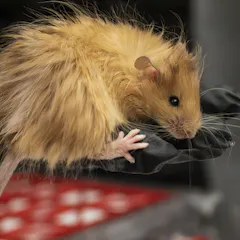
The “woolly mice” have the thick, shaggy hair of mammoths, along with a fat metabolism gene.
Stem cell engineering and CRISPR were used to create mice with two male parents. Could we use this technique on humans?

Lose the prickles. Add bioluminescence. Up the nutrients without the bitter flavor. CRISPR gene editing is opening a new world of genetically modified plants for home growers.
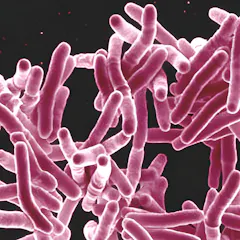
The only vaccination against TB is more than 100 years old. Gene-editing has made it more effective.

Cobra venom can cause tissue damage and life-changing injuries – but a cheap, common medication may be an antidote.

AI has learned the ins and outs of proteins. Gene editing gives scientists control of life’s molecular machinery. Together they could lead to a revolution in biotechnology.

Champions of xenotransplantation see it as the solution to organ shortages across the world. But this technology has other applications.

Many people know someone with a genetic disease, but few understand how gene mutations work.

Drug development takes a great deal of time, money and effort. While future profits play a big factor in which diseases gets prioritized, advocacy and research incentives can also tilt the scale.

Science is getting closer to finding a cure for HIV.

The pandemic spurred the diagnostics industry to consider aspects like scale, affordability, speed and portability of tests.

At the Third International Summit on Human Genome Editing, experts gather to discuss the path forward for CRISPR and other gene-editing technologies

Following the controversial births of the first gene-edited babies, a major focus of the Third International Summit on Human Genome Editing was responsible use of CRISPR.
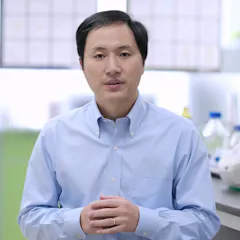
Scientific and public uproar resulted when the Chinese scientist announced the births of the first human babies with heritable edits to their genes. A new documentary reexamines the saga.
Top contributors
-

Chair, The Conversation Media Group
-
Head of School (Computer Science) and Co-Director (Centre for Data Science), Queensland University of Technology
-
Distinguished Research Professor, Emerita, Dalhousie University
-
Geneticist and Group Leader, The John Curtin School of Medical Research, Australian National University
-
Assistant Professor in Biomedical Ethics, National University of Singapore
-
Emeritus Robert Reford Professor and Professor of Medicine, McGill University
-
Professor of Chemistry, Connecticut College
-
Doctoral Student in Biochemistry, University of Washington
-
Postdoctoral Associate in Science and Society, Duke University
-
Postdoctoral fellow, Harvard University
-
Vanier Scholar and Ph.D. Candidate in Microbiology and Immunology, Dalhousie University
-
Research fellow, The University of Queensland
-
Emeritus Professor of Developmental Biology, The University of Queensland
-
Associate Professor of Public Policy and Women's Studies, University of Michigan
-
Chen Su Lan Centennial Professor in Medical Ethics, National University of Singapore; Distinguished Visiting Professor in Law, University of Melbourne; Uehiro Chair in Practical Ethics, The University of Melbourne