
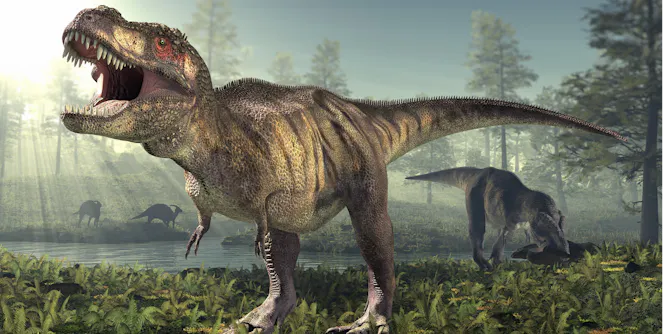
Ever since moviegoers saw the first ‘Jurassic Park,’ millions have wondered if scientists could make a dinosaur in the lab.
Articles on DNA
Displaying 161 - 180 of 523 articles

DNA testing for cocoa beans could fight slavery and child labour.
Using a technique called admixture mapping, researchers can leverage the diversity of people with mixed ancestry to look for hard-to-find genetic risk factors for diseases like Alzheimer’s disease.

The real message is how old you are when you first have sex and have your first child is controlled by a little bit of nature and a lot of nurture.

Determining the age of fish has been historically difficult, primarily involving lethal methods. A new DNA test solves this problem.
A lie about children’s paternity back in 1700 means tens of thousands of South Africans today are using the wrong surname.
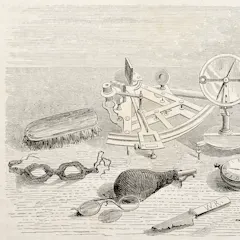
129 officers and crew died during the 1845 Franklin Northwest Passage expedition. DNA analysis from their remains of members can reveal the identity of the men who perished during the journey.
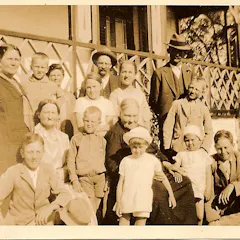
Given the central role that ethnicity played and still plays in South African politics, it is good to have an unbiased estimate of Afrikaners’ genetic history.
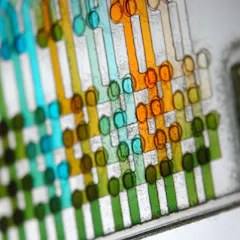
Electronics are not the only technology to have been miniaturized. Using the strange behavior of fluids in tiny spaces, microfluidic devices are critical to medicine, science and the modern world.
DNA has been storing vast amounts of biological information for billions of years. Researchers are working to harness DNA for archiving data. A new method uses light to simplify the process.
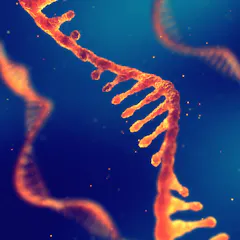
Long non-coding RNAs were long thought to serve no purpose. Now, researchers think differently.
If storing DNA for criminal investigations helps identity the perpetrators and eliminate the innocent, why don’t we include samples from everyone?

Technology that can identify stray bits of genetic material in the environment can help scientists monitor human and animal health.

The first full human genome was sequenced 20 years ago. Now, a project is underway to sequence 1 million genomes to better understand the complex relationship between genetics, diversity and disease.

Genetic ancestry tests may sound like a bit of fun, but in an era marked by increasing xenophobia, it’s important to be aware of the interplay between genetics and ideas of race.
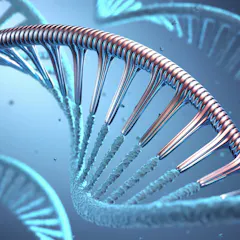
In the spotlight for its role in COVID-19 vaccines – and a Nobel Prize – mRNA is not a new invention. It’s a crucial messenger molecule at work every day in every cell in your body.

Scientists used to believe that a group containing starfish and sea urchin were the closest relatives of vertebrates like humans. But new research challenges this idea.
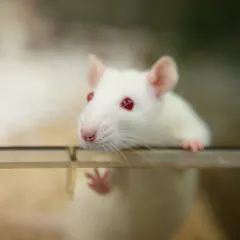
Male rats transfer different hereditary information to their offspring depending on their age.
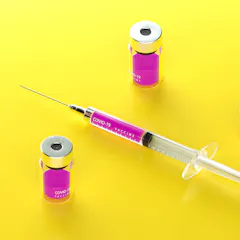
So far, most vaccines in the US are mRNA vaccines. These represent a new technology and are likely to take over the vaccine world. But how do they work? What are their weaknesses? Five experts explain.

The coronavirus pandemic has driven a lot of scientific progress in the past year. But just as some of the social changes are likely here to stay, so are some medical innovations.
Top contributors
-

Chair, The Conversation Media Group
-
Distinguished Professor, Charles Sturt University
-
Jenny Graves is a Friend of The Conversation.
Distinguished Professor of Genetics and Vice Chancellor's Fellow, La Trobe University
-
Lecturer, Business School & Centre for Policy Futures, The University of Queensland
-
Research fellow, The University of Queensland
-
Author and Honorary Fellow, Centre for History and Philosophy of Science, University of Leeds
-
Professor in Molecular Archaeology, Department of Archaeology and Classical Studies, Stockholm University
-
Professor of Microbiology, School of Medicine, University of Washington
-
Head, Molecular Medicine Laboratory, WEHI (Walter and Eliza Hall Institute of Medical Research)
-
Deputy Director and ARC Future Fellow, Australian Centre for Ancient DNA, Adelaide University
-
Ethical, Legal & Social Adviser in Public Health Genomics, Monash University
-
Doctoral Student in Biochemistry, University of Washington
-
Senior Lecturer in Population, Medical and Evolutionary Genomics, Lund University
-
Professor of English, York University, Canada
-
Assistant Professor in Biomedical Ethics, National University of Singapore