
An article written for Time Magazine, but never published, could have rewritten the history of how DNA was discovered.
Articles on DNA
Displaying 101 - 120 of 523 articles
On DNA Day, Canada should be inspired by the lifesaving discoveries of its researchers. However, lack of funding threatens Canadian researchers’ ability to meet the challenges of the future.

New genetic studies claim to be able to foretell our intelligence or predisposition to certain diseases. But two scientists beg to disagree, reminding us that not everything is written in our DNA.
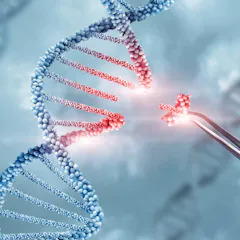
Chemist David Liu explains how gene editing is paving the way to treating and even curing certain genetic diseases.
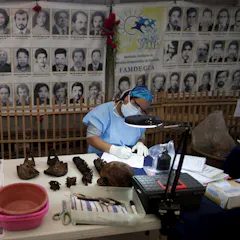
Forensic anthropologist Alexa Hagerty’s work faced her with the brutality of the genocides in Guatemala and in Argentina’s “Dirty War” – and with the bureaucratic violence of state institutions.

DNA analysis sheds light on important societies within Africa that existed before colonialism.

Even in death, a tree helps others live.
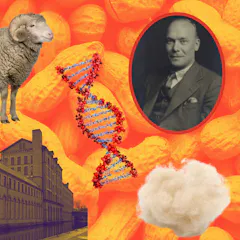
Vegan wool, peanut coats and the discovery of DNA: the forgotten life of scientist William Astbury

Beethoven was afflicted with health conditions for much of his adult life, and wished for their cause to be discovered and made public.
Our understanding of Parkinson’s disease is far from complete. But researchers now believe that in most cases, Parkinson’s is caused by a complex interaction between genetic and environmental factors.
Making sure RNA molecules are in the right place at the right time in a cell is critical to development and normal function. Researchers are figuring out exactly how they get to where they need to go.

The largest birds that ever lived on Earth, elephant birds have a spotty fossil record. But understanding them could help protect Madagascar’s biodiversity.
People don’t all age at the same rate. Untangling the factors that influence health and disease – such as epigenetics, demographics and behavior – could lead to better care for those who need it most.
Gene editing promises everything from treatments for serious conditions like sickle cell disease to the resurrection of the dodo.
Our DNA contains the information that determines the colour of our eyes.

DNA analysis reveals a large migration of people into Scandinavia during Viking times.

Multicancer early detection tests are among the priorities of the Biden administration’s Cancer Moonshot. The tests show promise, but questions remain about when and how to use them.
A new ‘rule book’ for naming genomically sequenced bacteria is a boon for science.

Journals, museum collections and other historical sources can provide valuable data for modern ecological studies. But just because a source is old doesn’t make it useful.
New research adds to scientists’ understanding of how invading pathogens can change the way our genes switch on and off.
Top contributors
-

Chair, The Conversation Media Group
-
Distinguished Professor, Charles Sturt University
-
Jenny Graves is a Friend of The Conversation.
Distinguished Professor of Genetics and Vice Chancellor's Fellow, La Trobe University
-
Lecturer, Business School & Centre for Policy Futures, The University of Queensland
-
Research fellow, The University of Queensland
-
Author and Honorary Fellow, Centre for History and Philosophy of Science, University of Leeds
-
Professor in Molecular Archaeology, Department of Archaeology and Classical Studies, Stockholm University
-
Professor of Microbiology, School of Medicine, University of Washington
-
Head, Molecular Medicine Laboratory, WEHI (Walter and Eliza Hall Institute of Medical Research)
-
Deputy Director and ARC Future Fellow, Australian Centre for Ancient DNA, Adelaide University
-
Ethical, Legal & Social Adviser in Public Health Genomics, Monash University
-
Doctoral Student in Biochemistry, University of Washington
-
Senior Lecturer in Population, Medical and Evolutionary Genomics, Lund University
-
Professor of English, York University, Canada
-
Assistant Professor in Biomedical Ethics, National University of Singapore