
As we age, our DNA accumulates damage, which can increase our risk of developing
cancer. But our cells work hard to guard against cancer – new research explains how.
Articles on DNA
Displaying 261 - 280 of 523 articles
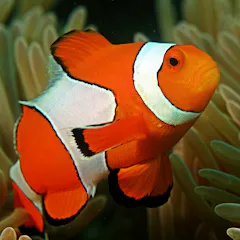
Our children all know the little clownfish Nemo, star of the Pixar film. But why does he have three stripes, rather than one or two? Developmental and evolutionary biology are revealing the answer.

From wealth, to the natural world, to genes and intelligence, a podcast exploring the theme of inheritance.

DNA evidence tracks the ancient history of the Jewish people.

New research is pinpointing how much genes influence the stability of educational achievement.
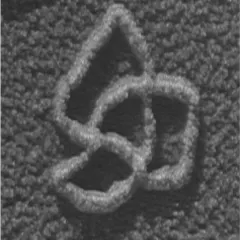
Mathematical models can describe the many shapes of DNA, as well as cellular processes like DNA replication.

How can there be boom in new species discoveries while others are dying out at unprecedented rates?
How do brains convert experiences into memories? New research explores the chain of events by focusing on what genes shift into gear when neurons are firing.

Your weight during your youth could have an effect on your heart for the rest of your life.
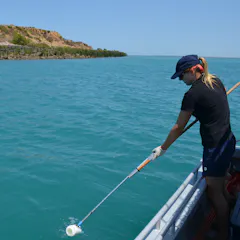
DNA sequencing means a scientist can take a bucket of seawater and ID every fish in the area. Now we need a universal ‘biobank’ of samples to make a truly powerful environment monitoring tool.

New research could allow us greater control over what happens to genetically modified organisms once they’re in the wild.

Separating children from their parents is not just a psychological stress, it’s a DNA stress. Scientific research shows that early life stress may have irreversible effects on how DNA works in the cells of the body.
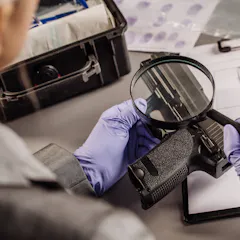
Lifting fingermarks from a crime scene often destroys the DNA they can contain.

Car parks seem to be intersecting with English history quite a bit lately.

Jurassic Park’s dinosaur DNA premise is not so simple in real life
Genetics is influencing more and more of our decisions, but we can’t make the right choices if we don’t understand it.

You should be aware of the amount of genetic information you might disclose in a research study – and what the benefits and risks will be.
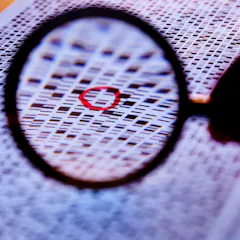
Data and privacy issues are tangled up in the DNA reports consumers get from big genetic testing companies – and the third-party sites they turn to in order to glean more from their raw DNA.

The first people to make it to Australia could have navigated their way by sea crossing, reaching the north-west coastline of the island continent more than 50,000 years ago.

More people are sending off saliva samples to find out about their genetic roots. But the raw DNA results go way beyond genealogical data – and could deliver unintended consequences.
Top contributors
-

Chair, The Conversation Media Group
-
Distinguished Professor, Charles Sturt University
-
Jenny Graves is a Friend of The Conversation.
Distinguished Professor of Genetics and Vice Chancellor's Fellow, La Trobe University
-
Lecturer, Business School & Centre for Policy Futures, The University of Queensland
-
Research fellow, The University of Queensland
-
Author and Honorary Fellow, Centre for History and Philosophy of Science, University of Leeds
-
Professor in Molecular Archaeology, Department of Archaeology and Classical Studies, Stockholm University
-
Professor of Microbiology, School of Medicine, University of Washington
-
Head, Molecular Medicine Laboratory, WEHI (Walter and Eliza Hall Institute of Medical Research)
-
Deputy Director and ARC Future Fellow, Australian Centre for Ancient DNA, Adelaide University
-
Ethical, Legal & Social Adviser in Public Health Genomics, Monash University
-
Doctoral Student in Biochemistry, University of Washington
-
Senior Lecturer in Population, Medical and Evolutionary Genomics, Lund University
-
Professor of English, York University, Canada
-
Assistant Professor in Biomedical Ethics, National University of Singapore