

Your fingers’ lengths are just one feature of many that let your hands grasp, press, pull and otherwise interact with the world.
Articles on Genes
Displaying 1 - 20 of 208 articles

AI is reshaping biomedical research and drug discovery and delivery. But challenges still exist.
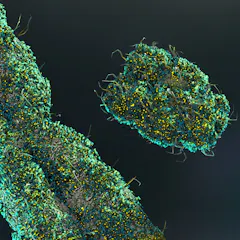
The Y chromosome doesn’t seem to do much except determine sex – but its loss in older men might be linked to heart disease, cancer and Alzheimer’s.

Why genetic influence on lifespan appears to have doubled.

Studying ancient genes can tell us more about the evolution of humans’ anatomy, behaviour and thinking.
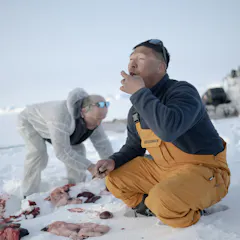
We are indeed still evolving, though it can be hard to tell because it happens over generations and often involves things you can’t see, such as what foods different people are able to digest.

Two new studies suggest the story of dogs and their relationship with humans is older and more complex than once thought.
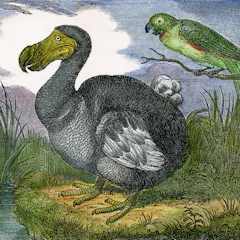
A tech company says it could be five years away from bringing the dodo back.

Two genomic variants contribute to the risk of breast cancer in black South African women.

While trauma can ripple across generations, its effects aren’t hard-coded in our genes.

Environmental factors such as lifestyle and the medications you take influence the effects your genes have on your body − and can clarify how diseases develop.

Human beings don’t have a thick coat of fur like many other mammals do. Scientists think it has to do with something else that comes out of skin: sweat.

The US has a long history of misusing genetics and biology in immigration policy, the effects of which are still keenly felt today.

Two new studies have revealed why some cats are orange – an enduring enigma of genetics, until now.
We can already tinker with human DNA to treat diseases. But being able to edit RNA allows for even more precision – and fewer risks.
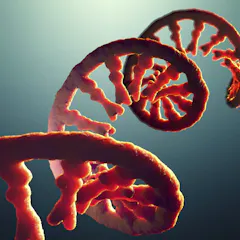
Victor Ambros and Gary Ruvkun won the 2024 Nobel Prize in physiology or medicine for their discovery of microRNAs, molecules that turn genes on and off – and cause disease when they go awry.

A new database documents 16,000 proteins from deep-sea organisms that could yield new inventions.
Human psychology is influenced by a complex network of genes and environmental factors. Studying how and when genes fail to cooperate could broaden our understanding of behavior.

It may not be obvious to the human ear but birds of the same species sing in different dialects.
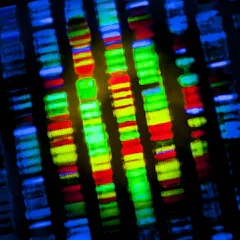
Genomic research stands to help develop new medical treatments – and we need donations of lots of data for this to work. But people don’t want data on their genes to be exploited for profit.
Top contributors
-
 Jenny Graves is a Friend of The Conversation.
Distinguished Professor of Genetics and Vice Chancellor's Fellow, La Trobe University
-
Sir Henry Wellcome Postdoctoral Fellow, King's College London
-
Professor in Functional Genetics, University of Aberdeen
-
Mark Elgar is a Friend of The Conversation.
Emeritus Professor of Evolutionary and Behavioural Ecology, The University of Melbourne
-
Research Scientist in Biostatistics, University of Washington
-
Assistant Professor of Environmental Health Sciences, UMass Amherst
-
Associate Professor in Obesity, UCL
-
Research Fellow at Institute of Psychology, Psychiatry and Neuroscience, King's College London, King's College London
-
Postdoctoral Researcher of Evolutionary Biology, University of Pennsylvania
-
Associate professor and Royal Society Research Fellow, Department of Psychiatry, University of Oxford
-
PhD Candidate, University of Cambridge
-
Emeritus Professor, University of Cape Town
-
Professor of Genetic Epidemiology, King's College London
-
Assistant Professor of Psychological Science, Boise State University
-
University Academic Fellow, University of Leeds