

Across ages, genders, cultures and conditions, crowds always walk in a counter-clockwise spiral.
Articles on Walking
Displaying 1 - 20 of 183 articles

Social media claims a special walking technique can boost your lymphatic system. Here’s what’s actually backed by evidence.

A sedentary lifestyle lurks in every neighbourhood. So what motivates people to walk?
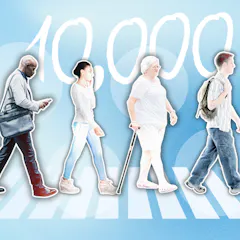
The infamous 10,000 steps per day recommendation didn’t come from a research laboratory.

A tick disease researcher explains the risks and how she avoids bringing home ticks from both work and walking her dog in the woods. Lint rollers, tick checks and some types of chemicals play a role.

Tourist destinations can do more to encourage travellers to use public transport.

Both legally and practically speaking, getting to the water’s edge isn’t as straightforward as it might seem – or as many people might like.

The documentary explains how the English and Welsh culture of access differs from that of close neighbours like Scotland.

From a biological perspective, being inactive is more than the opposite of being active. Being sedentary results in unique physiological changes that can lead to a variety of health risks.
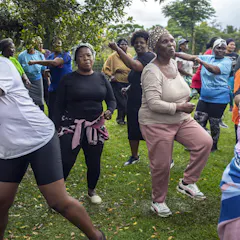
People don’t need a strict workout schedule to get moving.
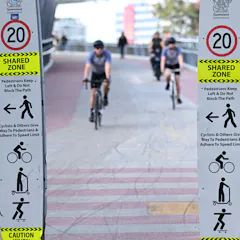
For the first time in more than a decade, Australia has new physical activity guidelines. They’re commendable but unlikely to get us more active.

Rachael Mead’s body once carried her across Antarctic ice sheets. At 55, she set out to reclaim her resilience – and what she discovered was surprising.

Walking together can be a powerful way to feel a sense of belonging in our environment.
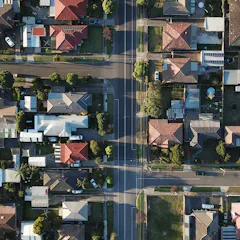
Choosing an area to live is tricky. But many people overlook the importance of walkable, leafy and quiet suburbs. Here’s how to check.
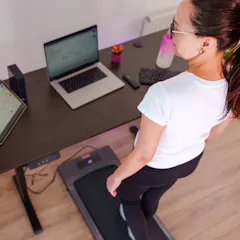
Yes, there is evidence changing your desk set up can help with fat loss, improving cholesterol, blood pressure and metabolism. But try this before you buy.
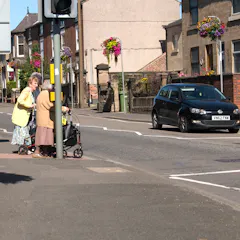
Many older people with reduced mobility say they feel ‘hurried’, ‘rushed’ and ‘unsafe" when walking around their city.

Some 6.5 million people in 2024 visited the park for a short or long walk.

Young men in low-income communities in Cape Town and London often walk with great fear.
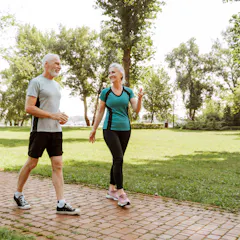
Even modest amounts of walking – as few as 3,000 steps a day – may help protect against Alzheimer’s by reducing harmful tau proteins in the brain.

The explosion of urban writing set in the cities and towns of Australia allows us to walk amid history, subcultures and alternative visions of urban places.
Top contributors
-

Adjunct Research Fellow, School of Human Sciences, The University of Western Australia
-
Senior Lecturer in Clinical Exercise Physiology, University of East London
-
Honorary Professor of Planning, The University of Queensland
-
Teaching Assistant Professor, University of Pittsburg and Visiting Associate Professor, The University of Osaka, University of Pittsburgh
-
Reader in Exercise and Health Physiology, University of Hertfordshire
-
PhD Candidate, School of Population Health, UNSW
-
Associate Professor in Urban Planning, The University of Queensland
-
Professor of Human Geography, The University of Queensland
-
Distinguished Professor and Director, Urban Futures Enabling Capability Platform, and Director, Healthy Liveable Cities Group, RMIT University
-
Professor of Physical Activity, Lifestyle, and Population Health, University of Sydney
-
Associate professor, UCL
-
Senior Lecturer, University of Environment and Sustainable Development
-
John Rennie Short is a Friend of The Conversation.
Professor Emeritus of Public Policy, University of Maryland, Baltimore County
-
Professor of Transport Technology and Sustainability, Swinburne University of Technology
-
Adjunct Professor, School of Public Health, Curtin University