

Philadelphia has more fatal traffic accidents than other big US cities, and they’re concentrated in poor neighborhoods.
Articles on Pedestrians
Displaying 1 - 20 of 53 articles
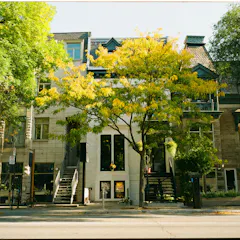
A sedentary lifestyle lurks in every neighbourhood. So what motivates people to walk?

Both legally and practically speaking, getting to the water’s edge isn’t as straightforward as it might seem – or as many people might like.

Urban design depends heavily on human judgment and field-based understanding.

As the baby boomer generation ages, cities must rethink the accessibility of public spaces. Comfort, legibility and geometric clarity are the essential elements of an inclusive city.
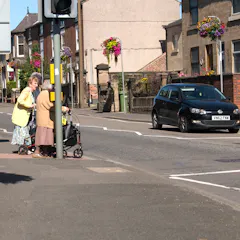
Many older people with reduced mobility say they feel ‘hurried’, ‘rushed’ and ‘unsafe" when walking around their city.

Should cyclists be allowed to treat stop signs as yield signs? This rule from Idaho is divisive, but the scientific data is surprising.
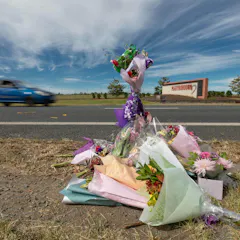
More lives are being lost on Australian roads despite safer cars and road safety campaigns. We breakdown the groups that are most vulnerable to fatalities.

Hot sunny days can make footpaths, bike lanes and city streets unbearable. If we want people to ditch the car, we’re going to need more trees, research shows.
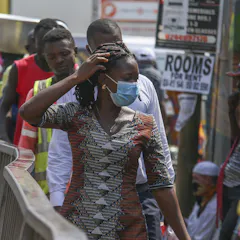
Ghana’s cities pay little attention to the needs of walkers.
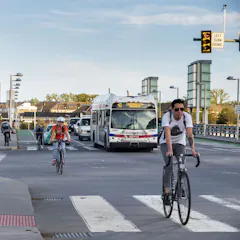
Philadelphia implemented new policies this year to better protect pedestrians and cyclists, but the city has a long way to go to reach its Vision Zero commitment of zero traffic deaths by 2030.
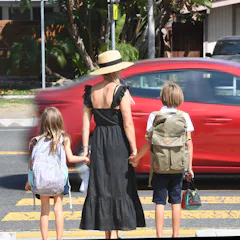
A traffic engineer argues that, contrary to his profession’s view, ‘human error’ is not the main cause of deaths in car crashes in the US.
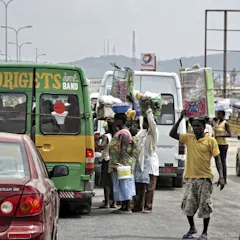
Walking is a common way of getting around in most African cities
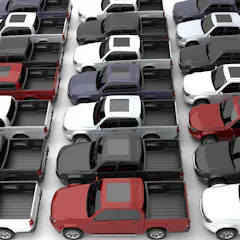
With the Clean Car Discount under threat, more large, polluting and dangerous vehicles will hit New Zealand roads. That will further discourage walking and cycling.
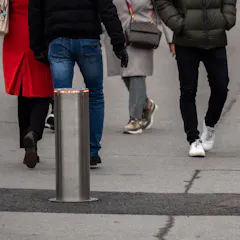
Cars are getting bigger on US roads, and that’s increasing pedestrian and cyclist deaths. A transport scholar identifies community-level strategies for making streets safer.
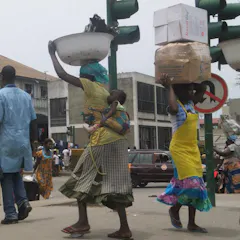
The city of Accra has no plan to tackle pedestrians’ behaviour.
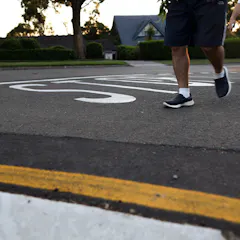
Some councils have installed zebra crossings at selected T-intersections, where they do improve safety. The problem is they also add to the existing confusion at other intersections.
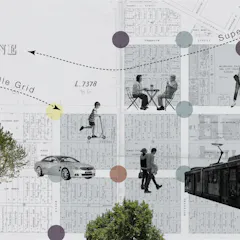
The Hoddle Grid that dictates the flow of vehicles and people in central Melbourne has had its day. It can be remade to reduce the dominance of cars and create a liveable city for the 21st century.

Shade, street furniture, streetscapes – they all matter when it comes to making a footpath appealing.
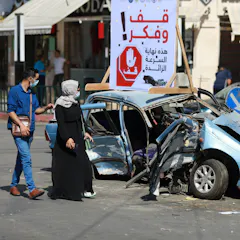
Traffic crashes kill and injure millions worldwide every year and are a major drain on economic development. Improving road safety would produce huge payoffs, especially in lower-income countries.
Top contributors
-
 John Rennie Short is a Friend of The Conversation.
Professor Emeritus of Public Policy, University of Maryland, Baltimore County
-
Chadwick Professor of Civil Engineering, UCL
-
Senior Research Fellow in Human Factors & Sociotechnical Systems, University of the Sunshine Coast
-
Teaching Assistant Professor, University of Pittsburg and Visiting Associate Professor, The University of Osaka, University of Pittsburgh
-
Associate Research Professor, Urban Health Collaborative, Drexel University
-
PhD Candidate, University of Memphis
-
Senior Lecturer, University of Environment and Sustainable Development
-
Professor of Transport, University of Sydney
-
Research Active Lecturer, Discipline of Psychology, Charles Darwin University, Charles Darwin University
-
Associate professor, UCL
-
Work Based Learning Advisor, University of Strathclyde
-
Research Fellow, University of Sydney
-
Assistant Professor, Stanford University McCoy Family Center for Ethics in Society
-
Professor of Human Factors, University of the Sunshine Coast
-
Assistant Professor of Philosophy, UMass Lowell