
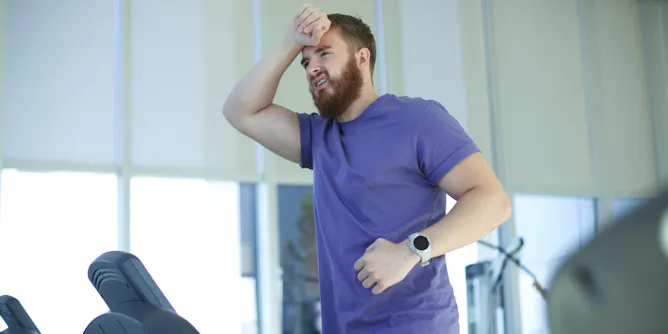
It’s a problem that affects almost everyone – from someone attempting their first 5K to elite endurance athletes.
Articles on Running
Displaying 1 - 20 of 161 articles

Plus, ‘slow jogging’ may benefit avid runners, too.

For many people, the mental benefits of a runner’s high even outlast the run itself.

When runners ‘hit the wall,’ they experience sudden debilitating fatigue, difficulty keeping pace, and often, a shift away from their goal pace towards surviving until the finish line.

For some people, running inside is mentally harder. Here’s what you can do to make a treadmill more like running outside.

I followed the course of the river as closely as I could over a continuous period of 14 days.

Gels can provide a quick source of energy – but they can also come with downsides.

Climate change is already re-shaping how people engage in sport. Due to warming temperatures, running may become less accessible and safe for many of us.

Successful marathon running is about fuelling well, thinking clearly and responding effectively when the race starts to bite.

Researchers found taking regular hot baths increased runners’ aerobic fitness without requiring additional mileage or harder workouts.

With the under-18 indoor mile world record under his belt, 16-year-old Sam Ruthe is poised for greatness. He also has modern coaching and shoe tech on his side.

There is no universal ‘right age’. Here’s what it comes down to.

Amateur runners and professional athletes differ greatly in demand and support, yet both remain vulnerable to running-related injuries.

Finding ways to reduce stress before a marathon may be as important as ensuring you’re properly fuelled and hydrated.

Researchers are questioning whether the very features that are meant to boost performance may actually increase the risk of running-related injuries.

Exercise might be good for the body and mind, but it can also result in some bizarre ailments.

Interval running can provide all the health benefits of a run but in a fraction of the time.
Being heavier makes running harder. It’s not about effort or determination, it’s about physics.

More than 80% of hamstring injuries in sport occur during sprinting. Two training approaches can help reduce these injuries.

The same principles that help athletes on the court, field or track can help you regulate stress and adapt to changes in everyday life.
Top contributors
-

Professor of Exercise Physiology, Anglia Ruskin University
-
PhD Candidate, Exercise Physiology, Anglia Ruskin University
-
PhD Candidate, Sport and Exercise Science, Anglia Ruskin University
-
Professor of Environmental Humanities, University of Kent
-
Lecturer in Exercise Science, Adelaide University
-
Postdoctoral research assistant at the Welsh Institute of Physical Activity, Health & Sport (WIPAHS), Swansea University
-
Professor, Department of Economics & SoDa Laboratories, Monash Business School, Monash University
-
Senior Lecturer, Sport & Exercise Biomechanics, Adelaide University
-
Senior Lecturer in Sport and Exercise, Teesside University
-
Professor of Biomechanics, Edith Cowan University
-
Lecturer, School of Sport, Rehabilitation and Exercise Sciences, University of Essex
-
Program Director of Nutrition and Food Sciences, Accredited Practising Dietitian, Adelaide University
-
Associate Professor of Sports Technology, Bournemouth University
-
Professor, Faculty of Kinesiology and Recreation Management, University of Manitoba
-
Lecturer in Biomechanics, University of Bath