

A new study finds congestion charging and creating car-free streets and separated bike lanes have been most effective at reducing car use in European cities.
Articles on Walking
Displaying 81 - 100 of 183 articles

A walk can gift you fresh eyes to see otherwise forgotten or ignored aspects of your local area.

Hard and strong, or bendy and flexible? A cartilaginous skeleton provides advantages in the ocean, but wouldn’t stand up to life on land.
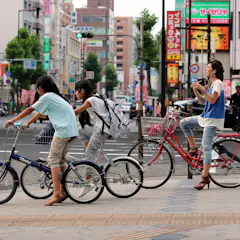
Women in cities tend to get more walking done, which is beneficial to both their health and the climate. Making streets safer for cycling would give them greater access to cities too.

During pilgrimage walks, people often observe and appreciate simple things more keenly, feel the spiritual connection with their surroundings and gain new, enriching life perspectives.

The new year is a perfect time to adopt new health habits and routines. These four scholars reflect on the ways that they overcame the pandemic blues to get fit.
On Christmas day alone, it’s estimated that people consume around 6,000 calories.
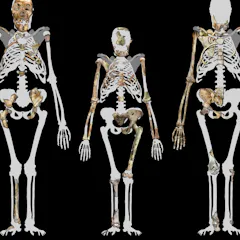
Walking has taken a very long time to develop, with evidence of bipedalism among early humans in Africa roughly 4.4 million years ago.
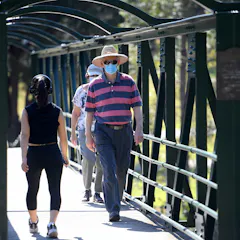
While the figure of 10,000 steps a day has become a popular benchmark, new research finds we might not need to take quite so many strides to cut our chances of an early death.
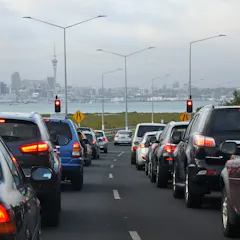
To reduce pressure on cities and the environment, drivers should face a charge that reflects the actual costs of clogged roads, air pollution, climate change, injury and death.

Gymnasts need to carefully calibrate their leg muscles to gain optimum spring from the floor, springboard or beam. And their arms are crucial for balance and creating the right amount of rotation.

Walking in the footsteps of First Nations peoples provides an alternative to overseas travel and an opportunity to reflect.

Hiking has seen a sharp increase in popularity since the start of the pandemic.

A global study of 117 cities finds Australian capitals have fairly poor access by car. Public transport, cycling and walking access is better than in the US, but not as good as in Europe and China.

What if assisted living facilities became more active communities, where the residents were less sedentary? This could potentially enable residents to gain more independence, rather than losing it.

While the road toll has come down over the decades, it’s largely a result of fewer car occupants dying. Pedestrian deaths have barely changed for a decade, but they remain a road safety blind spot.
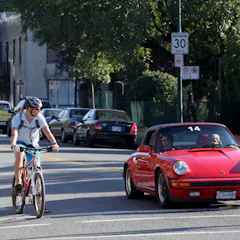
Cities around the world are reducing traffic speeds and improving access to local services and activities by public transport, cycling and walking. They are now reaping the many ‘slow city’ benefits.

Even just a few minutes of walking every hour can help better manage blood sugar levels.

But more intense exercises – such as weightlifting – are still important for health and fitness.
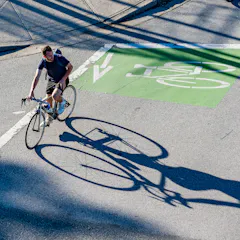
Active travel can help tackle the climate crisis earlier than electric vehicles – even if you swap the car for a bike for just one trip a day.
Top contributors
-

Adjunct Research Fellow, School of Human Sciences, The University of Western Australia
-
Senior Lecturer in Clinical Exercise Physiology, University of East London
-
Honorary Professor of Planning, The University of Queensland
-
Teaching Assistant Professor, University of Pittsburg and Visiting Associate Professor, The University of Osaka, University of Pittsburgh
-
Reader in Exercise and Health Physiology, University of Hertfordshire
-
PhD Candidate, School of Population Health, UNSW
-
Associate Professor in Urban Planning, The University of Queensland
-
Professor of Human Geography, The University of Queensland
-
Distinguished Professor and Director, Urban Futures Enabling Capability Platform, and Director, Healthy Liveable Cities Group, RMIT University
-
Professor of Physical Activity, Lifestyle, and Population Health, University of Sydney
-
Associate professor, UCL
-
Senior Lecturer, University of Environment and Sustainable Development
-
John Rennie Short is a Friend of The Conversation.
Professor Emeritus of Public Policy, University of Maryland, Baltimore County
-
Professor of Transport Technology and Sustainability, Swinburne University of Technology
-
Adjunct Professor, School of Public Health, Curtin University