

Some countries are making progress but others still face the challenge of weak coordination.
Articles on Natural disasters
Displaying 61 - 80 of 694 articles
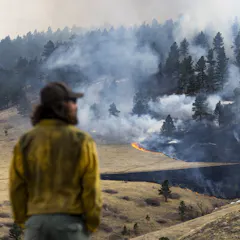
Increasing awareness can help close the gap on the number of people signed up for emergency alerts, but that won’t happen without increased accessibility.
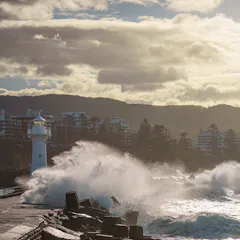
At long last, Australia has a national climate adaptation plan to guide public and private responses to intensifying threats.
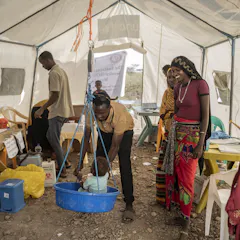
There are lessons for other African countries in how Ethiopia built its health emergency response teams.

One of the largest earthquakes on record struck far eastern Russia this week. The last time the region was hit by a such a huge quake, the Soviets hushed it up.

Huge upheavals of the land and sea were facts of life in the ancient world, just as they are today.
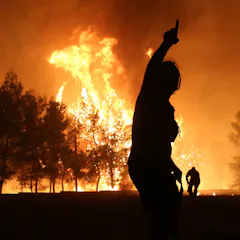
Fire-scorched land is less able to handle climate-driven downpours.
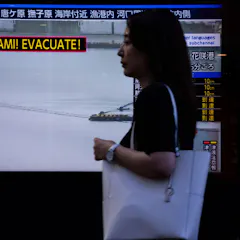
It is not easy to calculate the risk of a tsunami.
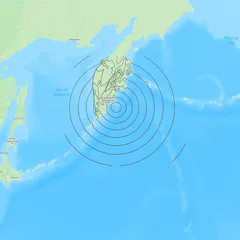
The earthquake in Kamchatka is the largest worldwide since 2011. Its location has been very seismically active in recent months.
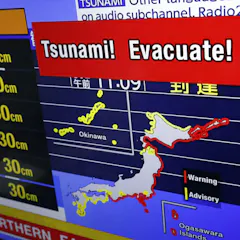
It’s far better to evacuate early and orderly than do it late in a panic. That’s why authorities around the Pacific are taking no chances as a tsunami threat looms.
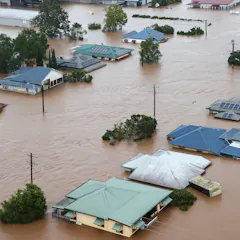
Now is the time for government to act – before the next disaster strikes.
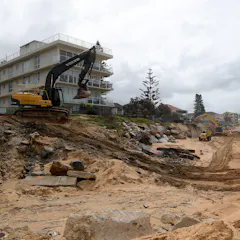
Find out what Australian governments, industries and local groups are doing to adapt to climate change in this new database. Or add your own entry.
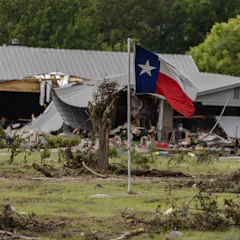
There are ways the state could help these communities, as a team of disaster planning specialists explains.
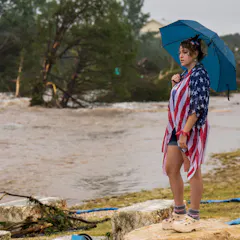
After a natural disaster, survivors often suffer from prolonged trauma for years to come, particularly in places where mental health services are few and far between.
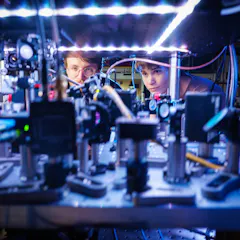
Federal funding cuts in the billions have impacted dozens of universities in the US.

Risk models can’t rely just on the past anymore. A team of geoscientists suggests new ways to forecast evolving hazards in real time as cascading disaster risk worsens.

Changes made to comply with executive orders could interfere with the mission of a program that has historically helped some of the people who most need a hand.
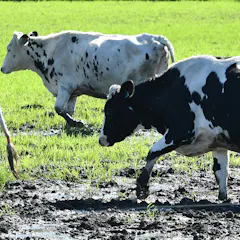
Industry figures have warned consumers to prepare for price rises, amid expected shortages of milk, butter and cheese.

Forecasters already patch together very rough estimates, and ending NOAA’s ‘billion-dollar disasters’ list means less access to insurance data. Texas’ state climatologists explain why that matters.
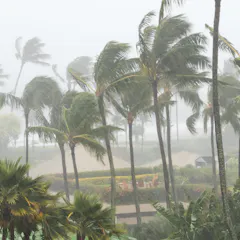
A damaged home and the psychological stress that comes with living through a major cyclone can prompt people to buy private health insurance.
Top contributors
-

Professor of Geology and Environmental Geosciences, University of Dayton
-
Honorary Professor of Hazards and Disaster Risk Sciences, University of Sydney
-
Professor of Climate Science, UMass Lowell
-
Associate Professor of Landscape Architecture and Urban Planning, Texas A&M University
-
Professor of Disasters and Health, UCL
-
Professor Emeritus of Geography, Louisiana State University
-
Clinical Assistant Professor of Education, Health and Behavior Studies, University of North Dakota
-
Professor of Political Science, Public Policy and Urban Affairs, Northeastern University
-
Scientia Professor and ARC Laureate Fellow, Kaldor Centre for International Refugee Law, UNSW
-
Professor of Geography, University of Tennessee
-
Professor of Earthquake Science, The University of Melbourne
-
Associate Professor of Civil Engineering, Boise State University; United Nations University
-
Professor of Public Administration, Binghamton University, State University of New York
-
Associate Professor of Human Geography, University of Tasmania
-
Principal Investigator FiRES Project (SNSF Consolidator Grant), ETH Zürich, Switzerland // Honorary Associate Professor, University of Wollongong, Australia.