

Prisons and jails are difficult to evacuate when wildfires or storms approach. Many of these facilities lack evacuation plans and may keep incarcerated people on-site instead of moving them to safety.
Articles on Natural disasters
Displaying 121 - 140 of 694 articles
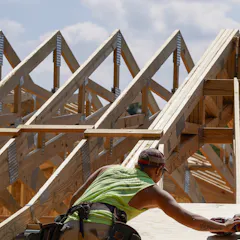
In interviews with residents and builders after disasters from Hawaii to Colorado to Puerto Rico, an engineer and policy specialist found people often overestimating the cost of building back better.

To prepare for more intense floods supercharged by climate change, we have to build infrastructure able to tolerate new extremes
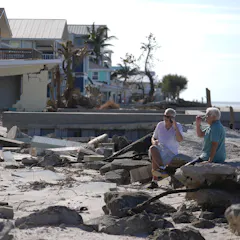
FEMA’s recovery work after Helene and Milton has been hampered by misinformation. Here’s what the agency actually does to help people displaced by disasters.

A report into the insurance sector’s response to the 2022 floods outlined a detailed pathway to reform. But these steps alone won’t solve the growing problem posed to Australian households by climate change.

The islands’ vulnerability has roots deep in the exploitative systems forced on them by colonialism, from slave-based land policies to ill-suited development that put lives in harm’s way.
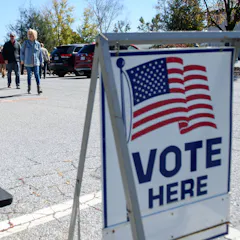
As Florida and North Carolina change voting rules because of the hurricanes, they might face legal challenges – and open the doors to false claims of election fraud.

In 1935, a hurricane devastated the Florida Keys, killing over 400 people, many of them World War I veterans. Ernest Hemingway joined the relief efforts – and became enraged at government inaction.
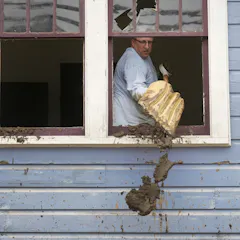
Disasters such as hurricanes Helene and Milton often hit low-income and other disadvantaged groups hardest. 2 policy experts suggest ways long-term aid could help.

Disaster relief requires cooperative, healthy relationships between the president, federal agencies and state, local and tribal governments. But with politicians in the mix, trouble can happen.
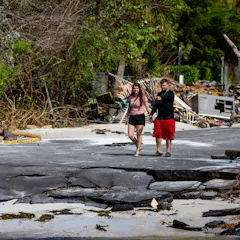
Natural disasters create practical challenges for voters and election administrators. But in some cases, voters can also pin the blame on the government, or judge a candidate by the federal response.
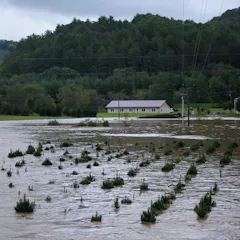
If your area experiences a 1,000-year rainfall event, don’t assume that you’re off the hook for the next 999 years.
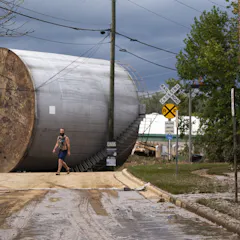
People living near these industries, as well as emergency responders, often have few details about the chemicals inside. New interactive maps pinpoint the risks.
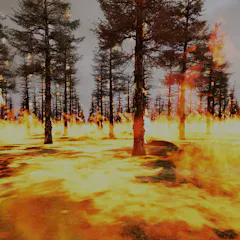
iFire allows firefighters and emergency responders to virtually teleport into a burning landscape and train for the real thing.
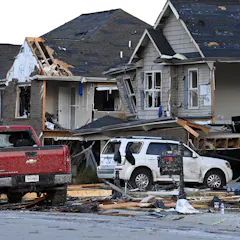
Insurers are raising rates quickly, and it’s not just in California and Florida. They’re often shrinking coverage at the same time.
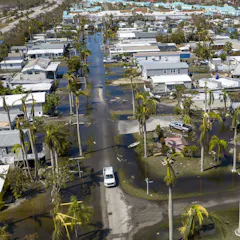
Fast population growth has left more people in flood-prone areas of Gulf Coast communities, including Houston and New Orleans. Often, those residents at most risk are the most socially vulnerable.

The vast majority of damage to residential buildings during flooding occurs in basements. Rather than rebuilding identically after a disaster, we need to build better.

Here’s how our understanding of underwater avalanches is changing.

Insurance companies will need to be innovative and explore new policy options as they manage the growing risk to homes from climate change and natural disasters.

A town hit hard by two hurricanes, downpours and a deep freeze, all in the midst of a pandemic, offers crucial lessons for everyone’s disaster planning and recovery.
Top contributors
-

Professor of Geology and Environmental Geosciences, University of Dayton
-
Honorary Professor of Hazards and Disaster Risk Sciences, University of Sydney
-
Professor of Climate Science, UMass Lowell
-
Associate Professor of Landscape Architecture and Urban Planning, Texas A&M University
-
Professor of Disasters and Health, UCL
-
Professor Emeritus of Geography, Louisiana State University
-
Clinical Assistant Professor of Education, Health and Behavior Studies, University of North Dakota
-
Professor of Political Science, Public Policy and Urban Affairs, Northeastern University
-
Scientia Professor and ARC Laureate Fellow, Kaldor Centre for International Refugee Law, UNSW
-
Professor of Geography, University of Tennessee
-
Professor of Earthquake Science, The University of Melbourne
-
Associate Professor of Civil Engineering, Boise State University; United Nations University
-
Professor of Public Administration, Binghamton University, State University of New York
-
Associate Professor of Human Geography, University of Tasmania
-
Principal Investigator FiRES Project (SNSF Consolidator Grant), ETH Zürich, Switzerland // Honorary Associate Professor, University of Wollongong, Australia.