

Evacuations in the face of a wildfire, hurricane or other disaster are stressful and can take more time than you might expect. Here’s why practice helps and what to think about.
Articles on Natural disasters
Displaying 21 - 40 of 694 articles

The federal government’s role in disaster management has been to provide some funding. However, that limited role can lead to poor co-ordinaton.
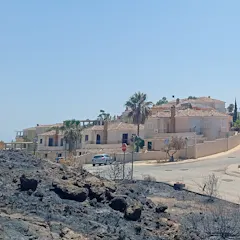
Deadly fires in Almería, Spain, have shown that firefighting alone is not enough – people need to be properly prepared.
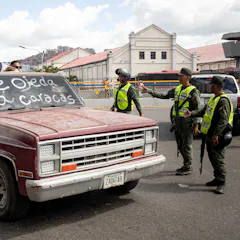
The armed forces are at the heart of the disaster response on Venezuela’s coast, just like they were in 1999.
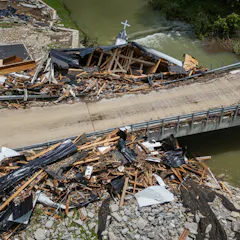
Increasing flash flooding is exhausting communities as they’re hit again and again.
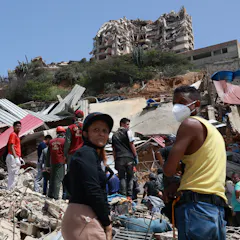
Two physicians discuss the ongoing earthquake relief efforts in their home country of Venezuela and explain what the healthcare system was like before the disaster.
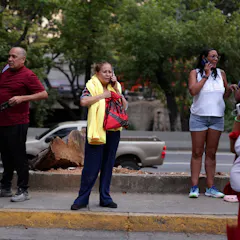
Where the State is failing, Venezuelan citizens and exiles are proving vital to relief efforts.
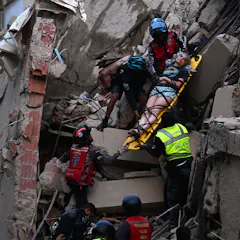
If you want to help, an aid expert advises you to donate cash to nonprofits involved in local rescue and recovery efforts.
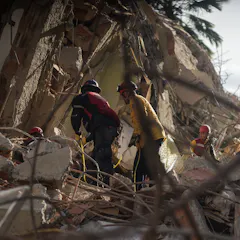
The earthquakes represent a politically perilous moment for Venezuela’s interim president, Delcy Rodríguez.
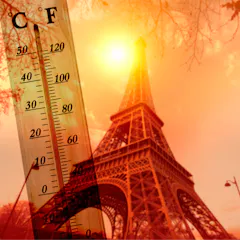
As people across Europe are having to acclimatise to an unprecedented heatwave, coordinated responses for tackling extreme heat need to come from the top, and there’s no time to lose.
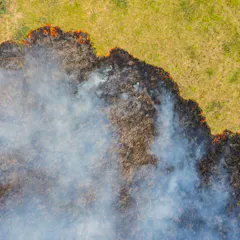
Studying the scale and intensity of previous fires can help us to detect thermal hotspots earlier and support faster, smarter crisis response and post-fire restoration.
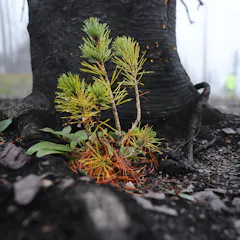
The dead remains of foundation species can boost or deter how well future generations are able to grow and thrive.

Subsidized insurance makes waterfront property seem safer than it is for wealthier buyers, while many low-income homeowners face repeat disasters with no help.
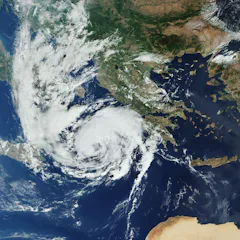
Freak tropical-like storms are highly sensitive to climate change and as a result, could be coming soon to the Mediterranean.

The tsunami struck just 12 hours after a cruise ship had left the fjord, rattling the tourism industry.
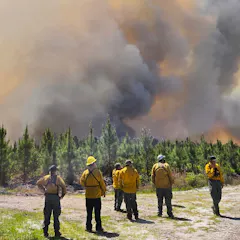
The southeastern US has been in drought for months. With the wind and unusually low humidity, it’s facing perfect conditions for wildfires spreading.
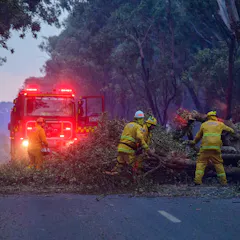
Extreme weather events are increasingly coming in waves, giving communities just days or hours to recover before the next disaster hits.
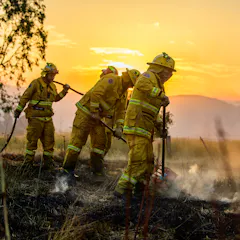
The latest State of the Climate report paints a grim picture of global warming. But by reducing our emissions and fossil fuel use, we can still slow it down.

When fires and floods hit, Aboriginal communities are often left to recover without much, if any, government support.
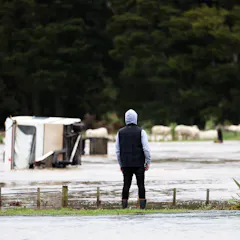
Post-disaster reviews show NZ repeats the same warnings. Breaking the cycle means stronger laws, clearer responsibilities and greater funding.
Top contributors
-

Professor of Geology and Environmental Geosciences, University of Dayton
-
Honorary Professor of Hazards and Disaster Risk Sciences, University of Sydney
-
Professor of Climate Science, UMass Lowell
-
Associate Professor of Landscape Architecture and Urban Planning, Texas A&M University
-
Professor of Disasters and Health, UCL
-
Professor Emeritus of Geography, Louisiana State University
-
Clinical Assistant Professor of Education, Health and Behavior Studies, University of North Dakota
-
Professor of Political Science, Public Policy and Urban Affairs, Northeastern University
-
Scientia Professor and ARC Laureate Fellow, Kaldor Centre for International Refugee Law, UNSW
-
Professor of Geography, University of Tennessee
-
Professor of Earthquake Science, The University of Melbourne
-
Associate Professor of Civil Engineering, Boise State University; United Nations University
-
Professor of Public Administration, Binghamton University, State University of New York
-
Associate Professor of Human Geography, University of Tasmania
-
Principal Investigator FiRES Project (SNSF Consolidator Grant), ETH Zürich, Switzerland // Honorary Associate Professor, University of Wollongong, Australia.