

With extreme weather and glacier melt predicted to increase, neighbouring nations will need to act together to prevent deaths.
Articles on Floods
Displaying 1 - 20 of 532 articles
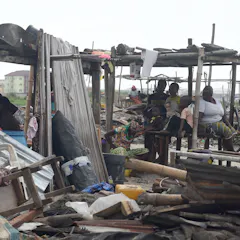
Residents whose homes cluster along waterways, canals and shorelines have built organised systems for living with climate change.
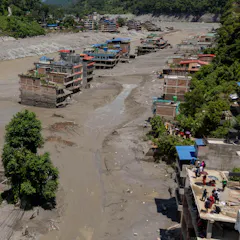
The problem wasn’t the volume of emergency information – it was who it came from, and how it was delivered.
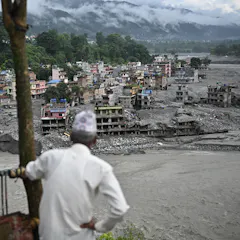
At least 119 countries have asked for aid from the fund set by major greenhouse gas emitting nations four years before the deadly Nepal flood. It has paid zero claims.
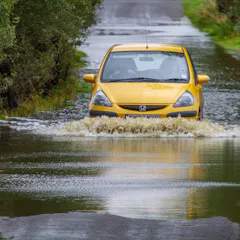
While deep water immobilises a vehicle, flowing water can take a car downstream.
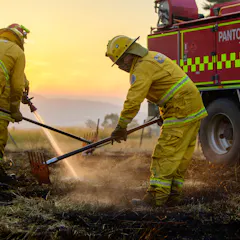
Over the past 12 months, the federal government has approved multiple fossil fuel projects and cut climate science funding.
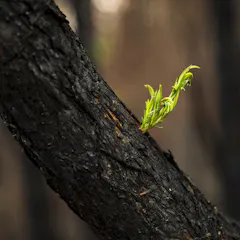
Global warming is set to surpass the 1.5°C limit if governments worldwide fail to act.

Around half of the glacier ice in the Himalayas (equivalent to about two billion Olympic swimming pools) could melt by the end of this century.
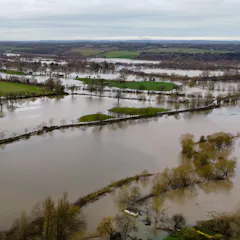
We have built the system to shed much of the surplus rather than keep it. We allow a wet winter to rush away, then ration what remains through a dry summer.
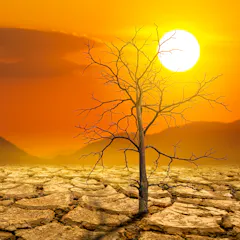
The world is likely to pass 1.5°C of warming. Africa faces worse heat, drought and floods, but faster cuts to emissions can still limit the overshoot damage.
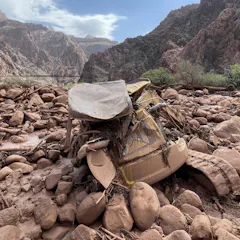
After the deadly Grand Canyon flood, a geologist and avid hiker explains what nature lovers need to prepare and watch for to stay safe.
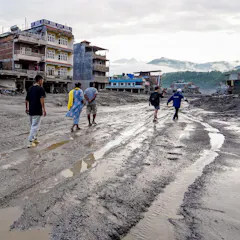
How do you warn people downstream about fast-moving hazards that can change form and cross borders?

The proportion of a watershed that is logged isn’t the only factor that determines flood risk. The landscape and climate matter too.
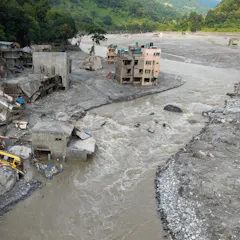
Rock-ice avalanches like the one which caused catastrophe in Nepal and Tibet (China) are not new. But warmer conditions make them more likely.
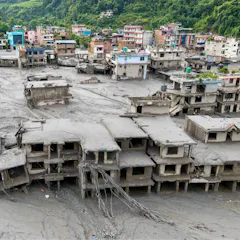
A geologist explains how thawing permafrost and melting ice are increasing the risk of destructive floods in the Himalayas and other high mountain regions around the world.

A catastrophic flash flood ripped through local villages and has claimed hundreds of lives.
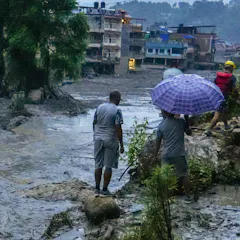
One disaster can create the conditions for the next.
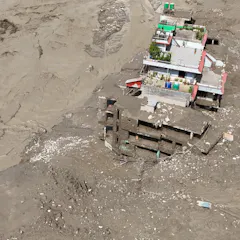
A group of 50 Himalayan hazard experts is providing rapid analysis of the event. Here’s what they’ve found so far.
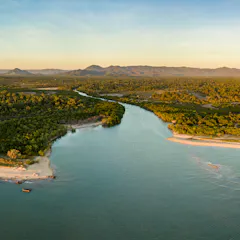
Sediment and nitrogen runoff carried by rivers is a major challenge to the Great Barrier Reef. Science confirms efforts to improve water quality are paying off.
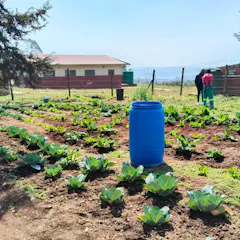
In a rural South African village, climate action is influenced by ubuntu: the belief that people are connected and have a responsibility to one another.
Top contributors
-

ARC Future Fellow and Associate Professor in Climate Science, ARC Centre of Excellence for 21st Century Weather, The University of Melbourne
-
Regius Professor of Meteorology and Climate Science, University of Reading
-
Professor of Environmental Planning, University of Waikato
-
Professorial Fellow, University of Canberra
-
Senior Lecturer, Climate Science and Science Communication, The University of Melbourne
-
Senior Research Associate, UNSW
-
Associate Professor in Environmental Science, Western Sydney University
-
Clinical Associate Professor, School of Medical Science & Sydney Infectious Diseases Institute; Principal Hospital Scientist, University of Sydney
-
Associate Professor, School of Civil, Environmental and Mining Engineering, Adelaide University
-
Senior Research Associate, Institute for Environment and Human Security (UNU-EHS), United Nations University
-
Professor emeritus, The University of Melbourne
-
Associate Professor, Macquarie University
-
Climate Scientist, Australian Bureau of Meteorology
-
Senior Research Fellow, The University Centre for Rural Health, University of Sydney
-
Adjunct Professor of Environmental Geography, CQUniversity Australia