

With extreme weather and glacier melt predicted to increase, neighbouring nations will need to act together to prevent deaths.
Articles on Disaster
Displaying 1 - 20 of 198 articles
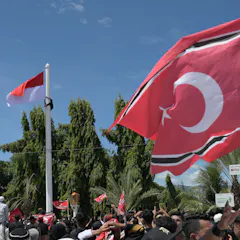
A decades-long insurgency in the Indonesian province ended after 2004’s devastating tsunami. But pro-independence talk is on the rise again.
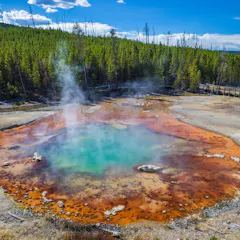
Anybody within the eruption zone would be pulverised by blasts, crisped by the heat, or asphyxiated by ash.
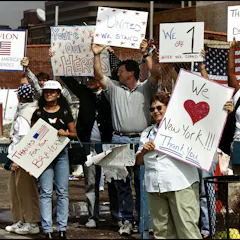
Decades of disaster research show how catastrophes strain communities – and reveal the connections that help people endure.
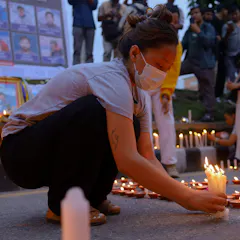
As a supporter or friend, you don’t need to have the answers, and you shouldn’t speculate. Here’s how to just be there and offer practical support.

Evacuations in the face of a wildfire, hurricane or other disaster are stressful and can take more time than you might expect. Here’s why practice helps and what to think about.

Rather than simply recounting history, each new version reworks a shared cultural template for contemporary audiences.
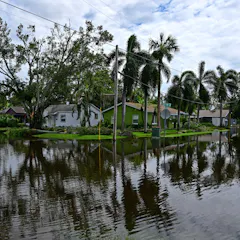
Florida’s current approach to insurance is forcing those who can least afford it to bear the cost of the climate crisis. But different approaches are available.
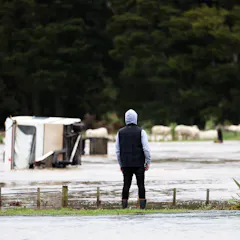
Post-disaster reviews show NZ repeats the same warnings. Breaking the cycle means stronger laws, clearer responsibilities and greater funding.

After record rains devastated Lismore in 2022, many businesses have rebuilt with the next flood in mind – from waterproof interiors to running practice evacuations.
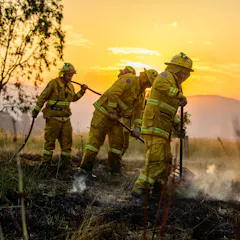
People who work in emergency services, such as firefighters, are more likely than others to develop symptoms of anxiety, depression and post-traumatic stress.
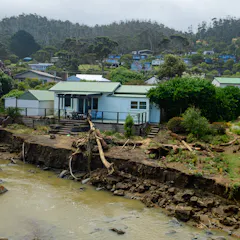
We have for too long persisted with approaches that seek to persuade, instruct, or direct people toward predetermined behaviours. Here’s a better way.

We know that heatwaves often trigger bushfires. But predicting when and where large fires will break out is getting more difficult with a warming climate.

Australians are installing home batteries at record rates. They could be used not just to cut bills but as a backup after a natural disaster.

After mass violence such as the Bondi beach terror attack, distress does not stop with those directly affected.
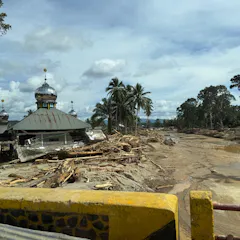
Extreme rain wasn’t the only cause of Sumatra’s deadly floods. Years of forest loss, eroded soils, and weakened watersheds turned a storm into a tragedy — one that could repeat.

Wealthy countries promised billions of dollars to help developing nations adapt to climate change, but the result rests on a shaky foundation of fuzzy accounting.
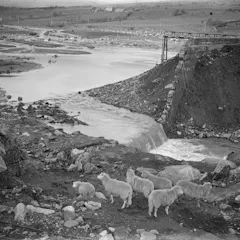
A century after a dam burst in Dolgarrog, killing 16 people, the Welsh village still lives with the legacy that reshaped UK safety laws and its own identity.
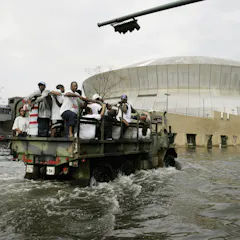
The 2005 hurricane was a disaster made worse by a lack of coordination and communication among governments and emergency leadership on the ground.

Current models for weather forecasting tend to ignore outlier data; learning how to incorporate these can help reduce risk and increase community resiliency.
Top contributors
-

Associate Professor of Disaster and Emergency Management, York University, Canada
-
Senior Scientist in Disaster and Climate Risk at Earth Sciences NZ & Senior Research Fellow (adjunct), Humanitarian Emergency and Disaster Management, Charles Darwin University
-
Professor of Geology and Environmental Geosciences, University of Dayton
-
Professor of Disasters and Health, UCL
-
Assistant Professor and Co-Director, Center for Emergency Management and Homeland Security, Watts College, Arizona State University
-
PhD Candidate in Political Science and International Relations, Queen's University, Ontario
-
Professor of Public and International Affairs, former Director of the Center for Disaster Management, University of Pittsburgh
-
Professor of Computer Science and Engineering, Texas A&M University
-
Professor of Oceanography, University of Miami
-
Associate Professor, Macquarie University
-
Professor and Inaugural Judith Neilson Chair in Architecture, UNSW
-
Senior Research Associate, Institute for Environment and Human Security (UNU-EHS), United Nations University
-
Associate Professor, Florida Institute for Built Environment Resilience, University of Florida
-
Professor of Climate Science, UMass Lowell
-
Associate Professor of Civil Engineering, Boise State University; United Nations University