

By observing the tree-ring-like growth records present in volcanic crystals, geologists are able to track volcanic activity and reconstruct the steps leading up to eruptions.
Articles on Earthquakes
Displaying 1 - 20 of 335 articles
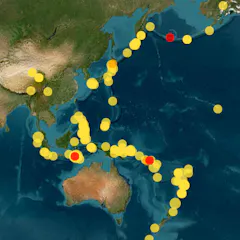
Scientists have been able to catalogue the largest earthquakes for a very long time.
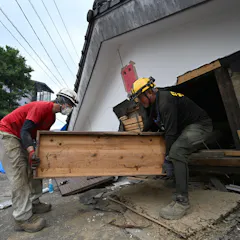
Very high temperatures during and after a disaster needs to be factored into emergency planning.
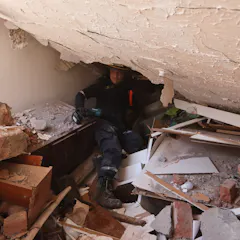
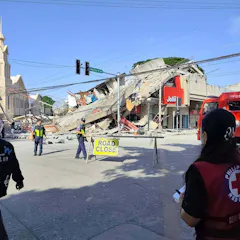
Many buildings in Colombia have thin concrete walls, which makes them extremely vulnerable to collapse.

New research reveals a magnitude 8.5 earthquake is likely to trigger a cascade of problems for NZ’s freight networks. But how many are avoidable?
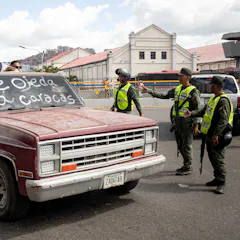
The armed forces are at the heart of the disaster response on Venezuela’s coast, just like they were in 1999.
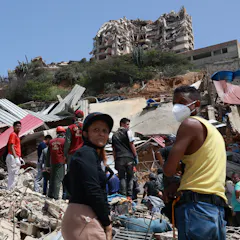
Two physicians discuss the ongoing earthquake relief efforts in their home country of Venezuela and explain what the healthcare system was like before the disaster.
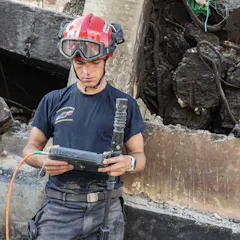
Why it’s still difficult to accurately predict earthquakes.
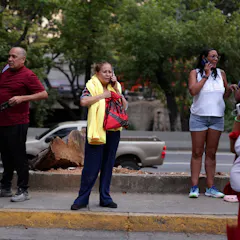
Where the State is failing, Venezuelan citizens and exiles are proving vital to relief efforts.
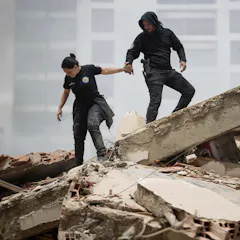
Much of the world’s housing stock predates current building codes.
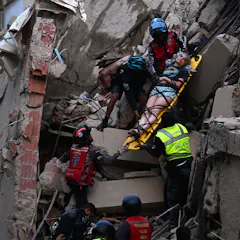
If you want to help, an aid expert advises you to donate cash to nonprofits involved in local rescue and recovery efforts.
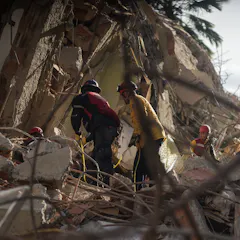
The earthquakes represent a politically perilous moment for Venezuela’s interim president, Delcy Rodríguez.
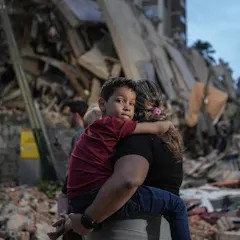
Both faults are along plate boundaries that move in similar ways and have ruptured in enormously destructive earthquakes in the past.
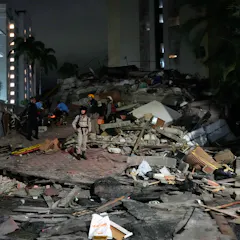
The two deadly earthquakes happened just 39 seconds apart, but were seismologically distinct.
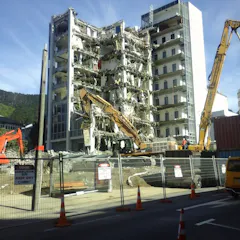
Flat basins are favoured places to build cities. But seismic waves can get trapped in these basins, putting cities at risk from distant earthquakes.
A full-scale earthquake test suggests a new generation of low-carbon timber-based buildings could remain usable after major shaking.
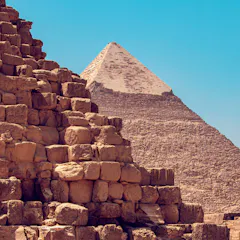
Key features of the famous monument defend it from earthquakes – but we can’t know if that’s what the builders had in mind.

Understanding why some faults creep rather than sticking and causing massive earthquakes is important for gauging the future risk of both earthquakes and tsunamis.
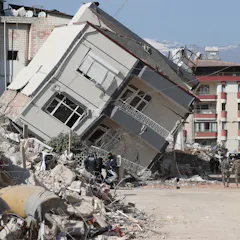
A new study uncovers a hidden pattern of ground motions at the end of big earthquakes that could help scientists and planners identify likely danger zones.
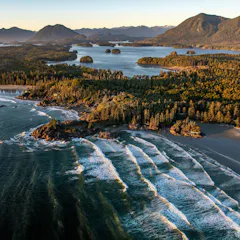
The interpretation that the subduction zone is winding down gets ahead of the science. What the new research actually shows is far more complex and interesting.
Top contributors
-

Professor of Earthquake Science, The University of Melbourne
-
Earthquake Scientist, Monash University
-
Professor in Earth Sciences, Nanyang Technological University, Singapore, and Emeritus Professor of Mineral Physics, University of Cambridge
-
Adjunct Research Fellow, Curtin University
-
Reader in Physical Geography and Natural Hazards, Coventry University
-
Professor of Geophysics, Durham University
-
Professor, Australian National University
-
Honorary Professor of Tsunami Research, PANGEA Research Centre, UNSW Australia, UNSW
-
Honorary Fellow in Structural Geology and Tectonics, The University of Melbourne
-
Senior Scientist in Disaster and Climate Risk at Earth Sciences NZ & Senior Research Fellow (adjunct), Humanitarian Emergency and Disaster Management, Charles Darwin University
-
Professor of Geophysics and Department Head, Colorado State University
-
Redmond Barry Distinguished Professor Emeritus, The University of Melbourne
-
PhD Candidate & Researcher, School of Architecture, Université de Montréal
-
Honorary Professor of Hazards and Disaster Risk Sciences, University of Sydney
-
PhD Candidate in the Department of Earth Sciences, Durham University