
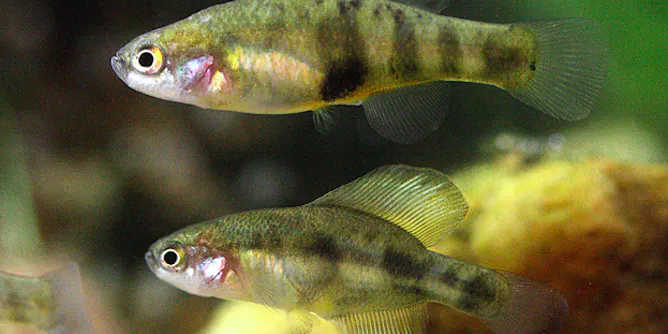
Parents’ DNA try to manipulate one another in a bid to shape junior in their mould.
Articles on DNA
Displaying 321 - 340 of 523 articles
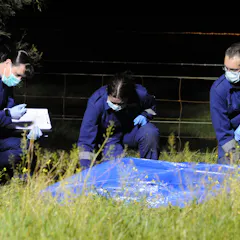
Genetic evidence has become a critical aspect of modern criminal investigations. What are the methods and approaches used in present-day DNA forensics?

Some animals seem to have missing genes – but the reality is a lot more intriguing.

If something goes wrong in pregnancy, a boy baby is more likely to be born malnourished or stillborn than a girl. This may have an evolutionary basis.

Most people will be much better off putting the money spent on a genetic test towards a gym membership, or a pair of trainers.

Massive online DNA databases can be used as a resource to discover viruses – even if the data had not been explicitly collected for that purpose.

A world first study shows CRISPR can remove a target gene from early stage human embryos. But with the advance in science come weighty ethical dilemmas.

Researchers who hold the world record for storing and retrieving data in DNA explain how the building blocks of life can be used to hold digital information as well.

Two US researchers have traced the majority of cancers to DNA replication errors during our natural cell replacement. Their finding asks for a renewed inquiry into the role of “chance” in cancer.
William Isdale speaks with University of Queensland Professor Peter Koopman about CRISPR technology.
New genetic technologies are letting us look at flu evolution right where it starts: within individual people, while they’re sick.

The daunting complexity of biological data requires tailored visualisation tools to reveal buried insights.
By 2167, DNA barcoding scans will lead to weather-style “biodiversity forecasts,” enabling us to more easily protect and care for the environment.

What’s on your cash? Studies show our money carries everything from pet DNA and old food to E.coli and traces of cocaine.

Converting a DNA sequence into an audio could help us learn something useful about it, like where mutations occur.

Scientists have shown the origins of today’s popular ‘tabby’ cat.

Professor Samir Brahmachari’s innovative Open Source Drug Development allows thousands of researchers to work together to discover novel therapies for under-studied diseases.

According to a new study, the environment, especially traffic-air pollutants, can impact our genes and increase allergy risks prior to birth.
A new research paper reports dangerous side effects in CRISPR-edited mice. Some scientists are pushing back, placing blame for the unwanted mutations on the experiment, not the technique.
Tumour evolution was first identified 40 years ago. We’re finally making good progress with it.
Top contributors
-

Chair, The Conversation Media Group
-
Distinguished Professor, Charles Sturt University
-
Jenny Graves is a Friend of The Conversation.
Distinguished Professor of Genetics and Vice Chancellor's Fellow, La Trobe University
-
Lecturer, Business School & Centre for Policy Futures, The University of Queensland
-
Research fellow, The University of Queensland
-
Author and Honorary Fellow, Centre for History and Philosophy of Science, University of Leeds
-
Professor in Molecular Archaeology, Department of Archaeology and Classical Studies, Stockholm University
-
Professor of Microbiology, School of Medicine, University of Washington
-
Head, Molecular Medicine Laboratory, WEHI (Walter and Eliza Hall Institute of Medical Research)
-
Deputy Director and ARC Future Fellow, Australian Centre for Ancient DNA, Adelaide University
-
Ethical, Legal & Social Adviser in Public Health Genomics, Monash University
-
Doctoral Student in Biochemistry, University of Washington
-
Senior Lecturer in Population, Medical and Evolutionary Genomics, Lund University
-
Professor of English, York University, Canada
-
Assistant Professor in Biomedical Ethics, National University of Singapore