
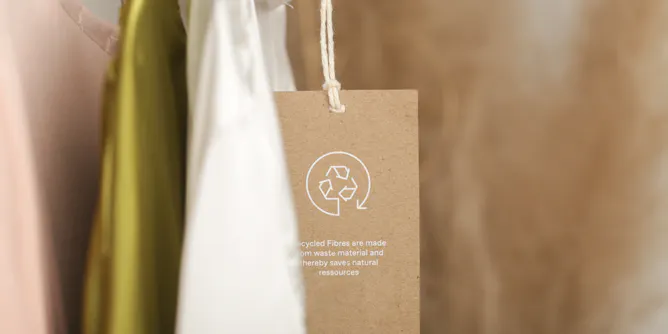
Research shows that green innovations for textiles can end up making consumers buy more.
Articles on Circular economy
Displaying 21 - 40 of 154 articles

It’s fine if steps towards circularity are small – but progress must be consistent.

Proper forest management can boost rural economies, and prevents fires from starting in the first place.
Most emissions can be avoided if trolleys are kept in circulation.
Construction waste can be turned into valuable new materials.
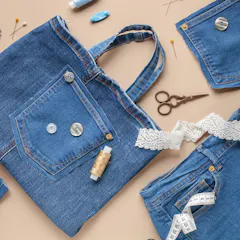
Local efforts to transform discarded garments and textile waste into valuable products are evidence that fashion and degrowth are compatible.

A process called “exaptation” places repurposing resources and adaptations at the heart of evolution; what if our homes were designed on the same basis?

Accelerated resource development in Canada should not burden future generations with environmental destruction.
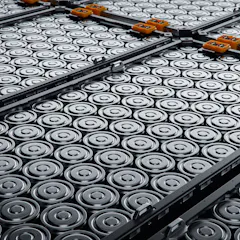
Old EV batteries have huge potential. But it’s not going to be easy to realise this.

A new Productivity Commission report finds regulations and costs are slowing Australia’s progress in becoming a circular economy.
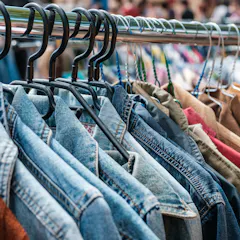
As rich countries move towards more sustainable practices, it’s vital to include communities whose livelihoods could be damaged.
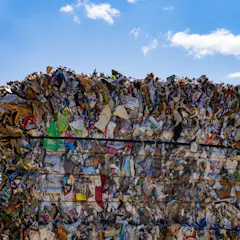
We don’t recycle enough! Cities, as the main sources of consumption and waste production, are strategically positioned to reverse this trend.

Building a circular economy is critical because wasted materials and energy not only damage the environment, but are also growing increasingly scarce and expensive.

Recent research has found several ways in which buying pre-loved beats traditional retail.
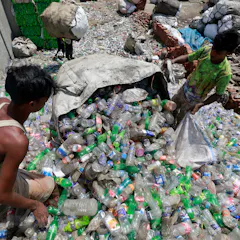
To be truly fair, a global treaty on plastic pollution must tackle the inequalities at the heart of current recycling and waste management systems.
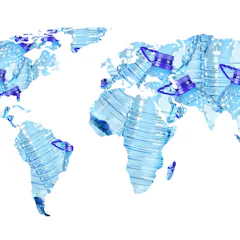
Global action has always been the missing piece of the picture, as the plastics economy transcends national boundaries. A new treaty could change that.
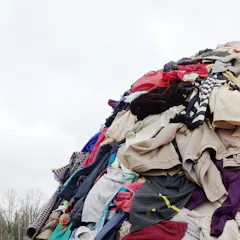
We give or throw away more and more clothes every year, overwhelming charities and triggering large exports of secondhand clothing. There’s a better way
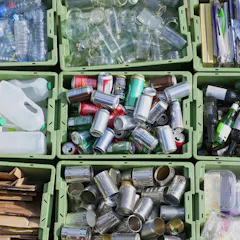
New Zealand food manufacturers are beginning to embrace the circular economy but are up against a lack of government support, customer awareness and low-emission freight options.

Many Australians are involved in Buy Nothing groups that allow locals to ask for and give away unwanted stuff for free. They bring circular economy principles to life, but depend heavily on women.
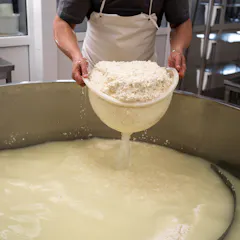
Millions of litres of nutrient-rich whey go to waste every year. Collaboration can help turn this waste stream into useful products
Top contributors
-

Associate Professor and Research Director, Institute for Sustainable Futures, University of Technology Sydney
-
Associate Professor, Global Management Studies, Toronto Metropolitan University
-
Professor of Technology Management and Circular Economy, Kingston University
-
Senior Lecturer in Urban Planning, School of Architecture and Cities, University of Westminster
-
Senior Lecturer, Auckland University of Technology
-
Lecturer in Circular Economy and Sustainable Transformations, University of Edinburgh
-
Professor, ESCP Business School
-
Reader in Fashion, Marketing and Sustainability, Glasgow Caledonian University
-
Professor, Harvard University
-
Senior Lecturer, School of Property, Construction and Project Management, RMIT University
-
Chair professor - Circular Economy, The University of Melbourne
-
Professor of Applied Environmental Science, University of Southampton
-
Professor of Management, Rochester Institute of Technology
-
Professor, Keevil Institute of Mining Engineering, University of British Columbia
-
Associate Dean and Head of Project Management, RMIT University