

The ‘pots to planes’ appeal in the summer of 1940 helped inspire a mass recycling effort, but problems soon emerged.
Articles on Circular economy
Displaying 101 - 120 of 154 articles

The COVID-019 pandemic has boosted use of disposable packaging and personal protective equipment, at the same time that many recycling programs are facing budget cuts. The upshot: More plastic trash.

We shouldn’t try to banish waste entirely. We need to rethink it.

New research examines the effectiveness of sustainability leaders making the climate crisis central to their business model and ethos.

From take-make-waste to reuse, repair and remanufacture.
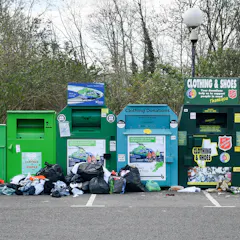
Lockdown has exposed real problems with the circular economy which urgently need to be addressed.
Taxes designed to encourage a green transition can instead penalise smaller businesses and ensure they’re left behind.
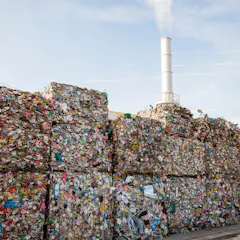
Burning non-recyclable waste to generate energy sounds like a great idea – but incineration plants need an ongoing waste stream to be viable, which perpetuates the make-use-dispose mentality.
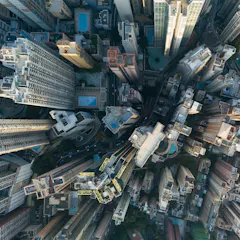
Old buildings aren’t just waste – the materials can be reused to create the cities of the future.
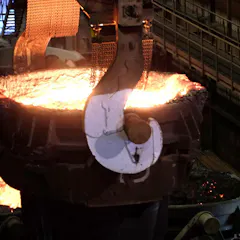
Europe recycles 70% of its steel, but much is exported, turning what should be a circular process into a linear one. Instead, materials need to be circularity-ready the moment they’re manufactured.
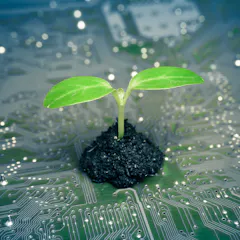
Innovation in digital technology is accelerating – it has massive untapped potential for tackling the climate crisis.
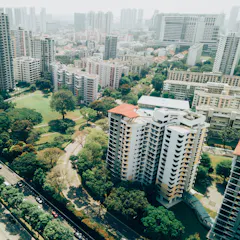
As the population of the world’s cities grows, so too does resource and energy use as well as waste generation. We can combat these issues with a circular economy that uses nature as a template.
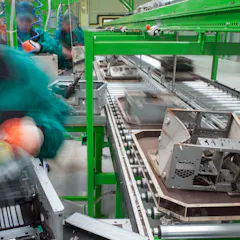
Some circular economy business models are based on case studies, others are more theoretical, yet it’s hard to get a comprehensive overview. Why? Simple: Because the opportunities are nearly endless.

In a growing world with an increasing population with ever-greater needs, it is high time to find a balanced solution for our activities. Nature provides us with the template.
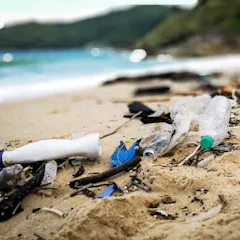
The world is on the brink of creating irreversible damage to the environment if better policy isn’t rolled out. Read the findings of the UN report.
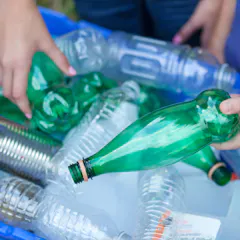
China, which once processed much of the world’s scrap, has slashed imports of “foreign garbage.” What can the US do to step up recycling at home?
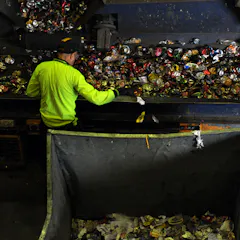
Too much recyclable packaging is still finding its way into landfill - and plastic is the biggest culprit, with two-thirds going unrecovered, according to a new analysis.
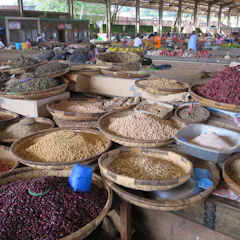
Across Africa less than 10% of the population is connected to a sewer system. But the waste could be used elsewhere.

With all those blue recycling bins around you might think we are experts at recycling plastics. The truth is, that though many plastic items can be recycled, very few are. So what’s the solution?
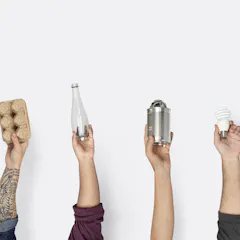
Recycling on a large scale is a Bronze Age invention.
Top contributors
-

Associate Professor and Research Director, Institute for Sustainable Futures, University of Technology Sydney
-
Associate Professor, Global Management Studies, Toronto Metropolitan University
-
Professor of Technology Management and Circular Economy, Kingston University
-
Senior Lecturer in Urban Planning, School of Architecture and Cities, University of Westminster
-
Senior Lecturer, Auckland University of Technology
-
Lecturer in Circular Economy and Sustainable Transformations, University of Edinburgh
-
Professor, ESCP Business School
-
Reader in Fashion, Marketing and Sustainability, Glasgow Caledonian University
-
Professor, Harvard University
-
Senior Lecturer, School of Property, Construction and Project Management, RMIT University
-
Chair professor - Circular Economy, The University of Melbourne
-
Professor of Applied Environmental Science, University of Southampton
-
Professor of Management, Rochester Institute of Technology
-
Professor, Keevil Institute of Mining Engineering, University of British Columbia
-
Associate Dean and Head of Project Management, RMIT University