

New research suggests municipalities could improve recycling and composting rates by changing how often they collect garbage and organics.
Articles on Waste management
Displaying 1 - 20 of 85 articles

Circular economies don’t follow the ‘take, make and dispose’ model but try to keep products in use for as long as possible by reusing and recycling them.

Understandably, some residents of the affected Melbourne councils are unhappy about the escalating dispute. But these are lawful, protected actions.

Kenya faces extreme weather crises. Humanitarian aid must be part of the solution.

A research team has paved plastic-infused roads in Texas and Bangladesh, with promising results.
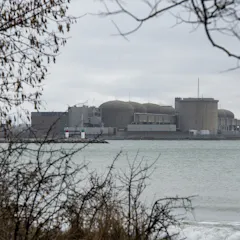
Such repositories raise complex ethical questions around public safety, particularly given the millennia-long timescales of nuclear waste.
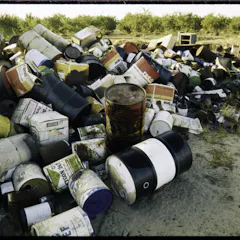
Critics of environmental protection laws may have forgotten how much progress has been made.

Many multi-unit residential buildings are designed or managed in ways that make recycling and proper waste disposal difficult.
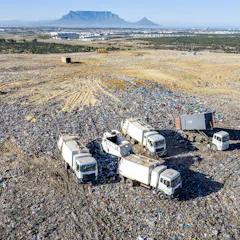
In South Africa, landfill practices impose a huge burden on the economy, environment and communities.
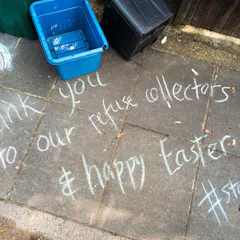
Instead of a collective shift towards real social solidarity, the pandemic exacerbated socio-economic divisions.

International efforts to reach agreement on reducing plastic pollution are disappointing. But we don’t need to wait for a treaty to make changes in our own lives.
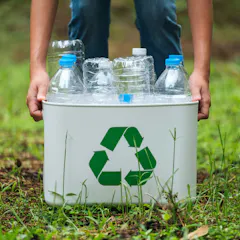
Offering people the chance to win a prize instead of only receiving their deposit back could incentivize more people to recycle more often.

Varying approaches to waste definition and management have made it a challenge to track what happens to the waste we recycle.
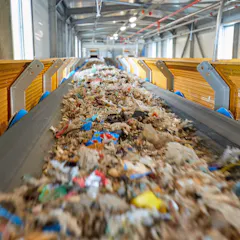
Australia stands to benefit from burning waste to produce electricity and heat for homes, but there are potential pitfalls and drawbacks too.
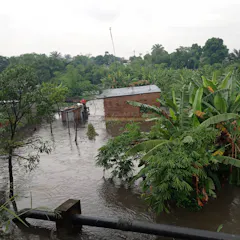
Periodic flooding in Kinshasa is a symptom of uncontrolled urbanisation.

The PFAS in lithium-ion batteries is a major obstacle to recycling or disposing of these batteries safely. But we have a way to fix this problem.
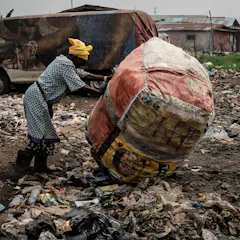
In Nigeria, informal collectors of plastic bottle waste are central to resolving the clash between its environmental costs and economic benefits.
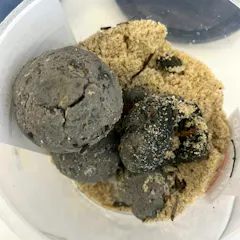
When lumps of black goop washed up Sydney’s beaches, an oil spill was the initial suspect – but a detailed chemical analysis points to sewage as the likely source.

Urban mining recovers valuable resources from the vast amounts of waste cities produce.
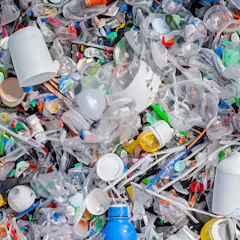
Pinpointing the biggest pollution hotspots helps to design more targeted ways to deal with plastic waste.
Top contributors
-

Senior Lecturer, School of Property, Construction and Project Management, RMIT University
-
Associate Dean and Head of Project Management, RMIT University
-
Professor of Global Environmental Politics, University of California, Berkeley
-
Lecturer, School of Life and Environmental Sciences, Deakin University
-
Senior Principal Research Scientist, Environment, CSIRO
-
Lecturer in Resource Efficiency Systems, School of Civil Engineering, University of Leeds; Imperial College London
-
Research Associate, Department of Civil and Environmental Engineering, Imperial College London
-
Professor of Waste Management, The University of Queensland
-
Professor and Associate Dean, School of Property, Construction and Project Management, RMIT University
-
Research Principal, Institute for Sustainable Futures, University of Technology Sydney
-
Senior Research Fellow, BehaviourWorks Australia, Monash University
-
Research associate, Loughborough University
-
PhD Candidate in Environmental Science, Policy, and Management, University of California, Berkeley
-
Postdoc, University of Copenhagen
-
Research Scientist, Oceans and Atmospheres, CSIRO