
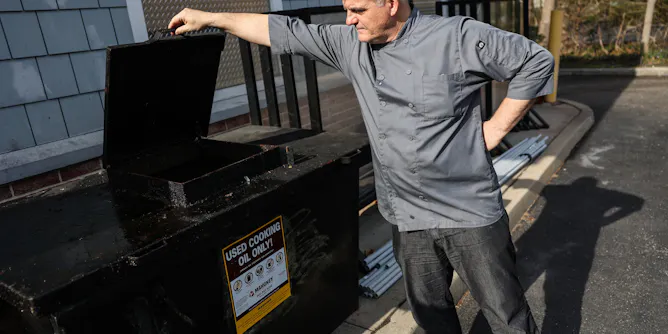
No longer viewed only as waste, used cooking oil is a common ingredient in biofuels.
Articles on Reuse
Displaying 1 - 20 of 32 articles
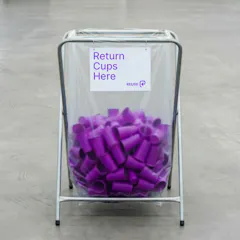
As part of a more effective network of reuse infrastructure, this new symbol could be a catalyst for more effective waste reduction.

Instead of just dumping all your old clothes at a charity shop, here are some tips on what to do first.
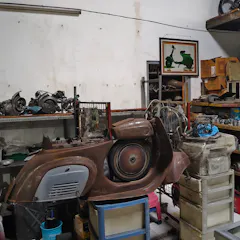
Consumers and companies need help engaging in reuse, repair and other circular practices, which have environmental and economic benefits.
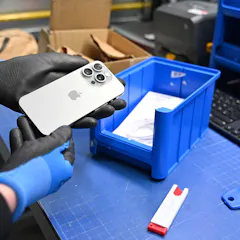
Seeing more refurbished electronic devices on the market? Thank tech innovation – and the government regulation that sparked it.
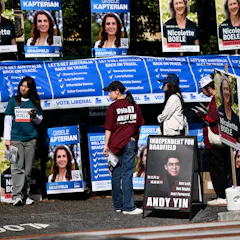
From corflutes and how-to-vote cards to 250,000 pencils, 240,000 volunteer vests and 80,000 ballot boxes, here’s what happens to election materials after polling day.

Strong, light composite materials have revolutionised many sports. But these composites are notoriously hard to recycle
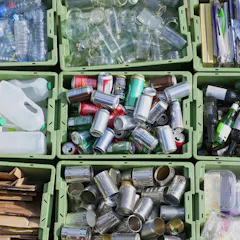
New Zealand food manufacturers are beginning to embrace the circular economy but are up against a lack of government support, customer awareness and low-emission freight options.

Initiating a circular economy can help coastal west African countries to address plastic pollution with a World Bank fund.
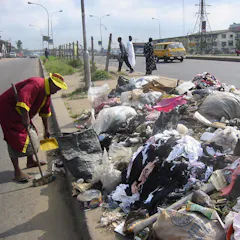
Lagos has a waste problem that can be tackled by adopting a sustainable waste management policy that considers income brackets.

Making less plastic and reusing what exists should be the priority.
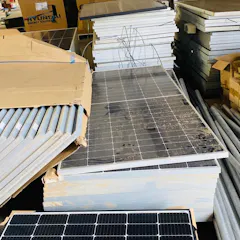
As the energy revolution gains pace, huge numbers of PV panels are already going to landfill. Many are still usable and even those that aren’t contain valuable materials that shouldn’t be discarded.

Humans generate a lot of trash, but there are cheaper and safer ways to handle it than loading it on rockets.

The recovery rate from construction and demolition waste has been rising steadily in Australia. However, the use of recycled materials is still not the norm across the construction industry.
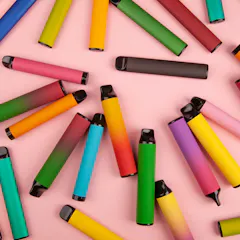
The vaping craze sweeping the globe is leaving a legacy of contaiminated e-waste in landfill while waste management authorities scramble to set up recycling schemes.

Tech companies still make it difficult to get gadgets repaired.

One-tenth of global emissions result from the production and supply of building materials – and the construction process itself.

Allotments and repairing old clothes are just aspects of 1970s life that are making a comeback.

A large-scale survey asked people exactly that. One use of recycled carbon dioxide stood out.
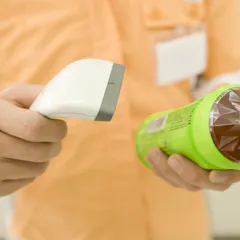
The hard work of eliminating plastic waste must start with businesses.
Top contributors
-

Associate Professor in Arts and Sustainability, University of Portsmouth
-
Senior Science Leader, CSIRO
-
Professor of Management, Rochester Institute of Technology
-
Professor of Chemistry, University of California, Riverside
-
Professor of Sustainable Resource Use, Alpen-Adria University Klagenfurt
-
Associate professor, Curtin University
-
Associate Professor, Global Management Studies, Toronto Metropolitan University
-
Research associate, Loughborough University
-
Doctor of Environmental Science, University of Southampton
-
Associate Professor of Operations Management, Georgia Institute of Technology
-
Professor of Global Environmental Politics, University of California, Berkeley
-
Research Fellow at the Global CO2 Initiative, University of Michigan
-
Professor of Accounting, Adelaide University
-
Professor of Applied Environmental Science, University of Southampton
-
Nottingham Trent University