
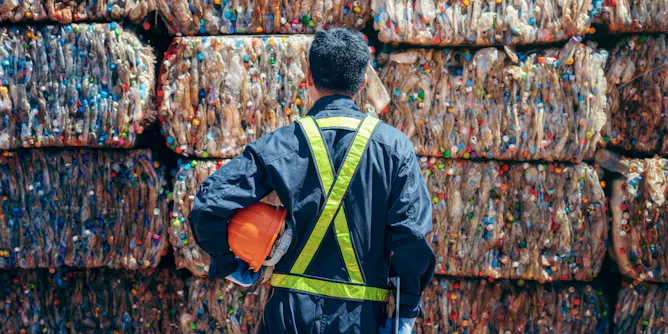
As a sustainability researcher, I know how quickly we could make big changes to reduce plastic pollution. Here’s what we – both individually and globally – should be doing more of, and what to avoid.
Articles on Circular economy
Displaying 61 - 80 of 154 articles

Using leaves for local food packaging is beneficial for health and the environment.
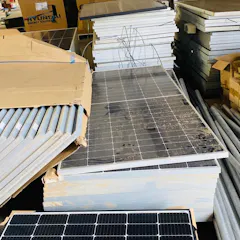
As the energy revolution gains pace, huge numbers of PV panels are already going to landfill. Many are still usable and even those that aren’t contain valuable materials that shouldn’t be discarded.

Companies like it when your phone breaks and you have to buy another. But we’d all save a lot of money if we could actually repair the things we purchased.

The pandemic has seen more and more full-time employees working fully remotely – and seeking out cheaper, warmer places in which to do so. Property price hikes show the impact on local communities.
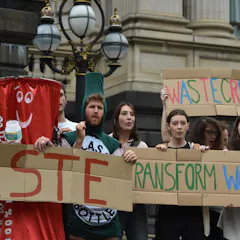
Experimenting with low-waste living shows it’s not easy being green. But householders can help policymakers design better waste management systems.
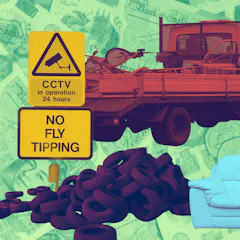
Criminals want your waste. Here’s what you can do to help tackle illegal fly-tipping.
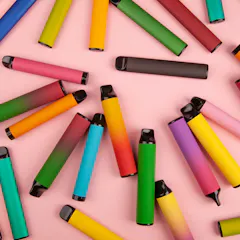
The vaping craze sweeping the globe is leaving a legacy of contaiminated e-waste in landfill while waste management authorities scramble to set up recycling schemes.

The planet is entering its sixth mass extinction event. This global nature summit is our best change to stop this tide of destruction.
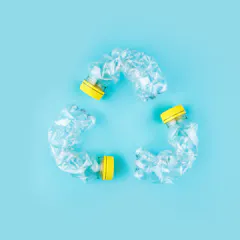
Product standards have real power. We could use them to reduce waste at every part of the plastic lifecycle.
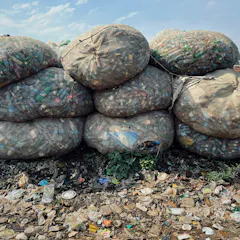
It’s important to look at the whole value chain in the plastics economy, starting with design of products that can be reused and recycled.

Japanese people had to rely totally on materials already present within the country.
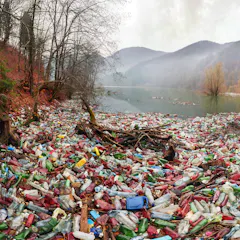
A global treaty on plastic pollution must incentivize a take-make-reuse waste management system and include quantitative targets based on geography-specific emissions.
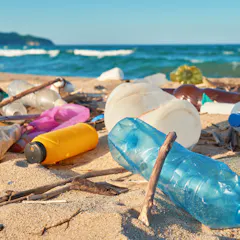
Plastic waste is a huge problem. To fix it, we need systemic change, not just a focus on picking it up or recycling plastic once it becomes rubbish.
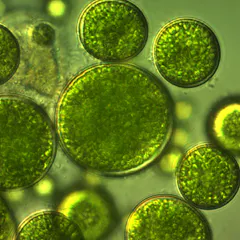
The inside of story of a pioneering programme to convert nitrogen into microalgae that can generate sustainable animal feed.
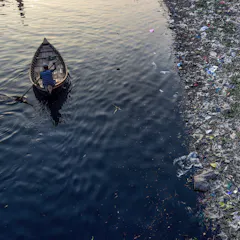
Representatives of 175 countries voted to start developing a global treaty to reduce plastic waste. Treaties addressing mercury, long-range air pollution and ozone depletion offer some lessons.
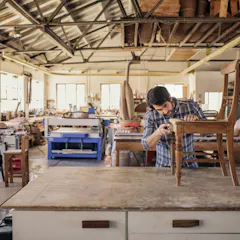
New production methods, consumer trends and good ideas have the potential to bring manufacturing back into city centres. Can it coexist with housing?

There are myriad benefits to recycling human waste but our reluctance seems to be based on distaste.

Canada could become a global leader in the supply of materials needed for renewable energy systems if it finds ways to control the environmental footprints associated with their extraction.

It’s not just about finding bargains.
Top contributors
-

Associate Professor and Research Director, Institute for Sustainable Futures, University of Technology Sydney
-
Associate Professor, Global Management Studies, Toronto Metropolitan University
-
Professor of Technology Management and Circular Economy, Kingston University
-
Senior Lecturer in Urban Planning, School of Architecture and Cities, University of Westminster
-
Senior Lecturer, Auckland University of Technology
-
Lecturer in Circular Economy and Sustainable Transformations, University of Edinburgh
-
Professor, ESCP Business School
-
Reader in Fashion, Marketing and Sustainability, Glasgow Caledonian University
-
Professor, Harvard University
-
Senior Lecturer, School of Property, Construction and Project Management, RMIT University
-
Chair professor - Circular Economy, The University of Melbourne
-
Professor of Applied Environmental Science, University of Southampton
-
Professor of Management, Rochester Institute of Technology
-
Professor, Keevil Institute of Mining Engineering, University of British Columbia
-
Associate Dean and Head of Project Management, RMIT University