

This new open-access tool connects global extraction sites with the ten key metals inside smartphones.
Articles on E-waste
Displaying 1 - 20 of 67 articles

Europe is not facing a scarcity problem but a recovery challenge, and one that can be solved.
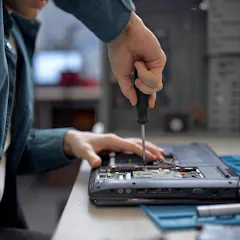
From phones and laptops to coffee machines and earbuds, new legislation is making it easier to fix tech products.

Clever clothing that can sense health issues are not far off, but they could prove hard to recycle or reuse.

An estimated 8 million handheld fans will be purchased in the UK in 2026. Many will end up as discarded electrical waste.

People don’t usually plan to hold onto their old devices, but that’s what many end up doing. Better information about recycling and reselling options could change that.
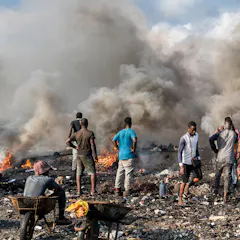
In Agbogbloshie, Ghana, thousands of young women and men burn electronic waste to extract minerals at a cost to their health. They need more protection.
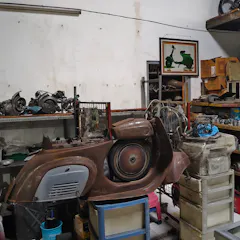
Consumers and companies need help engaging in reuse, repair and other circular practices, which have environmental and economic benefits.
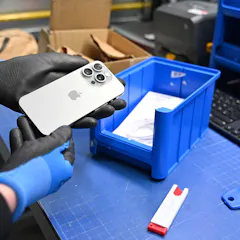
Seeing more refurbished electronic devices on the market? Thank tech innovation – and the government regulation that sparked it.

Schools should provide students with the know-how to challenge our throw-away culture and empower them to become conscious consumers.

The EU energy label for these devices now includes scores aimed at drawing consumers to products that are easier to fix.

The new method could also make small-scale gold mining less poisonous for people – and the planet.

The EU is vulnerable to shortages of materials that are required for clean technologies.
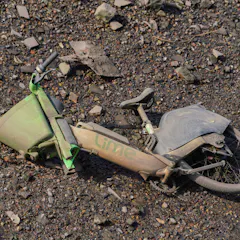
Electric bike batteries can be particularly dangerous and tricky to dispose of.

Inside every smartphone and laptop are tiny specks of valuable materials, many of which are still lost even when you take your old electronics to a recycling center.
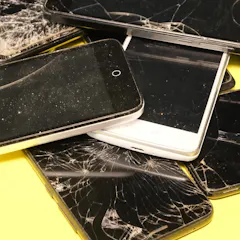
But there are some simple steps you can take to keep your personal information safe.
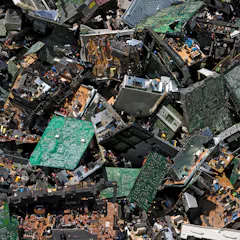
Less than 25% of all e-waste globally gets recycled. That’s because there are many challenges involved – but there is a way forward, too.

Recycling metals from e-waste will be critical as demand for raw materials is likely to outstrip supply in the near future.

Data centres need to expand to support the AI revolution, but that means even more electronic waste.

Urban mining recovers valuable resources from the vast amounts of waste cities produce.
Top contributors
-

Professor of Applied Environmental Science, University of Southampton
-
Honorary Senior Lecturer, Industrial Design, UNSW
-
Professor, Institute for Media and Creative Industries, Loughborough University
-
Senior Lecturer in Sustainability| Business and Accounting Discipline, Charles Darwin University
-
Scientific Researcher, Joint Research Centre (JRC)
-
Research Active Lecturer, Discipline of Psychology, Charles Darwin University, Charles Darwin University
-
Professor, Information and Communications Technology, CQUniversity Australia
-
Professor of Bio-innovation and Enterprise, Coventry University
-
Full Professor of Geography, Memorial University of Newfoundland
-
Research Associate, Hong Kong University of Science and Technology
-
Professor of Environmental Geography, School of Biological Earth and Environmental Sciences, UNSW Sydney, UNSW
-
Professor of Global Environmental Politics, University of California, Berkeley
-
Reader in Forensic Geoscience, Keele University
-
Research Chair, Indigenous Approaches to Environmental Management, Keele University
-
Fellow of The Royal Society of Chemistry (FRSC), Deakin University