
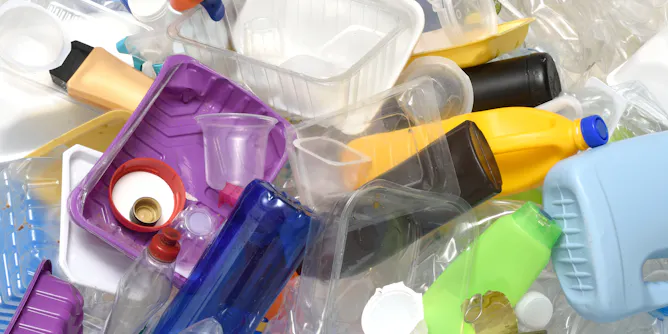
Enzyme proteins can be bred and trained to digest plastics rather than their natural substrates.
Articles on Plastic
Displaying 1 - 20 of 399 articles

A walk along the Kent coast after a storm inspired one of my early works. The shoreline was covered in seaweed, shells, jellyfish – and plastic.
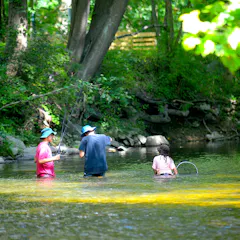
An environmental engineer who mapped microplastic pollution in three of Pennsylvania’s watersheds explains what it means for our health.
We may need to give the human digestive tract more credit for its ability to act as a barrier to microplastics.
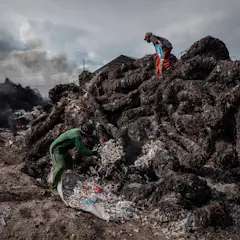
As more countries ban waste imports, plastic waste generators like the US will need to find better solutions. A few states are putting more responsibility on producers.

Fashion made out of recycled polyester mostly uses plastic bottles. That’s not a good thing.
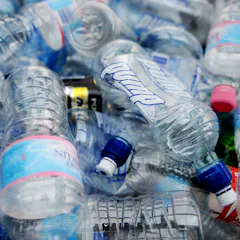
Just a tiny fraction of the plastic Australia uses each year gets recycled. This year’s oil shock could cause a rethink.
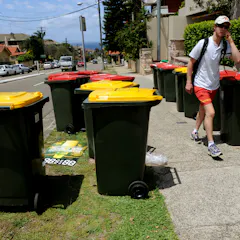
The first thing to know is that what’s accepted in your yellow-lidded kerbside bin depends on where you live.
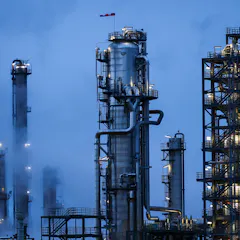
Even if the Iran war ends, the fallout from this oil shock is likely to persist for a long time. Here’s what the end of ‘cheap’ oil could mean for the world.
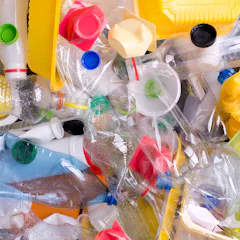
Scientists have shown that plastic bottles could be converted into levodopa, an important Parkinson’s drug, with implications for both medicine and the environment.

Originally invented for billiard balls, this new material revolutionised photography – and paved the way for cinema.

Certain birds ingest more plastic waste, which causes them harm while transporting it to different locations.
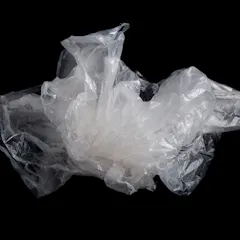
From beetles to sustainable packaging – one failure in the lab led to a new line of promising research.
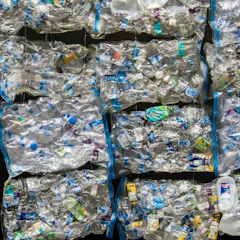
Instead of treating plastic purely as waste, new research shows that it can be transformed into something useful — acetic acid, a key component of vinegar and an important industrial chemical.
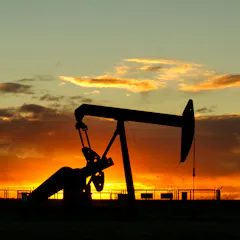
Oil is a key feedstock for everything from plastics to cosmetics. Over time, we’re likely to see less oil burned for transport – and more used to make products.
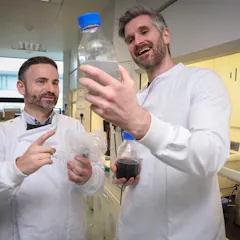
Contamination tolerance shapes the economics of recycling.
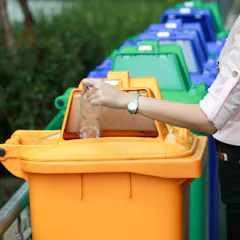
Just 15% of Europe’s plastic waste gets recycled, but we can do better.

A research team has paved plastic-infused roads in Texas and Bangladesh, with promising results.
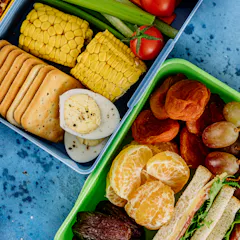
Packing lunchboxes everyday can seem like a thankless and impossible task. It needs to be healthy, low waste … and something your child will actually eat.
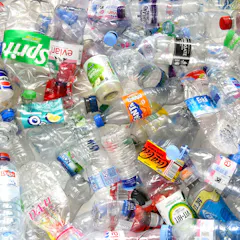
Scientists question whether alarming reports of plastic particles in human organs are accurate or the result of laboratory contamination.
Top contributors
-

Senior Principal Research Scientist, Environment, CSIRO
-
Research Chair, Indigenous Approaches to Environmental Management, Keele University
-
Senior Principal Research Scientist, CSIRO
-
Lecturer, School of Life and Environmental Sciences, Deakin University
-
Professor of Sustainable Development, Keele University
-
Research Scientist, Stanford University
-
Lecturer in Ornithology, Charles Sturt University
-
Assistant Professor of Ecology and Evolutionary Biology, University of Toronto
-
Professor, School for Resource and Environmental Studies, Dalhousie University
-
Professor of Ocean Policy and Economy, University of Portsmouth
-
Professor of Coastal Oceanography, The University of Western Australia
-
Associate professor, University of Portsmouth
-
Oceanographer, The University of Western Australia
-
Research associate, Loughborough University
-
Professor of Global Environmental Politics, University of California, Berkeley