
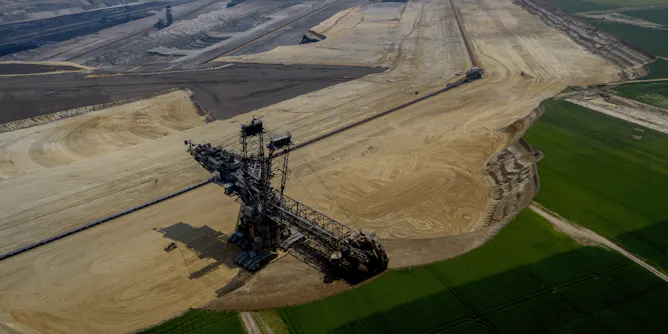
Purely technical solutions to the challenges of sustainable development will likely end in failure. Living within planetary boundaries will require a unified effort across disciplines and economies.
Articles on Circular economy
Displaying 41 - 60 of 154 articles
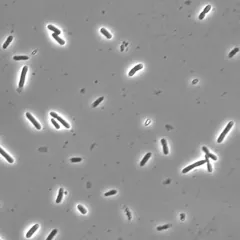
The world is full of microbes, and many of them like the taste of waste. Some carbon monoxide-loving microbes can be harnessed to transform waste into valuable biofuel.
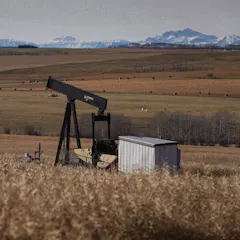
The customary energy life cycle includes exploration, development, extraction, processing, transmission and sometimes reclamation. An additional stage is needed: recycling.
Paul Hawken’s The Ecology of Commerce is reviewed by Professor Denise Baden, Professor of Sustainable Business at the University of Southampton.

The round fruit at the heart of a circular economy.

A ‘right to repair’ bill before parliament aims to reduce the cost and difficulty of fixing consumer items. Setting minimum acceptable lifespans for common products should be the first step.

Existing laws and regulations failed to prevent asbestos contamination of mulch. What’s missing is mandatory certification of recycled products so users can be sure they’ve been tested and are safe.
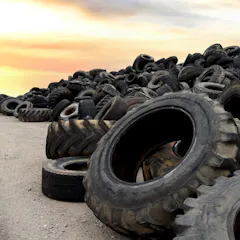
New technique could drastically improve the recyclability of rubber tyres.

Wind farm owners are keeping old turbines in service to capitalise on high electricity prices.
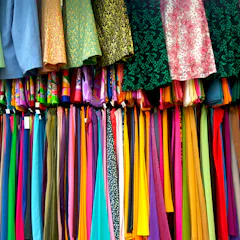
The production, use and end-of-life of clothing all have an impact on our health. But greater ecological awareness could turn the tide.
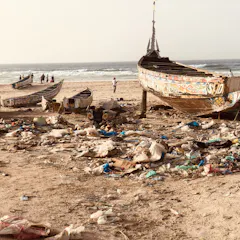
Initiating a circular economy can help coastal west African countries to address plastic pollution with a World Bank fund.

About half of our Halloween pumpkins go entirely uneaten.

A household survey has revealed three distinct patterns of consumer behaviour around food waste.
We can’t entirely eliminate food waste – but we can find cheap ways to turn it into something useful.
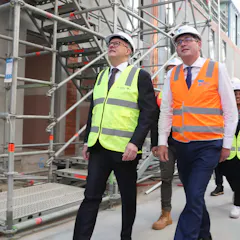
We can construct buildings that reduce atmospheric CO₂ by more than their lifetime emissions. They now don’t cost much more – and a project involving 1.2 million homes would drive costs down further.

New restrictions on PFAS and other potentially hazardous chemicals in Australia present an opportunity for industry to develop alternatives for new, safe and clean products.
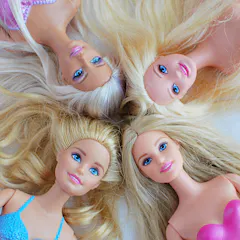
Toys are the most plastic-intensive consumer goods in the world. So how can we avoid movie tie-in fads adding to the surging plastic waste problem?

A new report outlines a comprehensive strategy for Australia to reduce the carbon footprint of our homes while making them more comfortable and affordable.
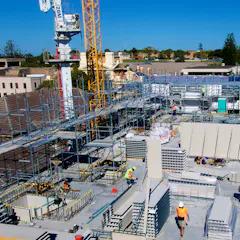
Our buildings and infrastructure can only become sustainable if the sector shares, leases, reuses, repairs, refurbishes and recycles materials and products. A new report maps out out how to get there.

Confusion about what should and shouldn’t be recycled? You’re not alone – and it’s causing some people to ignore recycling altogether.
Top contributors
-

Associate Professor and Research Director, Institute for Sustainable Futures, University of Technology Sydney
-
Associate Professor, Global Management Studies, Toronto Metropolitan University
-
Professor of Technology Management and Circular Economy, Kingston University
-
Senior Lecturer in Urban Planning, School of Architecture and Cities, University of Westminster
-
Senior Lecturer, Auckland University of Technology
-
Lecturer in Circular Economy and Sustainable Transformations, University of Edinburgh
-
Professor, ESCP Business School
-
Reader in Fashion, Marketing and Sustainability, Glasgow Caledonian University
-
Professor, Harvard University
-
Senior Lecturer, School of Property, Construction and Project Management, RMIT University
-
Chair professor - Circular Economy, The University of Melbourne
-
Professor of Applied Environmental Science, University of Southampton
-
Professor of Management, Rochester Institute of Technology
-
Professor, Keevil Institute of Mining Engineering, University of British Columbia
-
Associate Dean and Head of Project Management, RMIT University