

The speed of light is the fastest anything can travel. What happens to a photon from a galaxy 25 million light years away on its journey toward Earth?
Articles on Astronomy
Displaying 101 - 120 of 989 articles
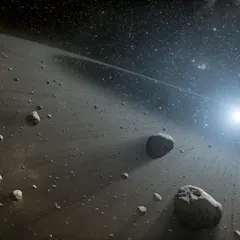
The Earth started as a mixture of gas and dust around the Sun and grew as it collided with asteroids and dust particles.
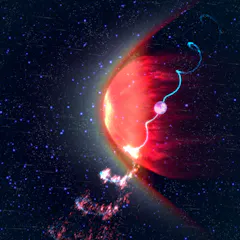
For the first time, astronomers have measured the plasma layers of a shock wave surrounding a pulsar.
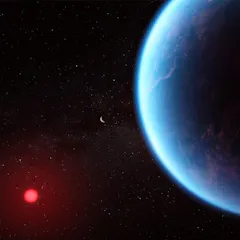
The exoplanet K2-18b could harbor a massive ocean, but scientists will need to study the planet more to see if it’s really likely to host life.
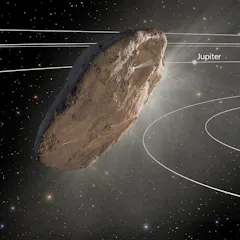
Learning about these interstellar objects could give us insights into other star systems.
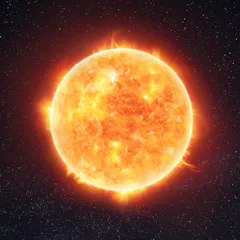
Stars are constantly vibrating because of ‘starquakes’. Listening to their sound can reveal a surprising amount of information.
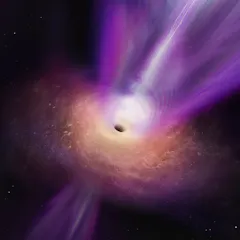
Whether a galactic environment has the right conditions for habitable planets to form could depend on how the black hole in that galaxy is rotating.
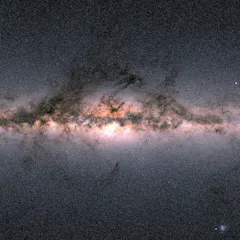
An astronomer says goodbye to Gaia, the satellite that mapped the galaxy.

A project to map galaxies across the universe may have spied cracks in the foundation of our understanding of the cosmos.

The SKA-Low radio telescope in Western Australia is slowly coming online. It will probe the shape of the universe and study cosmic mysteries.
Science uses careful, organized observations and tests to construct theories that are recorded, passed on to others and built on.
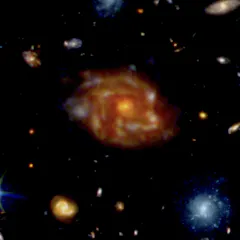
This enormous disk object formed soon after the Big Bang, challenging what we know about how galaxies grow.
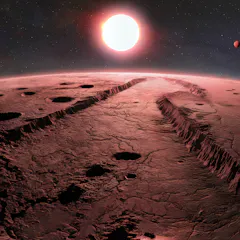
The small worlds were particularly challenging to discover.
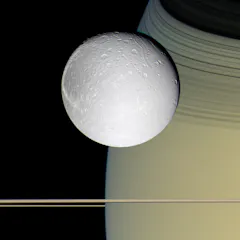
The number of known moons in our Solar System has been rising for centuries, but astronomers say it has probably peaked – for now.
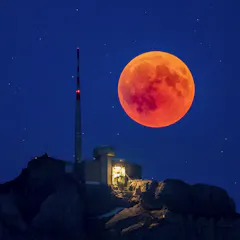
A full moon, low on the horizon, tinted red – it’s a sight not to be missed.
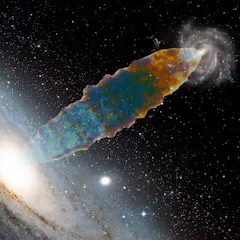
Understanding the evolution of radio galaxies is crucial for unravelling the broader processes that shape the universe.
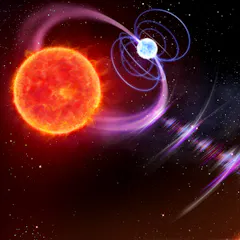
Recently, astronomers have been puzzled by an unknown type of cosmic radio signal. A new breakthrough has finally traced one of them.
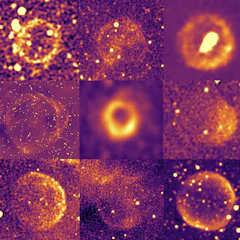
The newest generation of radio telescopes can detect objects so faint, we’ve never seen them before.
Scientists already knew how to study the chemical composition of the atmosphere of exoplanets. Now, they can also study details about their powerful winds.
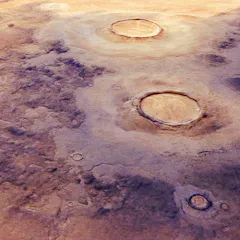
The discovery indicates water may have remained stable on Mars for much longer than scientists thought.
Top contributors
-

Professor (Astrophysics), University of Southern Queensland
-
Senior Curator (Astronomy), Museums Victoria Research Institute; The University of Melbourne
-
Associate Professor in Astronomy, Monash University
-
University Distinguished Professor of Astronomy, University of Arizona
-
Associate Professor, School of Physics, The University of Melbourne
-
Professor of Astrophysics, University of Sydney
-
Professor, Radio Astronomy, University of Sydney
-
Pro Vice-Chancellor Flagship Initiatives, Swinburne University of Technology
-
Honorary Fellow, Space and Astronomy, CSIRO; Western Sydney University
-
John Curtin Distinguished Professor (Radio Astronomy), Curtin University
-
Postdoctoral Researcher in Radio Astronomy, University of Sydney
-
Lecturer in Astronomy, Nottingham Trent University
-
Senior Lecturer in Physics, Nottingham Trent University
-
Associate Dean of Innovation and Engagement, Swinburne University of Technology
-
Associate Professor, Astronomy, University of Regina