
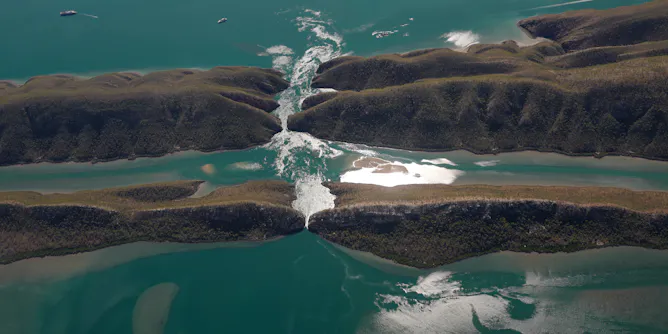
For coastal communities, understanding how tides are changing is increasingly important.
Articles on Moon
Displaying 1 - 20 of 418 articles
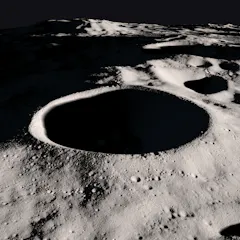
We’ve known for a while now that the Moon has water. Accessing it will make it easier not just to visit, but to stay.
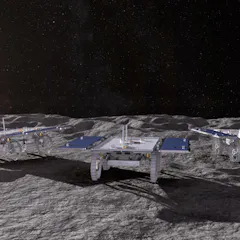
NASA’s CADRE mission will test a small team of autonomous rovers that can function without constant communication with Earth.
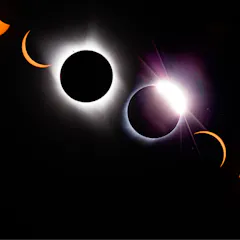
A solar eclipse’s appearance is wrapped up in the geometry of the bodies involved.
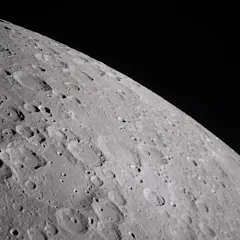
The rocket section struck the lunar surface near Einstein crater on the Moon’s near side.
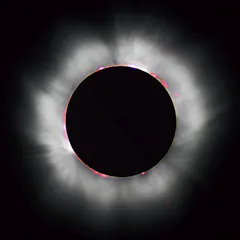
What’s the most impressive natural phenomenon known to humankind? Probably a solar eclipse! Here’s a brief overview ahead of this summer’s big celestial event.
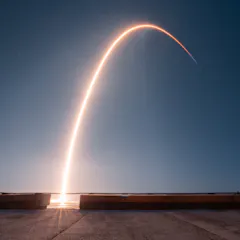
As the Moon starts getting crowded, questions of safety and responsibility are becoming hard to ignore.
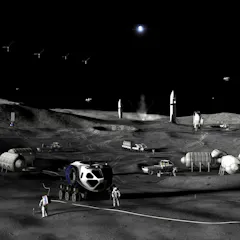
A lunar base could allow for research, economic activities and lunar mining. Such an operation has potential benefits, but lots of challenges await NASA.
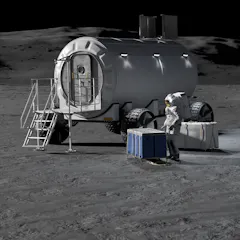
Suitable spots for establishing human outposts at the south pole are finite.
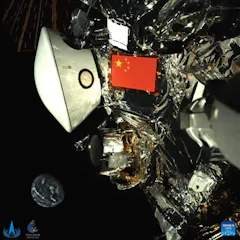
One of Earth’s closest cosmic companions has puzzled scientists for years.
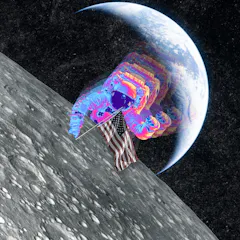
Lunar architecture isn’t just an engineering challenge. At its heart, it is about understanding human experience at the extremes.

Only by fostering a deeper sense of ‘space citizenship’ will everyone benefit from our journeys to the Moon – and beyond.
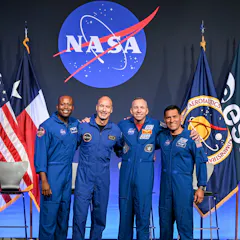
The Artemis program’s timeline and architecture has changed over the past year, so Artemis III will not land on the lunar surface.
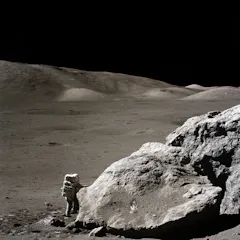
As lunar missions are back in vogue with engineering more sustainable human presence on the Moon in mind, there’s no getting away from the fact that you can’t breathe on a satellite that has no atmosphere.
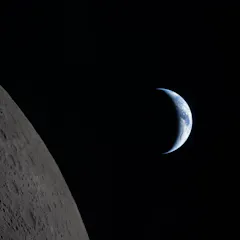
Landing on the Moon can disturb its environment – people are discussing how to balance those concerns with political and economic goals.
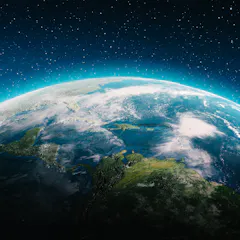
Climate science is the anti-myth. Researchers have long noted that the human brain struggles with psychologically distant threats.
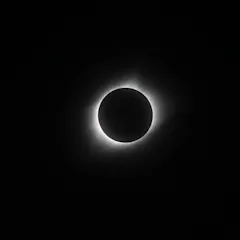
Astronauts report feeling profoundly awestruck when they go to space, an anthropologist reports. This experience shapes their perspectives even back on Earth.
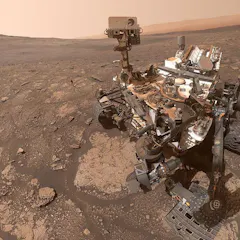
Study of extreme environments on Earth, along with exploration of the lifeless surface of the moon, can help us understand what life on Mars might look like.
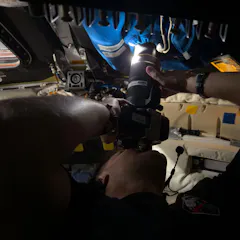
A photography expert explains how a photographer makes artistic decisions that an AI algorithm or robot can’t replicate.

A space historian explains how the Artemis II crew reimagined some Apollo-era photos and found spectacular new angles.
Top contributors
-

Senior Curator (Astronomy), Museums Victoria Research Institute; The University of Melbourne
-
Professor of Planetary Geosciences, The Open University
-
Associate Professor in Archaeology and Space Studies, Flinders University
-
Professor of Air and Space Law, University of Mississippi
-
Professor (Astrophysics), University of Southern Queensland
-
Senior Lecturer in Physics, Nottingham Trent University
-
Postdoctoral research associate, University of Oxford
-
Professor of Planetary and Space Sciences, The Open University
-
Professor in Earth and Planetary Science, Western University
-
Reader in Astrophysics, Keele University
-
Andrew Dempster is a Friend of The Conversation.
Director, Australian Centre for Space Engineering Research; Professor, School of Electrical Engineering and Telecommunications, UNSW
-
Associate Professor of International Affairs, Georgia Institute of Technology
-
Podcast host, The Conversation
-
Space Plasma Physicist, Imperial College London
-
Professor of Planetary Science and Exploration, The Open University
