
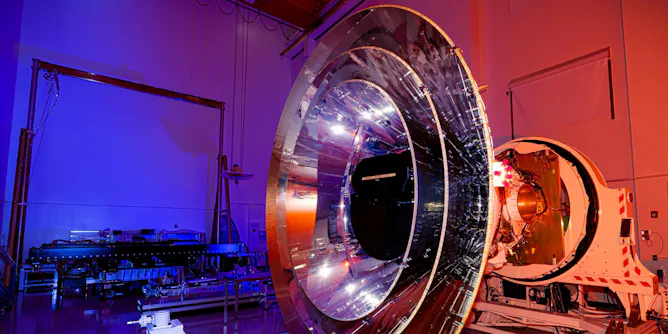
The SPHEREx mission will image 1 billion galaxies, 100 million stars, and 10,000 asteroids – and help to answer some of the biggest scientific mysteries.
Articles on Astronomy
Displaying 121 - 140 of 989 articles

In the search for elusive particles called neutrinos, researchers are stringing thousands of detectors in the depths of the Mediterranean.
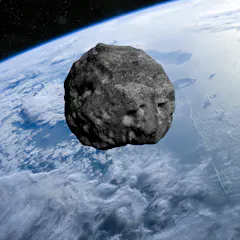
Asteroid 2024 YR4 has around a 1-in-77 chance of hitting Earth in 2032 – but there’s no need to panic.
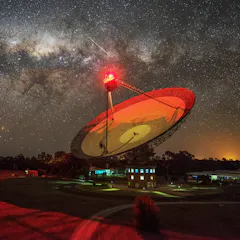
‘Project Phoenix’ was initiated by small research organisation known as the SETI Institute. But it was lucky to get off the ground.
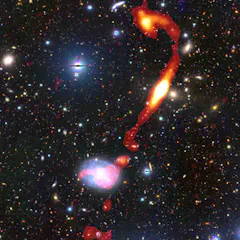
It’s been a bit troublesome to understand the physics behind what’s going on with Inkathazo.
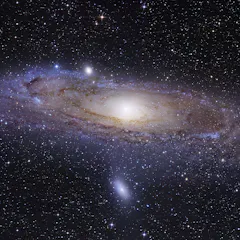
Hubble’s work pushed the field of astronomy forward, starting with his paper demonstrating that some objects exist outside our galaxy.
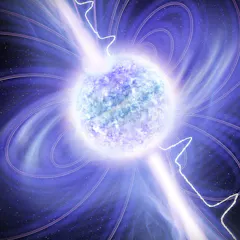
The slowest ‘cosmic lighthouse’ ever found challenges our understanding of how neutron stars work.
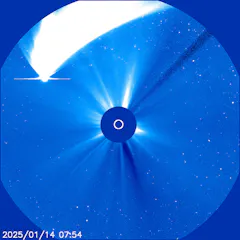
Comet C/2024 G3 (ATLAS) will be visible just after sunset in the coming nights.
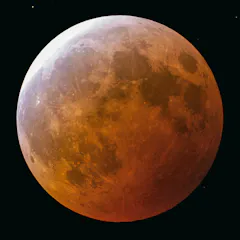
In 2025 we will see Saturn’s rings ‘disappear’, the Moon turning red, meteor showers and more.
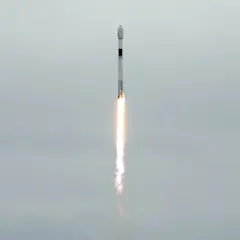
From exploring the Moon to revealing mysteries of the solar system, space agencies around the world are gearing up for an exciting year of launches and flybys.
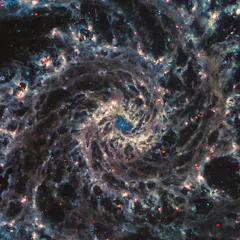
The James Webb Space Telescope is celebrating three years from its launch. Its discoveries have already changed our understanding of the early universe.

Disney’s ‘Moana’ movies have brought a new level of excitement for astronomy and wayfinding, says an astronomer who regularly hosts planetarium shows.

Killjoys on social media say there’s no point wishing on stars because they are already dead – but the naysayers are completely wrong.
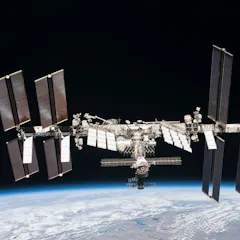
The International Space Station is an engineering feat that has led to countless scientific discoveries. Like the thousands of satellites in orbit, it manages to stay up in the atmosphere.

In 2017, astronomers found an object they’d never seen before. Now, it’s part of a growing category of elusive ‘dark comets’ – and we might find more soon.
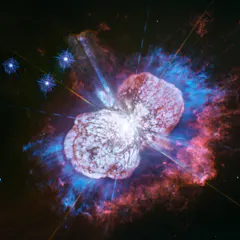
Just like volcanologists monitor volcano activity to predict eruptions, astronomers can monitor stars to predict explosions.
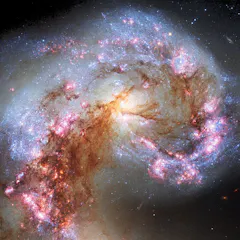
Elliptical galaxies have long provided a headache for astronomers.
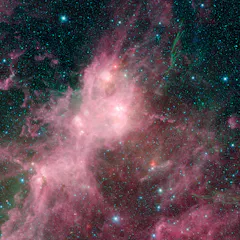
The universe is constantly expanding, but how do scientists think about what it’s expanding into?
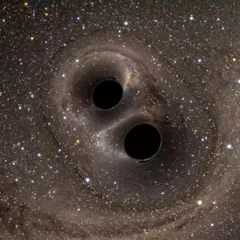
Most objects in the universe have been around for way longer than modern astronomy – digging into historical records can help scientists shed light on a cosmic mystery.
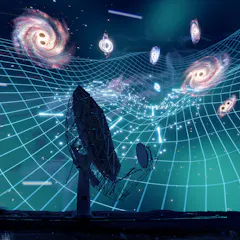
A new effort to map the rumblings in spacetime caused by enormous black hole collisions paints a surprisingly loud and lopsided picture of the universe.
Top contributors
-

Professor (Astrophysics), University of Southern Queensland
-
Senior Curator (Astronomy), Museums Victoria Research Institute; The University of Melbourne
-
Associate Professor in Astronomy, Monash University
-
University Distinguished Professor of Astronomy, University of Arizona
-
Associate Professor, School of Physics, The University of Melbourne
-
Professor of Astrophysics, University of Sydney
-
Professor, Radio Astronomy, University of Sydney
-
Pro Vice-Chancellor Flagship Initiatives, Swinburne University of Technology
-
Honorary Fellow, Space and Astronomy, CSIRO; Western Sydney University
-
John Curtin Distinguished Professor (Radio Astronomy), Curtin University
-
Postdoctoral Researcher in Radio Astronomy, University of Sydney
-
Lecturer in Astronomy, Nottingham Trent University
-
Senior Lecturer in Physics, Nottingham Trent University
-
Associate Dean of Innovation and Engagement, Swinburne University of Technology
-
Associate Professor, Astronomy, University of Regina