
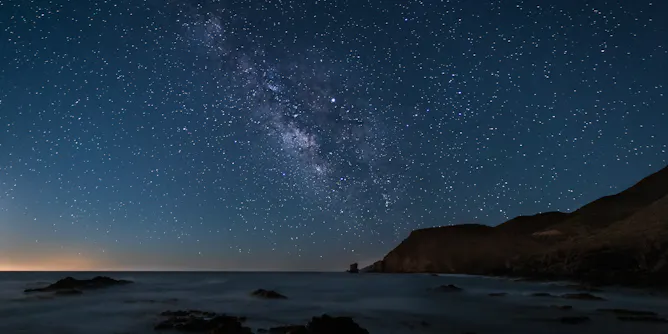
Some observatories that used to be dark and remote are now adjacent to bright urban centers. And sending all telescopes into space isn’t a viable solution.
Articles on Astronomy
Displaying 81 - 100 of 989 articles

The debate about an undiscovered planet X or planet 9 has been going on for more than 100 years.
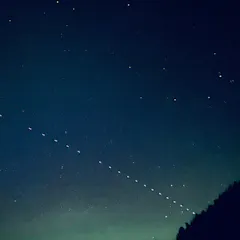
Streaks from satellites are disrupting observations by professional and amateur astronomers.
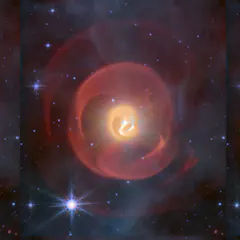
The stars are wreathed in a huge spiral of dust, like a snake eating its own tail.
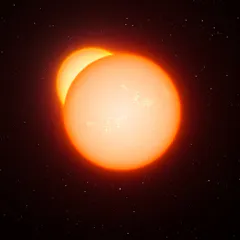
It takes a supercomputer weeks to output the properties of one stellar binary. A new study shows AI can do it in a fraction of the time.
If aliens did a flyby through the Solar System, would we even realise?
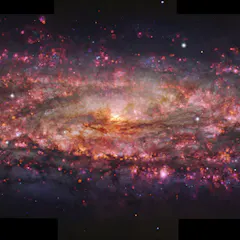
Researchers stitched together hundreds of images from the Very Large Telescope to form a breathtaking photo of a nearby galaxy.
An object dubbed 3I/ATLAS is only the third interloper from outside the Solar System seen in all of human history.
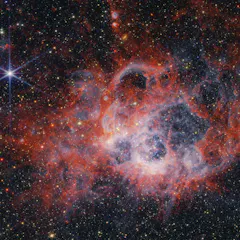
The James Webb Space Telescope has 2 powerful instruments that see light the human eye can’t.

The new observatory can take very high resolution images of distant objects in space.
Keeping Earth safe from asteroids isn’t just spotting them – it’s also helping people understand what a high-impact probability with Earth means.
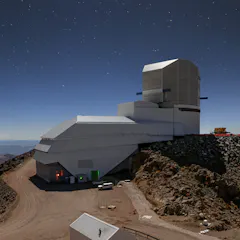
Vera C. Rubin’s research into stars in galaxies led to the modern understanding of dark matter.
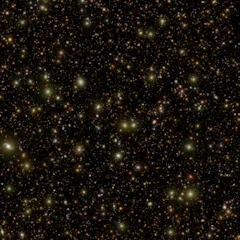
To make a truly realistic fake picture of a galaxy, you can model exactly how light particles travel through the atmosphere and telescope to reach its sensor.
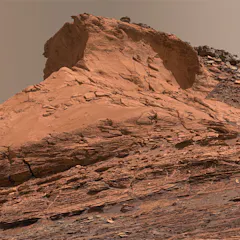
Mars isn’t a bright, fire-engine red, but the iron oxide in its rocks makes it appear redder than other planets, especially from afar.
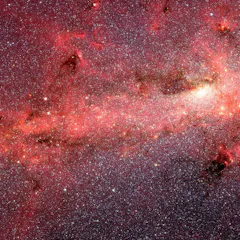
As the universe expands, it feels like it must be spreading out from some initial point. But a physicist explains why that’s not how it works. Hint: space-time is involved.

The Vera C. Rubin Observatory will capture enough detail to see a golf ball from 25km away.
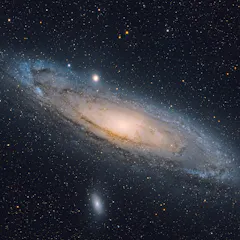
The odds of a galactic collision in our distant future are much lower than we thought, according to new simulations.
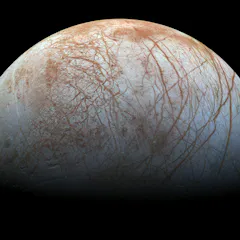
As NASA rolls out more powerful telescopes in the future, scientists will need a way to determine where to point them. A new approach could help.

The object doesn’t resemble any known type of star or system in the Milky Way.
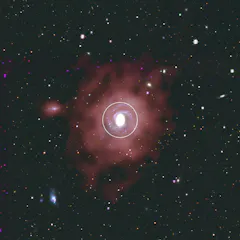
A new, more detailed study of 1,000 distant galaxies explains why some gas-rich galaxies don’t produce as many stars as you’d expect.
Top contributors
-

Professor (Astrophysics), University of Southern Queensland
-
Senior Curator (Astronomy), Museums Victoria Research Institute; The University of Melbourne
-
Associate Professor in Astronomy, Monash University
-
University Distinguished Professor of Astronomy, University of Arizona
-
Associate Professor, School of Physics, The University of Melbourne
-
Professor of Astrophysics, University of Sydney
-
Professor, Radio Astronomy, University of Sydney
-
Pro Vice-Chancellor Flagship Initiatives, Swinburne University of Technology
-
Honorary Fellow, Space and Astronomy, CSIRO; Western Sydney University
-
John Curtin Distinguished Professor (Radio Astronomy), Curtin University
-
Postdoctoral Researcher in Radio Astronomy, University of Sydney
-
Lecturer in Astronomy, Nottingham Trent University
-
Senior Lecturer in Physics, Nottingham Trent University
-
Associate Dean of Innovation and Engagement, Swinburne University of Technology
-
Associate Professor, Astronomy, University of Regina