
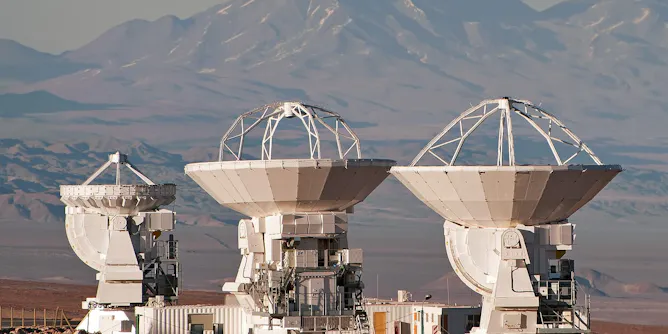
Interstellar maps can help scientists find patterns that tell them about fundamental chemical processes in the cosmos.
Articles on Radio astronomy
Displaying 1 - 20 of 130 articles
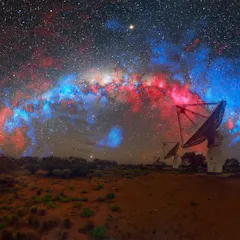
The best map yet of cosmic magnetic fields has been created with Australia’s most powerful radio telescope.

Seeing a signal in different kinds of light is like having a text written in several forms of writing – it makes it easier to decipher.
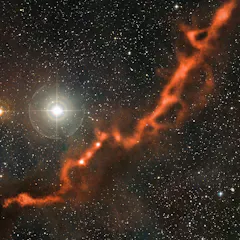
Discoveries of molecules in space that suggest extraterrestrial life are exciting, but they need to be taken with a grain of salt – an astrochemist explains why.
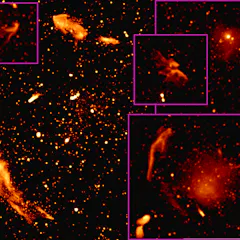
South Africa is using homegrown technology to answer questions about where our universe came from and where it is going.

Radio astronomy opened up the universe for scientists. They could map new elements across galaxies and also search for signals from extraterrestrial civilizations.
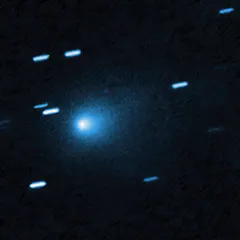
The alien question, while fun, generates misinformation and distracts from the science.

New radio astronomy results reveal how galaxies exchange gas with the intergalactic medium – the raw material for stars and the key to galactic evolution.

Some observatories that used to be dark and remote are now adjacent to bright urban centers. And sending all telescopes into space isn’t a viable solution.

The object doesn’t resemble any known type of star or system in the Milky Way.
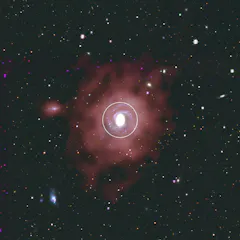
A new, more detailed study of 1,000 distant galaxies explains why some gas-rich galaxies don’t produce as many stars as you’d expect.
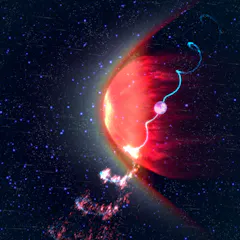
For the first time, astronomers have measured the plasma layers of a shock wave surrounding a pulsar.

The SKA-Low radio telescope in Western Australia is slowly coming online. It will probe the shape of the universe and study cosmic mysteries.
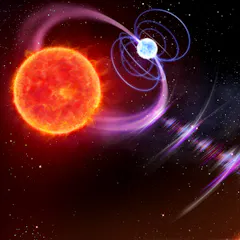
Recently, astronomers have been puzzled by an unknown type of cosmic radio signal. A new breakthrough has finally traced one of them.
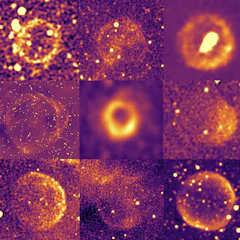
The newest generation of radio telescopes can detect objects so faint, we’ve never seen them before.
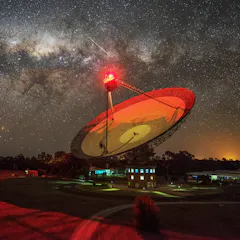
‘Project Phoenix’ was initiated by small research organisation known as the SETI Institute. But it was lucky to get off the ground.
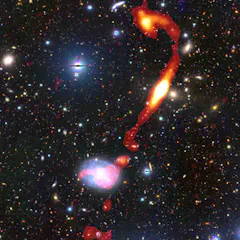
It’s been a bit troublesome to understand the physics behind what’s going on with Inkathazo.
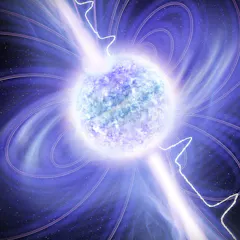
The slowest ‘cosmic lighthouse’ ever found challenges our understanding of how neutron stars work.

Killjoys on social media say there’s no point wishing on stars because they are already dead – but the naysayers are completely wrong.
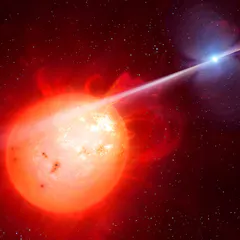
By searching sparsely populated regions of the galaxy, astronomers have for the first time found the source of a kind of signal that has puzzled them for years.
Top contributors
-

Professor, Radio Astronomy, University of Sydney
-
Honorary Fellow, Space and Astronomy, CSIRO; Western Sydney University
-
CSIRO
-
John Curtin Distinguished Professor (Radio Astronomy), Curtin University
-
Professor in Physics and Astronomy, UNSW
-
Professor at the International Centre for Radio Astronomy Research (ICRAR), The University of Western Australia
-
Postdoctoral Researcher in Radio Astronomy, University of Sydney
-
Senior research fellow, Curtin University
-
Radio Astronomer, Curtin University
-
Sir Bernard Lovell chair of Astrophysics, University of Manchester
-
Professor of Physics, University of Wisconsin-Milwaukee
-
Professor of Extragalactic Astronomy, Head of the Astrophysics Group, University of Bath
-
Senior Lecturer in Astrophysics, University of Sydney
-
Lecturer, University of Cape Town
-
Director, Astronomy and Space Science, CSIRO