
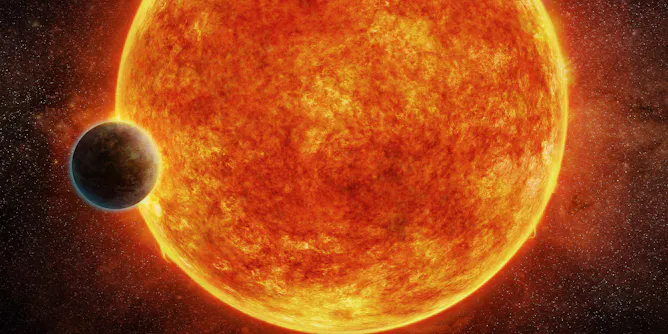
The exoplanet LHS 1140b may have a temperature that could allow for liquid water on its surface. Just possibly, it could support the existence of life.
Articles on NASA
Displaying 1 - 20 of 669 articles
From supernovae in distant galaxies to the packed centre of the Milky Way, the new Roman telescope will help us see and understand the ever-changing cosmos.
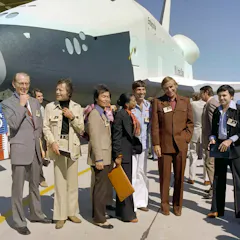
60 years of ‘Star Trek’: A cultural anthropologist on how the show’s “infinite diversity in infinite combinations” conception helped shape NASA’s vision of the future.
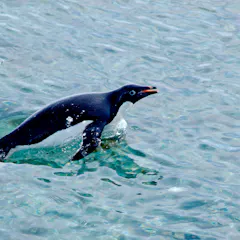
When penguin colonies are surrounded by sea ice, the penguins tend to eat more fish, rather than krill. And colonies that eat more fish are more successful at sustaining their numbers.
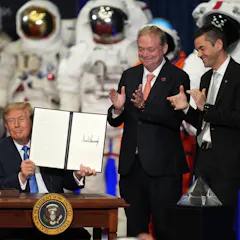
No, the US Space Academy wouldn’t be a real-life Starfleet Academy. But what it would be is still a little unclear.
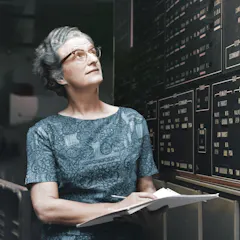
The US astronomer battled discrimination in a male dominated field.
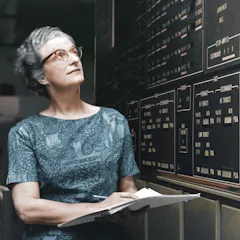
In August 2018, just four months before she died, I had the great fortune to interview Nancy Grace Roman about her extraordinary life studying the stars.
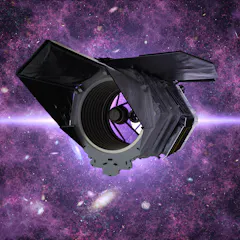
The Nancy Grace Roman Space Telescope will take a broad survey of space and use it to create a map of the universe.
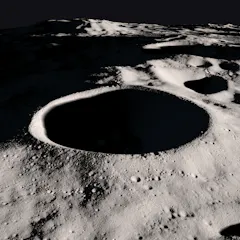
We’ve known for a while now that the Moon has water. Accessing it will make it easier not just to visit, but to stay.
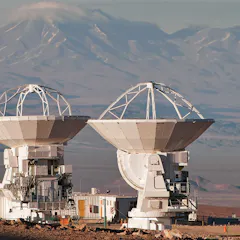
Interstellar maps can help scientists find patterns that tell them about fundamental chemical processes in the cosmos.
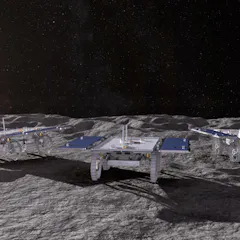
NASA’s CADRE mission will test a small team of autonomous rovers that can function without constant communication with Earth.
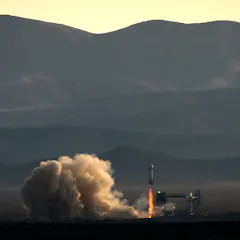
Orbital data centers, space habitats, mining the Moon – despite taking place in space, the practices many companies are imagining will still affect the Earth.
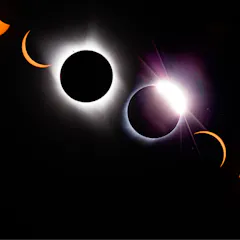
A solar eclipse’s appearance is wrapped up in the geometry of the bodies involved.
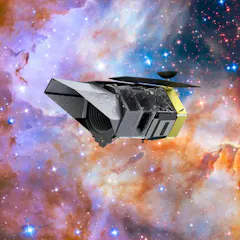
The Nancy Grace Roman telescope will probe dark energy and discover exoplanets.
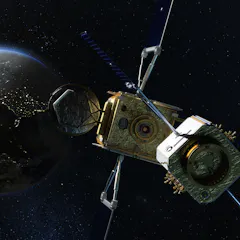
A new mission to save NASA’s Swift observatory shows why catching a satellite that was never designed for rescue is one of the hardest jobs in spaceflight.
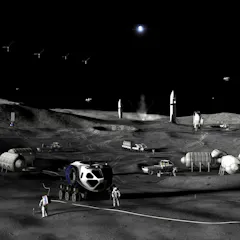
A lunar base could allow for research, economic activities and lunar mining. Such an operation has potential benefits, but lots of challenges await NASA.
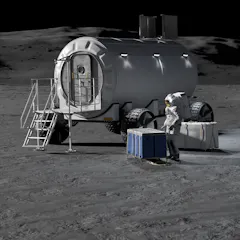
Suitable spots for establishing human outposts at the south pole are finite.
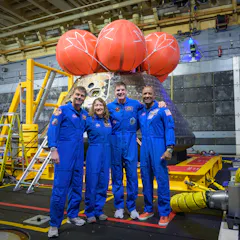
Jenni Gibbons will be lead capsule communicator for NASA’s Artemis III mission, Gordon Osinski is on the science team and Canada also contributes a robotic Lunar Utility Vehicle.
Lunar architecture isn’t just an engineering challenge. At its heart, it is about understanding human experience at the extremes.
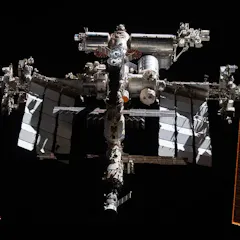
A worsening leak on June 5 forced five crew members to prepare for an emergency evacuation.
Top contributors
-

Postdoctoral research associate, University of Oxford
-
Professor of Strategy and Security Studies, Air University
-
Senior Lecturer in Physics, Nottingham Trent University
-
Associate Professor in Archaeology and Space Studies, Flinders University
-
Professor of Planetary and Space Sciences, The Open University
-
University Distinguished Professor of Astronomy, University of Arizona
-
Professor (Astrophysics), University of Southern Queensland
-
Kevin Orrman-Rossiter is a Friend of The Conversation.
Sterrenkenner, History & Philosophy of Science, The University of Melbourne
-
Professor in Earth and Planetary Science, Western University
-
Associate Professor of International Affairs, Georgia Institute of Technology
-
Lecturer in Astronomy, Nottingham Trent University
-
Professor of Air and Space Law, University of Mississippi
-
Assistant Professor of Space and International Relations, Johns Hopkins University
-
Professor of Planetary Geosciences, The Open University
-
Senior Instrument Scientist, Australian Nuclear Science and Technology Organisation