
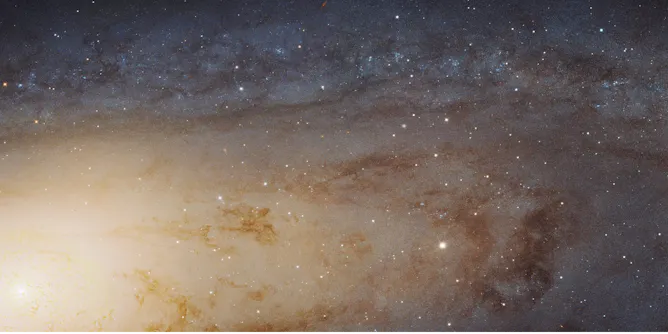
One hundred years ago, one star changed our view of the universe, proving that the Andromeda “nebula” was a galaxy like our Milky Way.
Articles on Astronomy
Displaying 181 - 200 of 989 articles
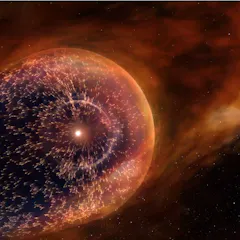
An interstellar probe could help scientists answer fundamental questions about how the Sun influences Earth, space and other planets in the solar system.
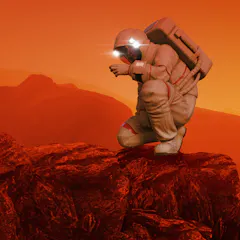
It’s hard to look for something you’ve never seen before – and that might not even exist. But you have to start somewhere.
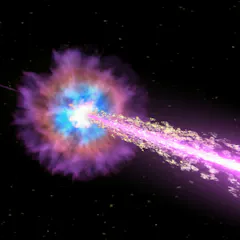
Analysis of two major cosmic blasts deepens the mystery of where the universe’s ‘heavy’ elements come from.

The best spots on the Moon for lunar bases are the same spots where scientists want to build telescopes − can these two interests coexist?
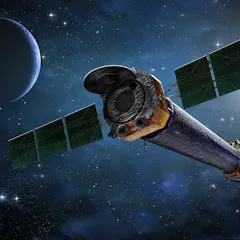
2024 marks 25 years since NASA’s Chandra X-ray Observatory started detecting X-rays from energetic astronomical events.
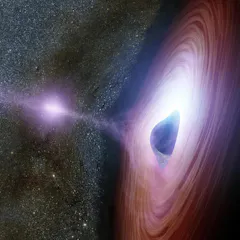
Studying theoretical, fast-spinning black holes is helping physicists understand more about the elusive black holes out in the universe.
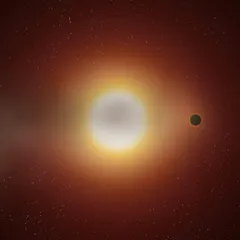
Research on one exoplanet that’s rapidly losing its atmosphere is hinting to scientists why exoplanets tend to look a certain way.
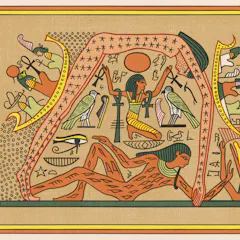
A new study shines light on the link between the Milky Way and the ancient Egyptian sky goddess Nut

It’s not easy to collect rocks on a budget when the rocks are 140 million miles away.

MeerKAT has made remarkable contributions to South African and international science.
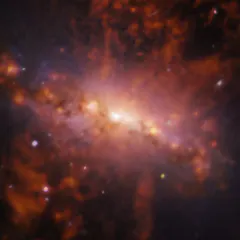
When astronomers focused on the galaxy NGC 4383, they didn’t expect the data to be so spectacular. This is the first detailed map of gas flowing from this galaxy as stars burst within.

If you look carefully at the night sky, you may spot this fuzzy visitor with the naked eye – but binoculars will help.

Saturn’s moon Enceladus has geysers shooting tiny grains of ice into space. These grains could hold traces of life − but researchers need the right tools to tell.
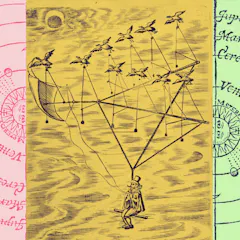
When scientists observed planets revolved around the Sun, they posited we were now like other planets. And if other planets were like Earth, then they most likely also had inhabitants.

Where specialized algorithms fail to classify star-borne pulses, human volunteers with just a little training can step in.
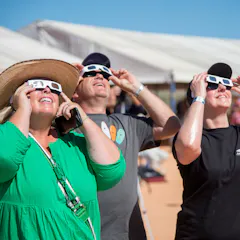
A type of eclipse is crucial for measuring what’s in the atmospheres of planets orbiting distant stars.
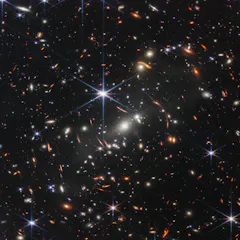
Now out in space for more than two years, the James Webb Space Telescope is a stunningly sophisticated instrument.

Astronomers caught the bizarre ‘awakening’ of an incredibly rare magnetic star.

Textbooks often show Earth’s orbit around the Sun as an almost egg-shaped ellipse. The real story is very different.
Top contributors
-

Professor (Astrophysics), University of Southern Queensland
-
Senior Curator (Astronomy), Museums Victoria Research Institute; The University of Melbourne
-
Associate Professor in Astronomy, Monash University
-
University Distinguished Professor of Astronomy, University of Arizona
-
Associate Professor, School of Physics, The University of Melbourne
-
Professor of Astrophysics, University of Sydney
-
Professor, Radio Astronomy, University of Sydney
-
Pro Vice-Chancellor Flagship Initiatives, Swinburne University of Technology
-
Honorary Fellow, Space and Astronomy, CSIRO; Western Sydney University
-
John Curtin Distinguished Professor (Radio Astronomy), Curtin University
-
Postdoctoral Researcher in Radio Astronomy, University of Sydney
-
Lecturer in Astronomy, Nottingham Trent University
-
Senior Lecturer in Physics, Nottingham Trent University
-
Associate Dean of Innovation and Engagement, Swinburne University of Technology
-
Associate Professor, Astronomy, University of Regina