

The early universe was kind of like a big game of musical chairs – scientists are figuring out how many particles were able to find ‘seats’ to understand the cosmos.
Articles on Astrophysics
Displaying 1 - 20 of 285 articles

Massive objects bend light around them, a quirk that opens up unique opportunities for astronomical surveys.
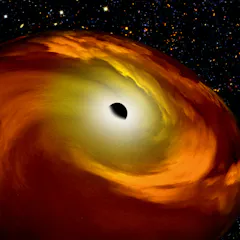
Some stars turn into black holes at the end of their lifespans, once they stop burning the fuel in their cores.
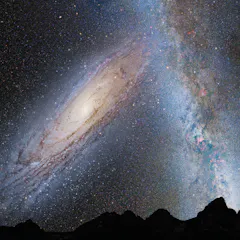
The Milky Way contains a fossil record of galaxies it has absorbed.
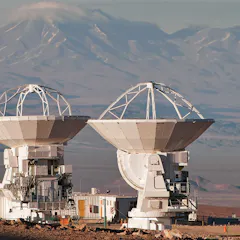
Interstellar maps can help scientists find patterns that tell them about fundamental chemical processes in the cosmos.
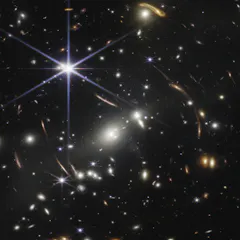
A recent paper claimed that dark energy might not exist. But new research suggests this conclusion was premature.
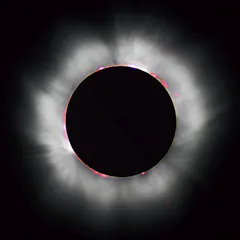
What’s the most impressive natural phenomenon known to humankind? Probably a solar eclipse! Here’s a brief overview ahead of this summer’s big celestial event.

A ‘failed star’ 1,350 light years away may hold clues about what makes other stars succeed.
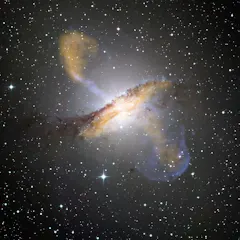
An astronomer explains why artificial black holes are pure science fiction – at least for now.
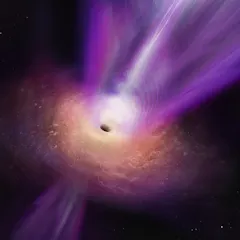
Black holes are a mainstay in sci-fi movies. How do these massive black holes, spread throughout our universe, actually work in real life?
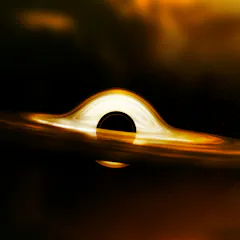
For the first time, scientists have gained information from the very surface of a newborn black hole.
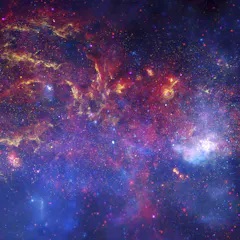
As a galactic archaeologist, my job is to reconstruct the past of our galaxy – and read the signs of its future.
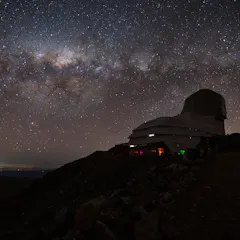
Scientists study small galaxies to look for hints of dark matter in the universe.
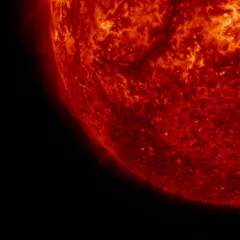
The Sun is a complex physical body. It generates incredible amounts of heat and a strong, often tangled, magnetic field.
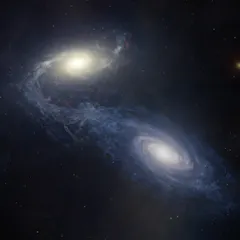
Astronomers want to understand how spiral galaxies form and get their massive spiral arms.

Project Hail Mary reminds us how important our world is – and how vital science is to our continued existence on it.

Ghost particles from ancient stellar explosions could be detected for the first time this year.
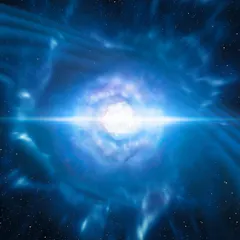
Gold and platinum are found in space, created when two stars collide. Astrophysicists can even trace this process further back, to the merger of galaxies.
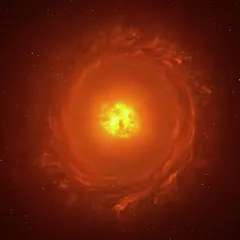
Astronomers have been watching the supergiant WOH G64 for decades – and it might have turned into a hypergiant and be heading for self-destruction.

Dark matter doesn’t seem to interact with the matter we can see and touch, so scientists look for it in unusual places, like faraway galaxies and underground detectors.
Top contributors
-

Professor (Astrophysics), University of Southern Queensland
-
Professor of Astrophysics, University of Sydney
-
University Distinguished Professor of Astronomy, University of Arizona
-
Associate Dean of Innovation and Engagement, Swinburne University of Technology
-
ARC Laureate Fellow, Swinburne University of Technology
-
John Curtin Distinguished Professor (Radio Astronomy), Curtin University
-
Emeritus Professor, ARC Centre of Excellence for Gravitational Wave Discovery, OzGrav, The University of Western Australia
-
Professor of Physics, Penn State
-
Professor, Radio Astronomy, University of Sydney
-
ARC Australian Laureate Fellow, School of Physics, The University of Melbourne
-
Professor of Astrophysics, UNSW
-
Professor of Astrophysics, Macquarie University
-
Senior Lecturer and ARC Future Fellow, Monash University
-
Reader in Astrophysics, Keele University
-
Pro Vice-Chancellor Flagship Initiatives, Swinburne University of Technology