
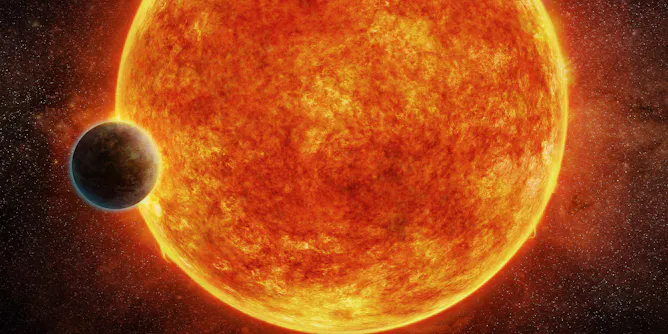
The exoplanet LHS 1140b may have a temperature that could allow for liquid water on its surface. Just possibly, it could support the existence of life.
Articles on Exoplanets
Displaying 1 - 20 of 228 articles

Massive objects bend light around them, a quirk that opens up unique opportunities for astronomical surveys.
Miniaturisation of sensors and light sails for propulsion mean we could reach the stars within a person’s lifetime.
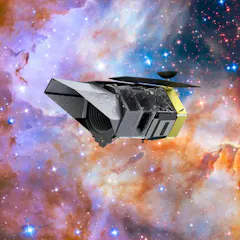
The Nancy Grace Roman telescope will probe dark energy and discover exoplanets.

A ‘failed star’ 1,350 light years away may hold clues about what makes other stars succeed.
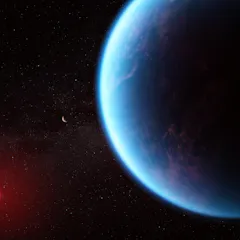
Only 6.6% of surveyed astrobiologists agreed that scientists had probably found extraterrestrial life on exoplanet K2-18b.
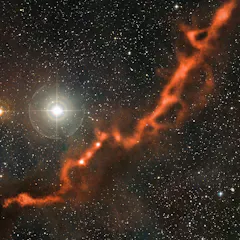
Discoveries of molecules in space that suggest extraterrestrial life are exciting, but they need to be taken with a grain of salt – an astrochemist explains why.
The fictional biologist in ‘Project Hail Mary’ claims that potential alien organisms might not be made of carbon or require water, unlike life on Earth.

The findings from Pandora will complement data from the James Webb Space Telescope to give astronomers more insight into stars and planets outside our solar system.
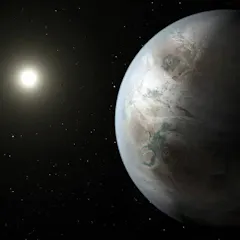
Observatories could identify gases potentially associated with life in the atmospheres of other worlds.
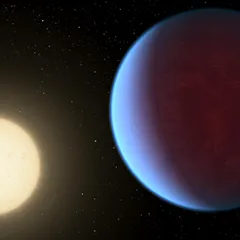
Searching for life on other planets requires more than just measuring their distances from their stars. A future NASA telescope may help search for potentially habitable worlds.
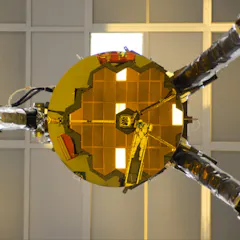
The only Australian hardware on board the legendary telescope is starting to fulfil its duties.

In the 30 years since the discovery of 51 Pegasi b, more than 6,000 planets outside our Solar System have been catalogued. Two modern-day explorers explain how.

A failed star just taught us something new about the search for alien life.
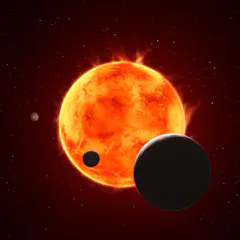
The largest telescope in space has been trained on a rocky exoplanet.

How researchers are working what out the incredible optical phenomena in Earth’s skies can tell us about other planets.
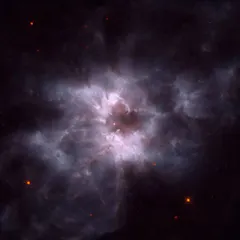
Could tiny stars a fraction the size of our solar system’s Sun have habitable planets orbiting them? A new study says it’s possible.
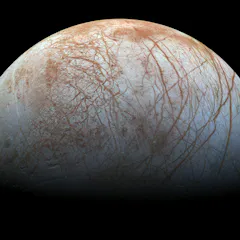
As NASA rolls out more powerful telescopes in the future, scientists will need a way to determine where to point them. A new approach could help.

The recent detection of a gas in a distant plant has been linked to life forms has sparked debate among scientists.
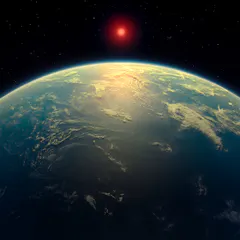
Looking at the history of ‘biosignature’ discoveries shows why they can be problematic.
Top contributors
-

Professor (Astrophysics), University of Southern Queensland
-
University Distinguished Professor of Astronomy, University of Arizona
-
Professor of Astrophysics Education, The Open University
-
Professor (Physics), University of Southern Queensland
-
Associate Dean for Research and Professor of Astronomy and Planetary Sciences, University of Arizona
-
Lecturer, University of Southern Queensland
-
Postdoc astrophysicist, Mississippi State University
-
Associate Professor, Japan Aerospace Exploration Agency (JAXA)
-
Professor of Planetary Geosciences, The Open University
-
Ernest Rutherford Fellow, The Open University
-
PhD Candidate, University of Southern Queensland
-
Senior Lecturer in Physics, Nottingham Trent University
-
Senior Curator (Astronomy), Museums Victoria Research Institute; The University of Melbourne
-
W J McDonald Postdoctoral Fellow, The University of Texas at Austin
-
Professor and Associate Dean (Research), UNSW