
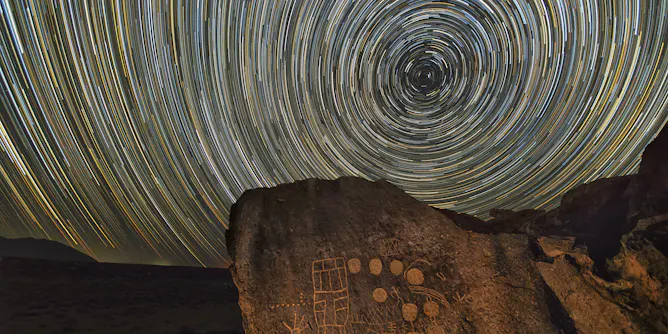
From Earth spinning on its axis and orbiting the Sun to it precessing like a top, lots of factors affect which stars you can see in the sky.
Articles on Astronomy
Displaying 41 - 60 of 989 articles
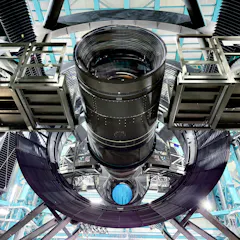
The camera can reach the furthest reaches of the cosmos and observe objects that are closer to home.
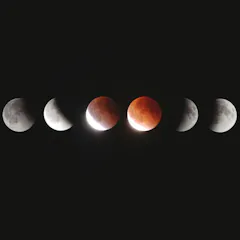
Australia and Aotearoa New Zealand are in a prime position to catch this total eclipse of the Moon; find the timing in our interactive map.
Astronomers captured the clearest example yet of one of these hidden explosions.

The Rubin Observatory in Chile has the largest camera ever built – and is set to find objects never before seen by human eyes.
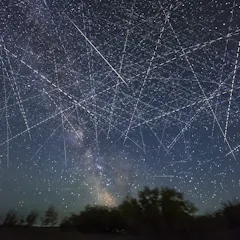
Planned ‘megaconstellations’ of satellites could cause unforeseen harm to the ozone layer and climate systems. Global regulation is needed before it’s too late.
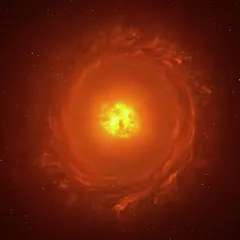
Astronomers have been watching the supergiant WOH G64 for decades – and it might have turned into a hypergiant and be heading for self-destruction.
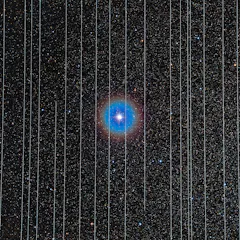
Cultural, spiritual, and most environmental impacts aren’t taken into account when launching thousands of satellites.

When Muslims arriving in the UK tried to sight the new crescent Moon, they would often struggle – in part due to a very British problem: the cloudy weather.

So what names do astronomers use for stars and how are official star names selected?

Comet MAPS has the potential to be one of the ‘Great Comets’ of this century.

Radio pulses repeating every minute-to-hour have puzzled astronomers, but a new paper in Nature Astronomy might finally shed some light.
The US, China, India, Europe and Japan all have exciting missions on the horizon in 2026. Many of them are collaborative feats.

Stargazing can stimulate an interest in space in kids and lead to a passion for science. But rural schools often lack the resources to nurture these interests.

The findings from Pandora will complement data from the James Webb Space Telescope to give astronomers more insight into stars and planets outside our solar system.
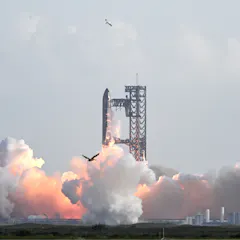
NASA, SpaceX and Blue Origin have all successfully launched superheavy-lift rockets. These massive vehicles are designed to carry a much heavier load.
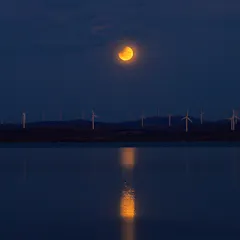
In 2026 we will see a total eclipse of the Moon, a blue Moon, a supermoon and the two brightest planets close together in the sky.
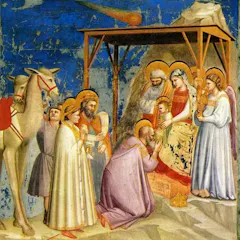
Or perhaps there was no star at all.
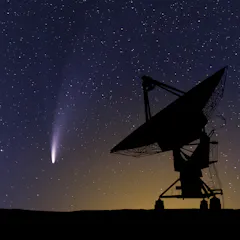
Bloemfontein could become South Africa’s top astro-tourism spot, using clear skies, observatories and planetariums to draw visitors and boost local jobs.
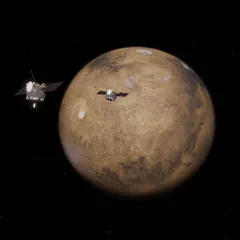
What’s better – many small space missions, or a few large, sweeping ones? Space scientists are asking this question as they face budget uncertainties.
Top contributors
-

Professor (Astrophysics), University of Southern Queensland
-
Senior Curator (Astronomy), Museums Victoria Research Institute; The University of Melbourne
-
Associate Professor in Astronomy, Monash University
-
University Distinguished Professor of Astronomy, University of Arizona
-
Associate Professor, School of Physics, The University of Melbourne
-
Professor of Astrophysics, University of Sydney
-
Professor, Radio Astronomy, University of Sydney
-
Pro Vice-Chancellor Flagship Initiatives, Swinburne University of Technology
-
Honorary Fellow, Space and Astronomy, CSIRO; Western Sydney University
-
John Curtin Distinguished Professor (Radio Astronomy), Curtin University
-
Postdoctoral Researcher in Radio Astronomy, University of Sydney
-
Lecturer in Astronomy, Nottingham Trent University
-
Senior Lecturer in Physics, Nottingham Trent University
-
Associate Dean of Innovation and Engagement, Swinburne University of Technology
-
Associate Professor, Astronomy, University of Regina