
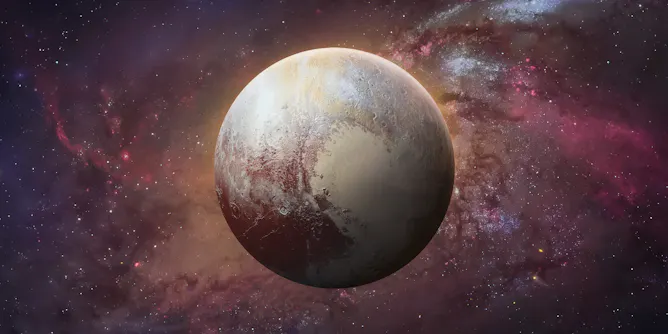
A South African team had a rare chance to capture information about Pluto’s atmosphere.
Articles on Astronomy
Displaying 161 - 180 of 989 articles
These small galaxies are either crammed with stars or they host gigantic black holes. The data astronomers have collected continues to puzzle them.
Today we’re able to finally reveal the first detailed picture of the gas shroud around a galaxy, extending 100,000 light years out into ‘empty’ space.
While space is mostly empty, it does have some matter and particles spread throughout it.
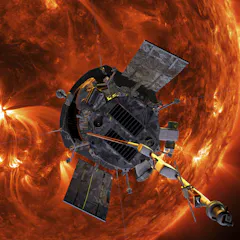
For years, researchers have wondered what energy source allows the solar wind − a projection of charged particles from the Sun − to rush by at hundreds of miles a second.

What’s so special about a supermoon? Hardly anything. There are better things to observe in the night sky, according to a professional astronomer.
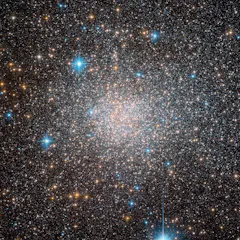
Space magnetism scrambles the paths of the universe’s most wayward particles – and scientists are finally discovering exactly how much.
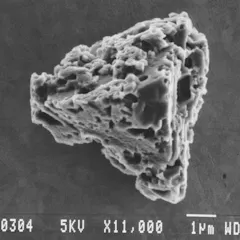
Most presolar grains were destroyed in the formation of the universe. But some survived on meteorites.
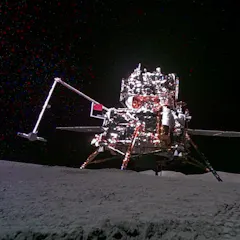
The far side of the Moon has a very different composition from the near side − so researchers are eager to see what stories these samples will tell.
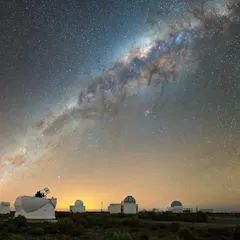
The first International Astronomical Union General Assembly was held just over 100 years ago, in Rome, Italy.
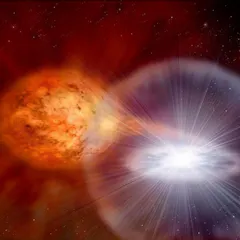
Your favorite TV show isn’t the only place where guest stars might appear. Keep an eye on the sky for the second half of 2024 and you might be able to witness a rare astronomical event.
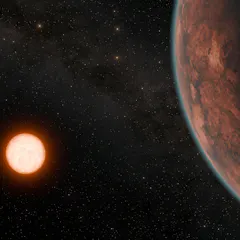
The groundbreaking discovery of a temperate Earth-size planet just 40 light-years away may hold the key to understanding stellar habitability.
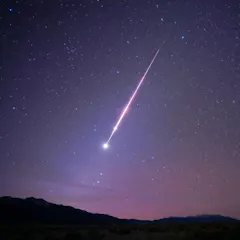
On July 31, Earth will pass through two debris streams that will produce meteor showers. Here’s where to look in the night sky in Australia and New Zealand.
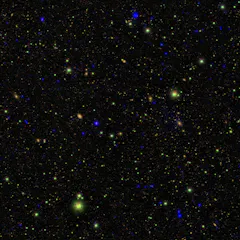
X-rays emitted around black holes can tell astrophysicists about how fast they’re growing.
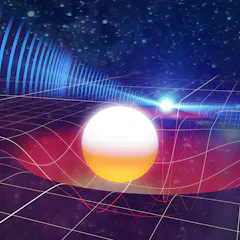
Neutron stars contain some of the universe’s most exotic states of matter – but there’s no easy way to peek inside.

Astronomers and stargazers around the world are excited to witness a rare event that only happens once every 80 years – a recurrent nova.
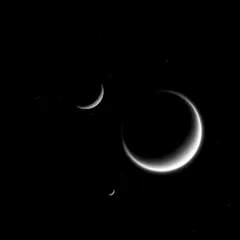
It’s not a competition, but if it were, Saturn would be winning.

Structures aligned with solar events served various purposes: science, farming, religion and even politics.
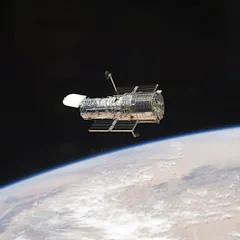
Hubble’s technical issues continue. But through some clever engineering, the telescope can continue operations with just 1 gyroscope.
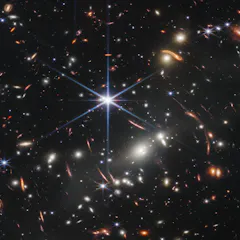
Astronomers Vicent Martínez and Bernard Jones explain the mystery of the Hubble tension, and why it matters so much for our understanding of the universe, on The Conversation Weekly podcast.
Top contributors
-

Professor (Astrophysics), University of Southern Queensland
-
Senior Curator (Astronomy), Museums Victoria Research Institute; The University of Melbourne
-
Associate Professor in Astronomy, Monash University
-
University Distinguished Professor of Astronomy, University of Arizona
-
Associate Professor, School of Physics, The University of Melbourne
-
Professor of Astrophysics, University of Sydney
-
Professor, Radio Astronomy, University of Sydney
-
Pro Vice-Chancellor Flagship Initiatives, Swinburne University of Technology
-
Honorary Fellow, Space and Astronomy, CSIRO; Western Sydney University
-
John Curtin Distinguished Professor (Radio Astronomy), Curtin University
-
Postdoctoral Researcher in Radio Astronomy, University of Sydney
-
Lecturer in Astronomy, Nottingham Trent University
-
Senior Lecturer in Physics, Nottingham Trent University
-
Associate Dean of Innovation and Engagement, Swinburne University of Technology
-
Associate Professor, Astronomy, University of Regina