
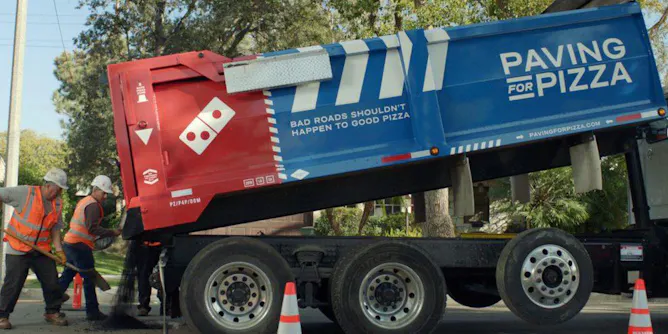
Companies have an opportunity to reframe brand communications from the promotion of conspicuous consumption to becoming a regenerative force in urban economies.
Articles on Advertising
Displaying 221 - 240 of 474 articles

As new rules come into force to stop damaging gender stereotypes in advertising, a psychologist assess what impact they will have.

2019 marks the 60th anniversary of the world’s most famous doll, Barbie. It’s an opportunity to look back at the journey of its creator, Ruth Handler, a visionary leader and model for women.
Facebook is built on harvesting platform data about its users, crunching that to predict behaviours and allegiances and then selling this package to advertisers. That hasn’t changed yet.

How sperm bank marketing meets the growing demand for donations.

Both Melbourne and Sydney have been embroiled in controversy over advertising that dominates public space, but the debate isn’t new. In fact, it’s almost as old as our cities.

The group’s bottom line has been shaky for years. And its board has been unwilling or unable to respond.

Caroline Fisher on the spin machines of #AusVotes19
Fisher says there has been "a real attempt to soften" Morrison through candid selfies. In contrast, Shorten has opted for more professional shots which portray him "in a more prime ministerial light".

Consumption has become the primary form of self-identity and self-expression.

YouTube channels are increasingly targeting children, but research shows these young viewers may not understand when they are being sold to.

Tobacco companies are enlisting the help of social media influencers to promote traditional cigarettes and their brands to young people.

Mexican advertising often portrays that to be white is to be rich, while to be dark is to be poor.

Algorithmic guardians could be programmed to manage our digital interactions with social platforms and apps according to our personal preferences.

In ads, robots typically are scary, sad or stupid. Real-life robots and artificial intelligence systems are none of those.

Most North American consumers generally prefer advertising with male-female couples rather than same-sex couples. But changes in how brands frame the messages of advertisements could change that.
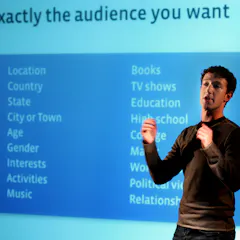
Facebook’s focus on personalizing ads has created new tools for businesses to interact with customers and to connect coworkers.

Gillette recently made headlines with their controversial campaign against toxic masculinity, but other brands appear to be better at taking action.

After 15 years of Facebook, the ways brands use it for marketing and advertising have changed – right alongside the way people make decisions as they scroll through a never-ending feed of information.

The new #MeToo-inspired Gillette ad for men’s razors has attracted some negative attention from men. Is the ad aimed at men or women? If men, does it represent a cultural shift in ads for men?

How do you celebrate masculinity without also acknowledging toxic masculinity in the #metoo era?
Top contributors
-

Director of Undergraduate Studies, School of Journalism, Media and Cultural Studies, Cardiff University
-
Associate Professor in Marketing, Director Centre for Organisations and Social Change, RMIT University
-
Professor, University of Technology Sydney
-
Senior Lecturer at Westminster School of Media and Communication, University of Westminster
-
Director of UWA Centre for Software Practice, The University of Western Australia
-
Senior Lecturer in Marketing and Advertising, University of Portsmouth
-
Professor of Marketing and Consumer Behaviour, Queensland University of Technology
-
Emeritus Professor of Marketing, University of Birmingham
-
Lecturer in Marketing, Research School of Management, Australian National University
-
Senior Lecturer in Marketing, University of Nottingham
-
Lecturer in Politics, The University of Melbourne
-
Professor of AfroEurasian Sport, EM Lyon Business School
-
Associate Professor of Marketing, Tasmanian School of Business and Economics, University of Tasmania
-
Associate Professor of Marketing, Dalhousie University
-
Professor of Technology & Society, Bangor University