

U.S. withdrawal from transnational environmental agreements presents other countries in the Americas with the opportunity to chart a new course.
Environment + Energy – Articles, Analysis, Comment
Displaying 151 - 175 of 1736 articles

Whether capturing them on film, containing them in amusement parks, or subjecting them to scientific experiments, our curiosity about whales and dolphins has compelled us to capture them out of the ocean.

The initiatives put in place by the organizers for the Milano Cortina Winter Olympics are an encouraging first step, but they remain insufficient.

This year, UNESCO will conduct a fact-finding mission to decide on Wood Buffalo National Park’s World Heritage status.
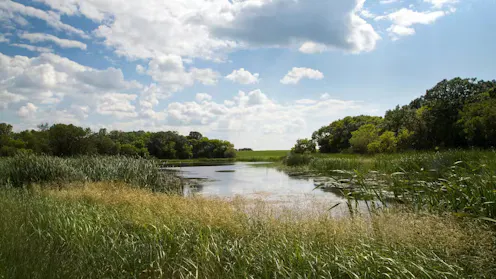
Some tout wetland drainage as providing numerous benefits, including reducing emissions. This assertion is not supported by science.

While gene editing offers benefits for animal agriculture, regulatory approvals raise questions about transparency, consumer choice and democratic oversight.

Some salamanders begin their spring migration in the deep cold. New field research shows how they stay active without freezing.
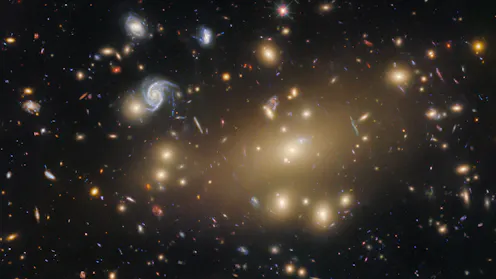
Two ways of measuring how fast the universe is expanding disagree, a puzzle known as the Hubble tension. Tiny magnetic fields from the Big Bang may offer a solution.
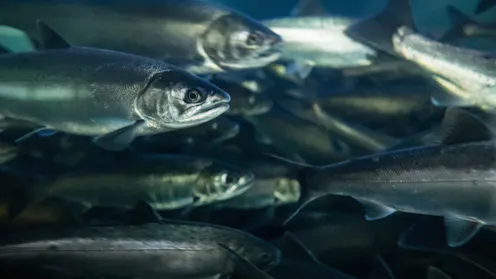
Expediency with industrial development carries real environmental risks for salmon unless matched by corresponding investment in mitigation and monitoring.

The recent retraction of peer-reviewed research claiming glyphosate is safe confirms what Indigenous communities have said for years.

For the Winter Olympic and Paralympic Games, climate change poses a risk and could impact where the Games can be held in the future.
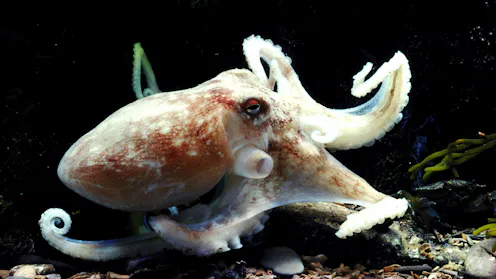
Batteries are typically held together by chemicals that don’t easily degrade. However, some marine animals have evolved remarkable natural ways to attach themselves to wet, slippery surfaces.

Everyone who cares about climate action must now grapple with how climate politics can function in a new world of uncertainty.

Remains of an ancient Arctic rhino indicate that land mammals traversed the North Atlantic via land bridges, and did so much more recently than previously thought.
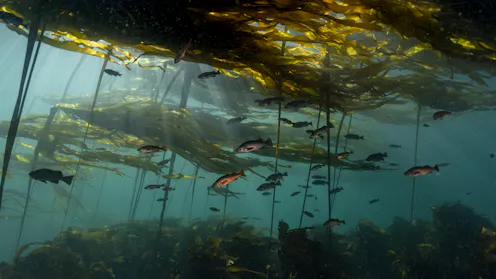
Researchers have known for centuries that some fish make sounds. Now, using special underwater acoustics, researchers have been able to identify sounds from eight different species.
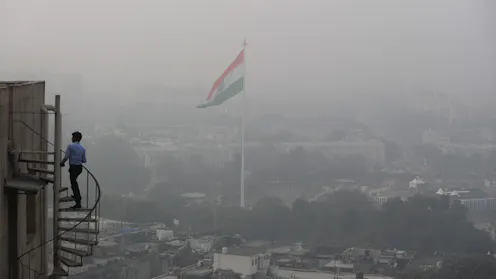
A new study highlights why airshed-aware systems thinking is crucial to break India’s air-quality governance deadlock.

Canada needs to move towards a carbon-neutral economy, and the biomass sectors have a key role to play in this transition.

To be inclusive and impactful, energy transition policies need to be co-created with the communities and workers who run Canada’s energy industries.
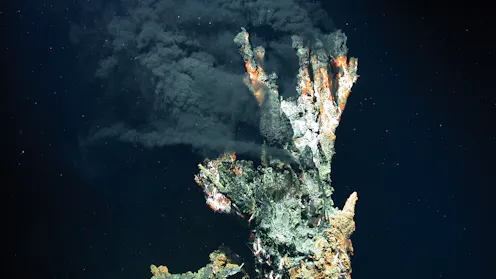
Researchers have discovered that chemical reactions in underwater hydrothermal vents could have produced the necessary ingredients for life on Earth.

Insects are an appealing food source because they are rich in protein and require few resources. While a possible future solution, they also have risks and limitations.
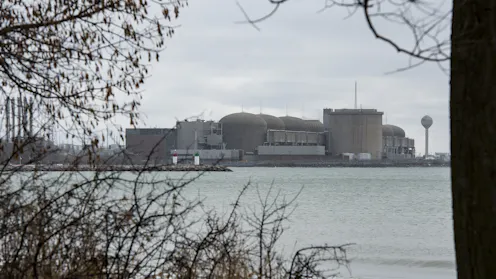
Such repositories raise complex ethical questions around public safety, particularly given the millennia-long timescales of nuclear waste.

Across the world, urbanization affects how food is grown, distributed and consumed, and cities are primary drivers changing food systems.

Like many other regions in the Global South, Aceh’s vulnerability can be traced back to colonialism. Post-colonial development continues to reinforce it.

A spark may start a fire, but systems decide whether it becomes a disaster. The Swiss New Year’s blaze shows what happens when they fail.

Canada and Venezuela compete in the same heavy-oil regional and global markets, so shifts in supply from Canada to Venezuela would widely reverberate across the Canadian economy.