Environment + Energy – Articles, Analysis, Comment
Displaying 51 - 75 of 1736 articles
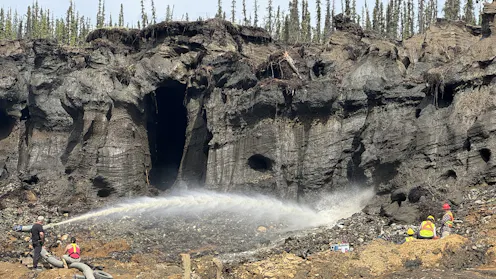
A hydraulic monitor thaws permafrost with high-pressure water in the Klondike goldfields, Yukon — mining exposures that researchers used to access ancient ground ice and fossil records.
(Duane Froese)
Permafrost holds an extraordinary molecular record of ancient life — and we are only now learning to read it, just as warming begins to erase it.
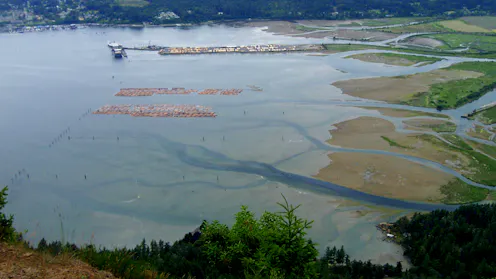
The Cowichan River delta on Vancouver Island, B.C. Researchers found fibreglass particles in more than 96 per cent of sediment samples collected across the Cowichan-Koksilah Estuary.
(Gerry Thomasen/Flickr)
Fibreglass is denser than seawater, and it sinks quickly and accumulates in sediments where many coastal organisms live and feed.
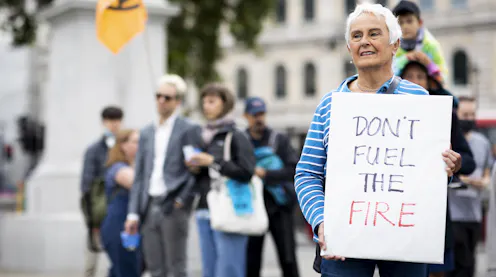
Older adults are frequently discussed as a vulnerable group during extreme heat, but vulnerability is not simply a function of age.
(In-Press Photography via Centre for Ageing Better)
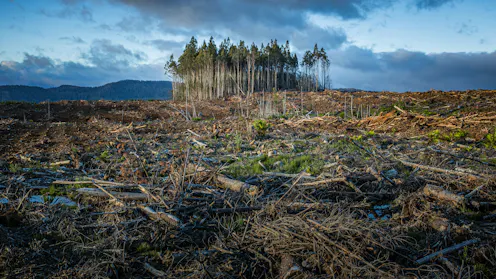
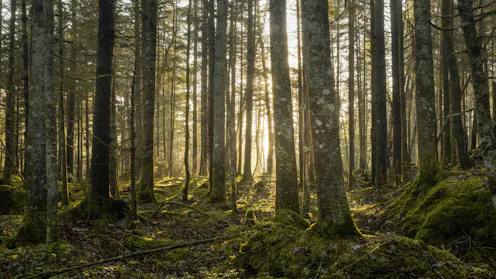
In mountainous environments, logging can hasten snowmelt, leading to larger floods.
With climate change, many forests are risk finding themselves in conditions to which their trees are less well adapted. In light of this, a new idea is gaining ground: assisted migration.
(Étienne Delorieux/Unsplash)
Relocating trees to protect forests struggling with climate change seems promising, but the extreme complexity of ecosystems poses challenges.
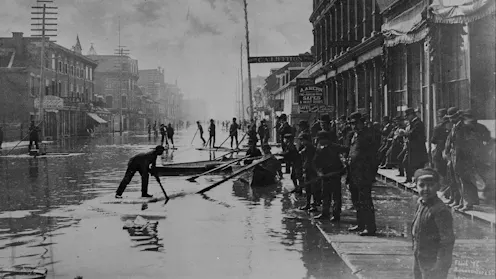
People stand near floodwaters along St. James Street in Montréal in April 1886. Flooding inundated large parts of the city’s West Island and affected some 20,000 families.
(CP PHOTO/National Archives of Canada)
With weather records dating back hundreds of years, it’s possible to track everything from sudden downpours that led to flash floods to the slow changes that occur over centuries.
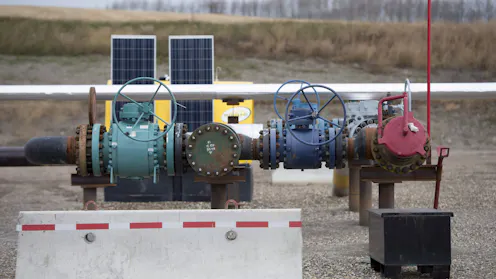
A multi-well pad for a natural gas plant is pictured outside of Fort St. John, B.C., in October 2018.
THE CANADIAN PRESS Jonathan Hayward
Setback regulations remain the only lever that affords some protection to those bearing the greatest health risks of shale gas development in their neighbourhoods.
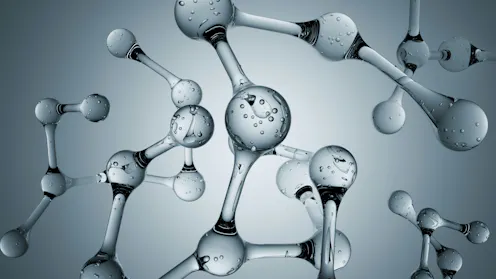
The International Renewable Energy Agency projects that global ammonia demand could approach 700 million tonnes a year by 2050, nearly four times more than what is produced today.
(Unsplash)
Scientific and engineering breakthroughs are allowing us to make ammonia from pollution rather than fossil fuels.
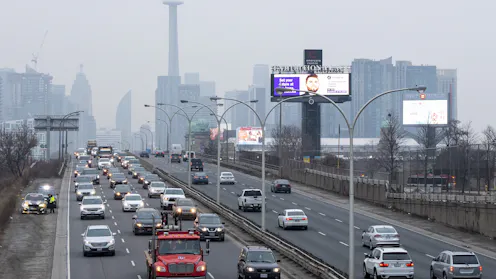
Traffic moves along a highway in Toronto, Ont. Cities built around a single transportation option, like private vehicles, are more vulnerable to disruption.
THE CANADIAN PRESS/Frank Gunn
Resilient urban mobility can be created by giving people options that ensure they can still move around when a shock affects one form of transportation.
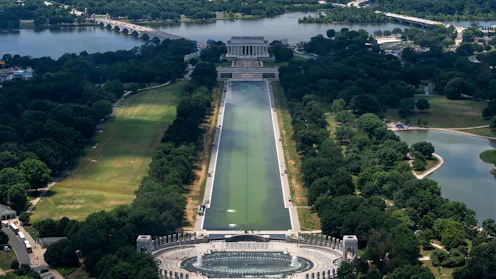
U.S. President Donald Trump painted the Lincoln Memorial Reflecting Pool ‘American flag’ blue but it swiftly turned green as algae bloomed.
(AP Photo/Manuel Balce Ceneta)
Algal blooms are not maintenance failures requiring paint or treatment with hydrogen peroxide and nanobubbles. They are ecological warning signs.
People walk on the Royal Roads University campus in Colwood, near Victoria, British Columbia. Universities can co-operate with local governments and organizations to develop ways to make communities more resilient to climate change.
(Royal Roads University)
Universities must develop an intentional, place-based approach to research and teaching that’s organized around a region’s unique and specific problems.
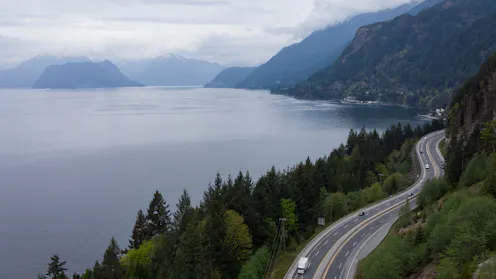
Motorists travel on British Columbia’s Sea-to-Sky highway in April 2021. Before the 2010 Winter Olympics, a section of the highway was realigned to accommodate increased traffic between Vancouver and Whistler.
THE CANADIAN PRESS/Darryl Dyck
Translocation intends to minimize the impacts of development. Research shows that we are moving millions of animals and have no idea what happens to them next.
Artificial intelligence and digital innovation minister Evan Solomon speaks before taking part in a panel discussion, ‘AI for All & Canada’s Innovation Advantage,’ during the Liberal Party of Canada convention in Montréal on April 10, 2026.
THE CANADIAN PRESS/Graham Hughes
AI is often described as if it lives in the cloud. The persistent controversies regarding the Wonder Valley project in Alberta illustrate how false that is.
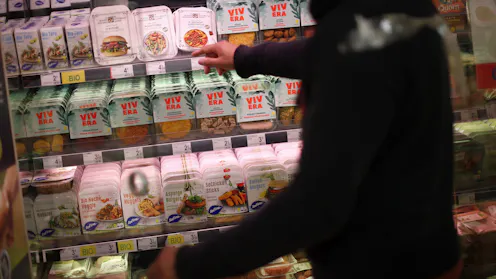
Plant-based products at a supermarket in Brussels in October, 2020. The foods we buy and consume are often discussed as if they are simply a matter of personal choice. But grocery shopping rarely works that way.
(AP Photo/Francisco Seco)
Pricing policies and retail strategies can help shift diets, but they must account for socioeconomic inequalities in how consumers respond to food prices.
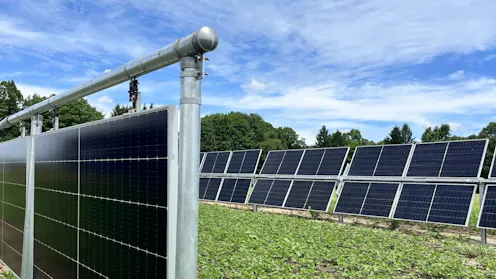
Soy grows between fences of photovoltaic solar panels at Western University in Ontario, Canada.
(B. Kayla Coban)
In Canada, agrivoltaics could produce enough electricity to eliminate the need for fossil fuels on the grid entirely, using less than one per cent of the country’s agriculture land.
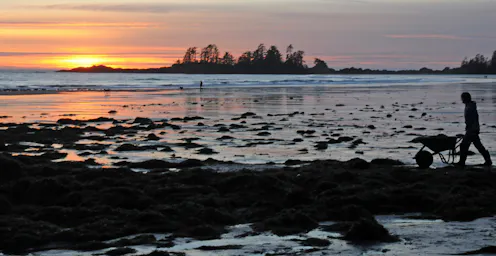
A Tofino resident picks up seaweed with a wheelbarrow on South Chesterman Beach in Tofino, B.C.
THE CANADIAN PRESS/Keven Drews
Grocery stores and the world around us are full of subtle psychological cues that encourage us to over-buy.
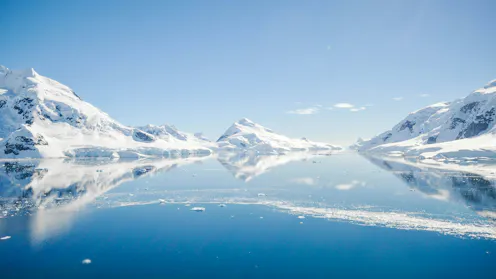
In the aquatic or frozen habitats of the North and South Poles, life is dominated by single-celled micro-organisms. Giant viruses sit at the top of the food pyramid.
(Unsplash/Henrique Setim)
Katarina Ost, L’Université d’Ottawa/University of Ottawa and Manisha A. Kulkarni, L’Université d’Ottawa/University of Ottawa
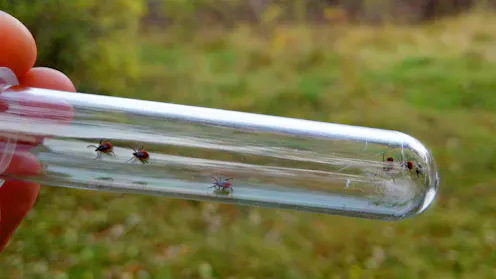
Researchers placed woodchips along the side of two trails in the Ottawa Greenbelt and found that the woodchips notably lowered the number of ticks.
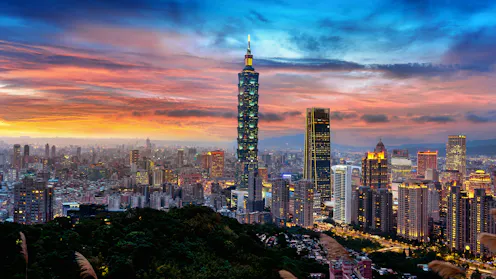
Taiwan imports almost all of its energy by sea, with liquefied natural gas and coal arriving through the same maritime corridors that could become contested in a conflict.
(Getty Images/Unsplash+)
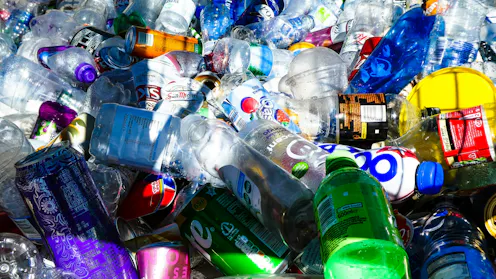
We may need to give the human digestive tract more credit for its ability to act as a barrier to microplastics.
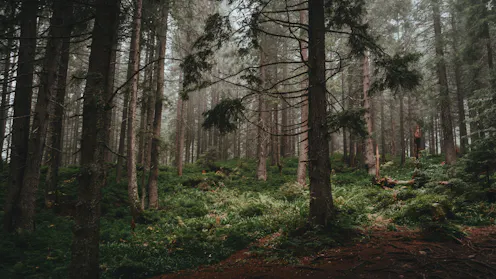
Forests everywhere are critical to climate stability, biodiversity conservation and sustainable livelihoods, yet they remain in decline due to a variety of pressures.
(Unsplash/Viacheaslav Marushchenko)
While some progress has been made since these goals were established in 2017, it is uneven. Only seven of the 26 targets have been broadly met.
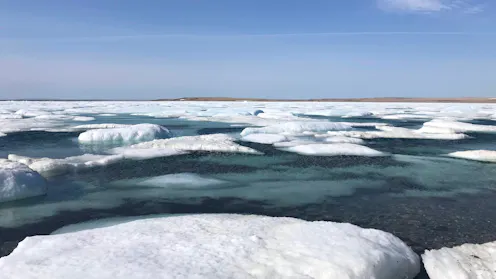
Ice-off in Resolute Bay, Nvt. Warming is leading to earlier ice-free dates and challenging the local community who uses the sea ice to access traditional hunting areas.
(Élise Devoie)
Given increasing geopolitical tensions and economic interest in the region, how can academic research support those who live in and depend on the Arctic?
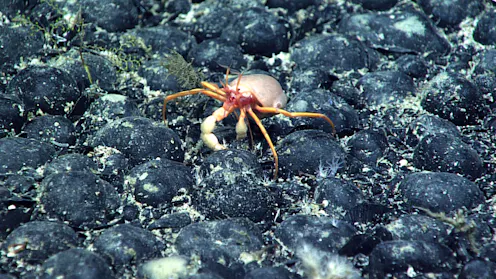
A crab with a coral on its back walks across a field of ferromanganese nodules on the seafloor of Gosnold Seamount in the North Atlantic.
(NOAA via AP)
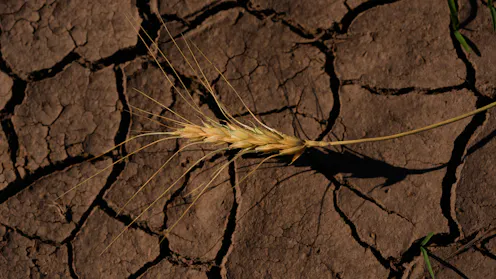
The modern food system was built on the expectation that geography would spread out the risks from droughts and floods. Climate change is testing all of that at once.