
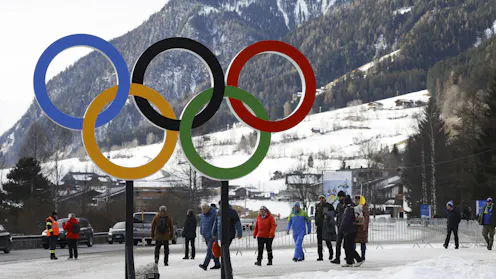
Like Paris 2024, the Milan-Cortina Winter Games aim to set an example in terms of sustainability, but their implementation comes with its own set of challenges.
Environment + Energy – Articles, Analysis, Comment
Displaying 176 - 200 of 1736 articles

Many multi-unit residential buildings are designed or managed in ways that make recycling and proper waste disposal difficult.

New research highlights the role of fossil-fuel industry propaganda and suggests strategies to tackle false narratives about fossil fuels.

Climate disasters are rising and insurance costs are, too. Canada’s poorest are caught in the middle.

Climate misinformation is undermining emergency response during crises. Canadian governments need to develop co-ordinated efforts to tackle it.

Calling Ksi Lisims a “nation-building” project masks unresolved questions about who benefits, who bears the risks and how the project fits into a rapidly changing global liquefied natural gas market.

Permafrost supports homes and communities across Northern Canada. However, as the climate warms, melting permafrost poses significant challenges for infrastructure.

A small parasite is taking advantage of global warming to wreak havoc: the winter tick is decimating young moose.
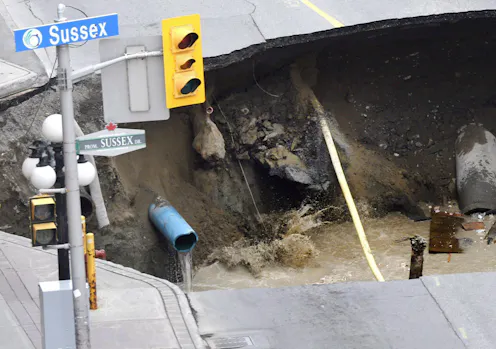
Sinkholes are not just costly inconveniences, they are growing threat to commercial activities, livelihood and property and are increasing in frequency due to climate change.

Adopting a well-established strategy can help Canada avoid the dysfunctional outcomes we see repeatedly in today’s planning and assessment processes.

The federal government’s deal with Alberta over a pipeline to British Columbia is offside for many reasons — and will deepen divisions among Canadian provinces.

Concrete is the most widely used construction material, so developing ways to make it more durable can improve infrastructure and save millions in costs.

Due to environmental conditions in Canada, freeze-thaw cycles, road salt and moisture are serving to accelerate cracking and surface deterioration of concrete bridges.
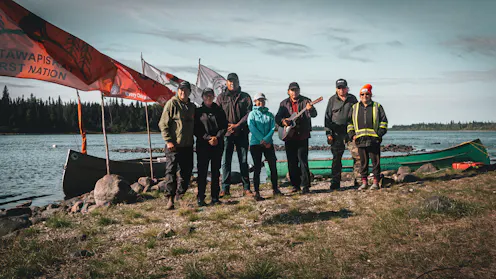
Ontario’s Bill 5 eliminates key environmental protections and grants the provincial government sweeping powers to fast-track development with little to no oversight.

Governments and experts need to consider both the frequency and size of floods to better prepare for future ones.

Any large-scale policy affecting schools, like Montréal’s ambitious transition to zero waste, needs to reflect that success relies on the labour and care of students and education workers.
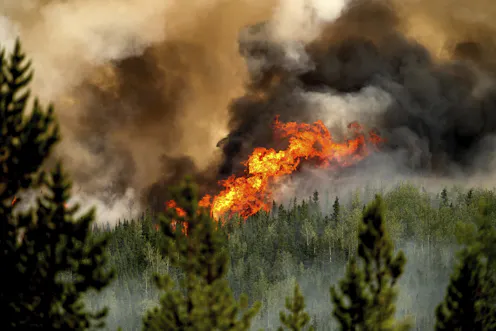
Canadians faces a growing safety crisis yet they remain unprepared. The real danger is complacency.

One of the leading causes of climate grief and anxiety among young people is government inaction that has amplified feelings of betrayal, anger and despair about climate change.

Since Atlantic cod fisheries collapsed in the early 1990s, ecosystems have been less productive and have struggled to recover.

A new study provides a clear picture of how birds are responding to climate change in the mountains near Vancouver.

Hunting advocacy organizations and politicians are inciting a moral panic about grizzly bears, oversimplifying an inherently complex ecological problem.
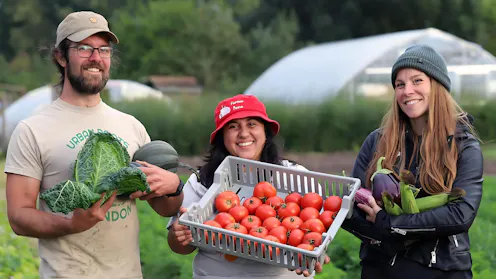
London, Ont., adopted Canada’s first stand-alone Urban Agriculture Strategy in 2017. Yet, almost eight years later, many of the strategy’s goals remain unrealized.
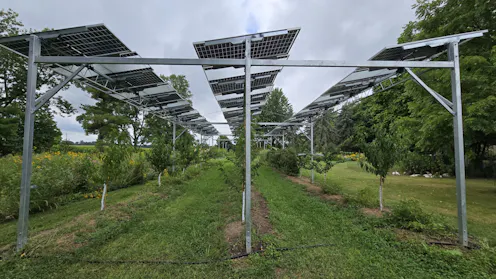
A new study finds farmers can enjoy increased crop yeilds under partial shade of solar panels long after they stop working decades from now.
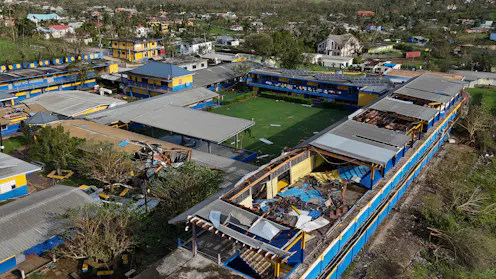
The structural vulnerability of many Jamaican schools is linked to decades of under-resourcing, where the state has adopted austerity measures imposed by the International Monetary Fund and other international institutions.
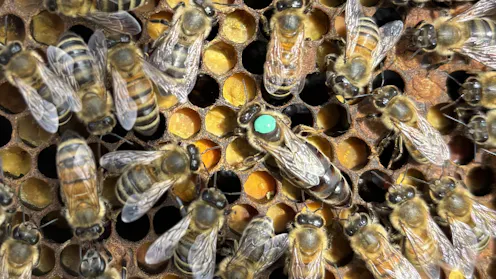
New research shows that virus infections change the queen’s pheromone, which may lead to a grim demise.