

Building your own DIY air cleaner is an easy and cost-effective way to remove smoke and harmful particles from the air.
Articles on Wildfires
Displaying 101 - 120 of 575 articles
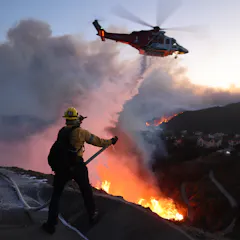
Parts of California are seeing fire season start more than 10 weeks earlier now than in the 1990s.
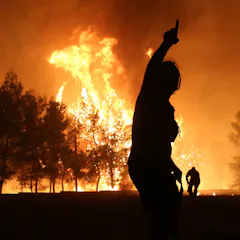
Fire-scorched land is less able to handle climate-driven downpours.

Oral history contributors were able to share their stories, and many felt a sense of healing.
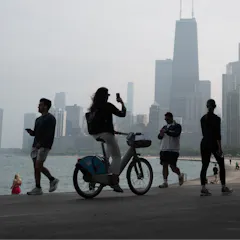
As wildfire smoke becomes a frequent summer hazard across large parts of the US, knowing the risk at the neighborhood scale matters for human health.

Reducing risk and managing beneficial fires require co-ordinated action from governments, communities and individuals.

Knowing how mountain winds create fire conditions is useful for monitoring the danger.
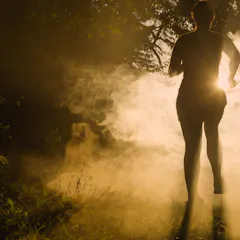
Factors like your health status and how hard you exercise can help gauge the risk of wildfire smoke exposure.
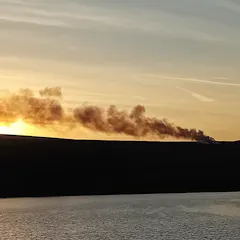
How a new monitoring system improves fire detections and captures the air pollution effects of planned peatland burns.
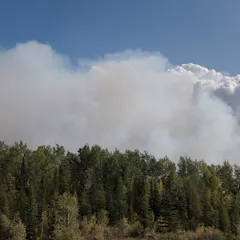
As global temperatures rise, wildfires are advancing further north. Many of them burn through peat, which contains massive amounts of carbon.
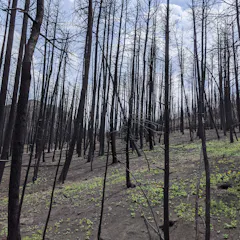
Scientists analyzed water quality in 145 watersheds after wildfires and found dramatic spikes in contaminants.

Mark Carney has the chance to differentiate Canada from the U.S. and demonstrate his leadership on climate. Instead, at the G7 summit and beyond, he seems to have abandoned his climate principles.

Wildfire smoke doesn’t just darken the skies — it harms the brain, especially in those most vulnerable.

As climate change leads to more extreme weather, temporary climate displacement could become permanent migration.
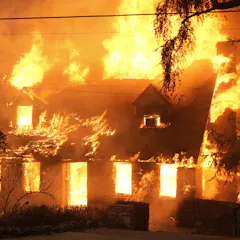
As built-up areas encroach on natural ones, we need new strategies for dealing with the impact of wildfires on buildings and communities.
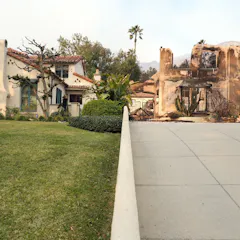
Hedges and trees may actually reduce home exposure to radiant heat and flying embers, but they must be well maintained. Two scientists who study how plants burn explain.
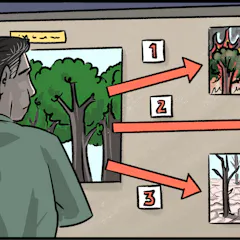
Park and forest managers can’t rely on the past any longer to understand future risks. Fires, pests and climate change are changing the game.
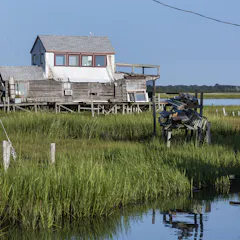
The administration wants to cut funding for programs that help communities adapt to wildfire risk, sea-level rise and invasive species, among many other risks.
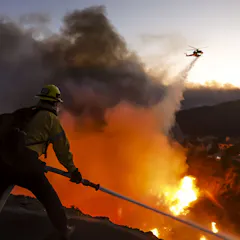
Fire seasons on both sides of the Pacific overlap for seven weeks a year – and changes in Australia’s climate are driving the problem.
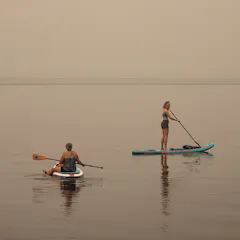
Exposure to either wildfire smoke or extreme heat poses a significant threat to health. When they occur together, it may amplify the health risks of exposure.
Top contributors
-

Professor of Pyrogeography and Fire Science, University of Tasmania
-
Associate Professor of Civil Engineering, Boise State University; United Nations University
-
Professor of Civil, Environmental and Ecological Engineering, Purdue University
-
Professor of Geography and Director of the Centre for Wildfire Research, Swansea University
-
Professor of Engineering, University of California, Merced
-
Assistant Professor of Environmental and Radiological Health Sciences, Colorado State University
-
Fellow, Queen's Institute for Energy and Environmental Policy, School of Policy Studies, Queen's University, Ontario
-
Tenured Scientist (IMB-CSIC, Spain) & Honorary Associate Prof. (SU, UK), Swansea University
-
Wildfire Specialist, University of California Cooperative Extension; Adjunct Professor at the Bren School, University of California at Santa Barbara, University of California, Santa Barbara
-
Emeritus Professor of Life Sciences, Arizona State University
-
Professor of Geology and Environmental Geosciences, University of Dayton
-
Professor, Disaster & Emergency Management, Faculty of Liberal Arts & Professional Studies & Director, CIFAL York, York University, Canada
-
Professor of Fire Ecology, University of Montana
-
Research Fellow in Environmental Science, University of Tasmania
-
Reader in Cultural Geography and Communication, University of Westminster