
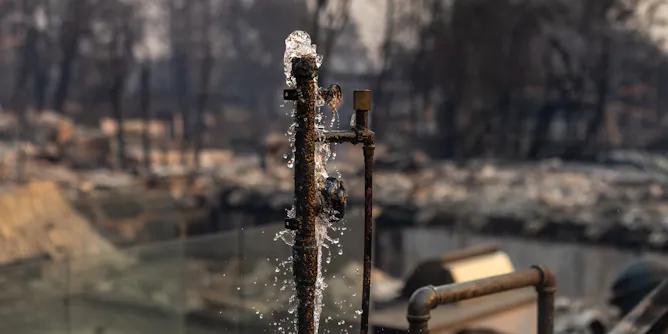
Fires can make drinking water, and the water pipes and tanks themselves, unsafe. A researcher who has worked with communities after several wildfires explains why, and what to do.
Articles on Wildfires
Displaying 161 - 180 of 575 articles
The heath-related impacts of climate change will reach US$1 trillion a year by 2050.
The state is seeing a sharp water divide this year, with lots of rain in the north while the south has stayed dry. A hydrologist explains what’s happening.
The chemicals emitted when buildings and vehicles burn can find their way into nearby homes. Studies show the health risks can stick around.
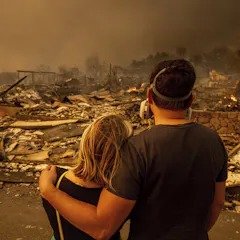
Where people live today also makes a difference when it comes to fire risk.
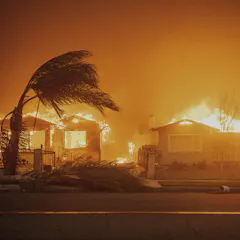
We knew this would happen eventually. We have moved from possible futures to these things now happening. The deferment has ended.
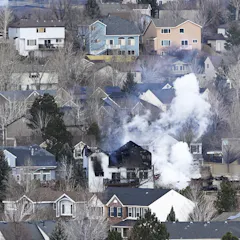
A series of surveys in the months and years after the devastating blaze near Boulder revealed continuing health concerns in surviving buildings, and tips for how to clean up smoke-damaged homes.
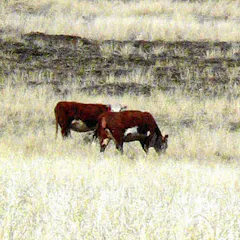
That delay can tip ranchers’ finances into the red. While the land needs time to recover, studies raise questions about whether two years is really necessary.
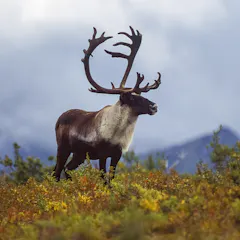
Rapid changes underway in the Arctic affect the region’s people and wildlife, and the entire planet.
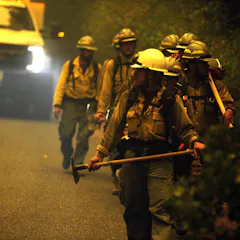
Firefighters work long hours to protect communities, often in dangerous conditions and for low starting pay. Surveys show the impact that can have on their physical and mental health.

The 1,000-ton rule states that a person is killed every time humanity burns 1,000 tons of fossil carbon. Minimizing the deaths caused by climate change should be a global priority.

A powerful storm hitting the West Coast combines these phenomena for a wet week of erratic weather, as a meteorologist explains.
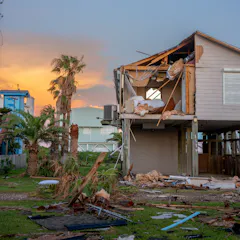
Insurance costs are rising quickly across much of the country. Hurricanes are part of the reason, but it’s the other perils common across the Midwest and Great Plains that complicate costs.
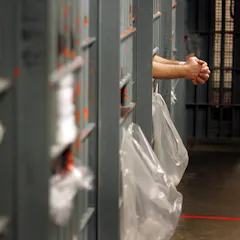
Prisons and jails are difficult to evacuate when wildfires or storms approach. Many of these facilities lack evacuation plans and may keep incarcerated people on-site instead of moving them to safety.
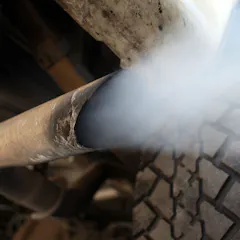
Ultrafine particles are approximately one-thousandth the width of a human hair. But because of their tiny size, they are easily inhaled – and typically more dangerous than larger particles.
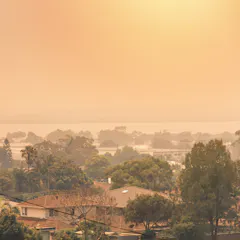
New international research reveals climate change increased the proportion of wildfire smoke-related human deaths tenfold between the 1960s and 2010s. Here’s what that means for Australia.

The municipality of Jasper is located within a national park, making for a unique situation regarding land ownership and planning.
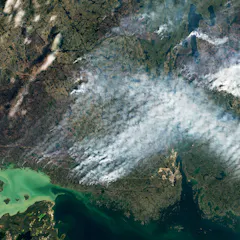
Global carbon emissions from forest fires have increased by 60% over the past two decades, with the largest contributions coming from fires in Siberia and western North America.
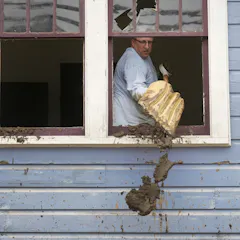
Disasters such as hurricanes Helene and Milton often hit low-income and other disadvantaged groups hardest. 2 policy experts suggest ways long-term aid could help.
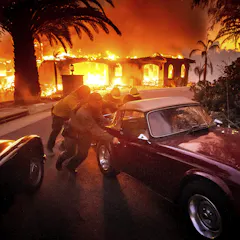
The US has seen huge wildfires in recent years. The vast majority of those that affect communities are started by human activity.
Top contributors
-

Professor of Pyrogeography and Fire Science, University of Tasmania
-
Associate Professor of Civil Engineering, Boise State University; United Nations University
-
Professor of Civil, Environmental and Ecological Engineering, Purdue University
-
Professor of Geography and Director of the Centre for Wildfire Research, Swansea University
-
Professor of Engineering, University of California, Merced
-
Assistant Professor of Environmental and Radiological Health Sciences, Colorado State University
-
Fellow, Queen's Institute for Energy and Environmental Policy, School of Policy Studies, Queen's University, Ontario
-
Tenured Scientist (IMB-CSIC, Spain) & Honorary Associate Prof. (SU, UK), Swansea University
-
Wildfire Specialist, University of California Cooperative Extension; Adjunct Professor at the Bren School, University of California at Santa Barbara, University of California, Santa Barbara
-
Emeritus Professor of Life Sciences, Arizona State University
-
Professor of Geology and Environmental Geosciences, University of Dayton
-
Professor, Disaster & Emergency Management, Faculty of Liberal Arts & Professional Studies & Director, CIFAL York, York University, Canada
-
Professor of Fire Ecology, University of Montana
-
Research Fellow in Environmental Science, University of Tasmania
-
Reader in Cultural Geography and Communication, University of Westminster