
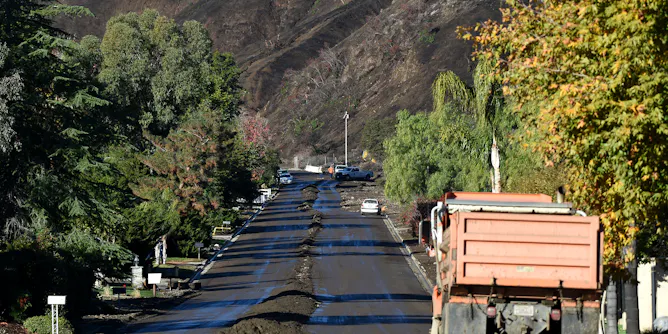
An atmospheric scientist and sailplane pilot describes why large areas of burned land can produce clouds and rainstorms.
Articles on Wildfires
Displaying 381 - 400 of 575 articles
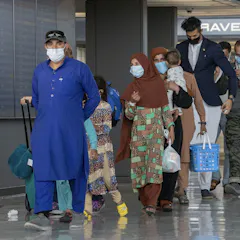
Needs will continue in Haiti and New Orleans – and for Afghan refugees – long past the point when most donors will have found new priorities.
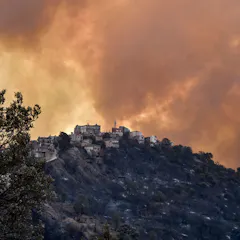
With a massive territory to manage, all actions taken - to prevent, to detect and to fire fight - aren’t enough.
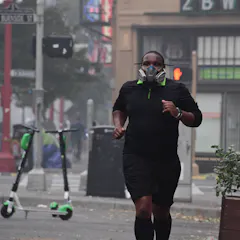
To stay healthy, it’s important to understand how wildfire smoke can harm your body and how to protect yourself.
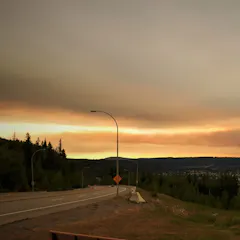
Smoke has long cast shadows across the skies in the northern hemisphere. Our aversion to smoke has influenced the way we’re willing to deal with the rising risk of wildfires.
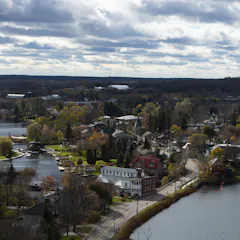
Whether Canada is able to address the most pressing challenges of the next several generations requires the full participation and support of rural people and places.
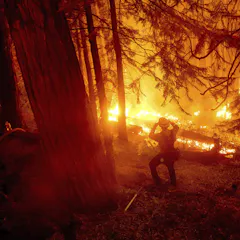
Not all forests respond to hotter and drier conditions in the same way.
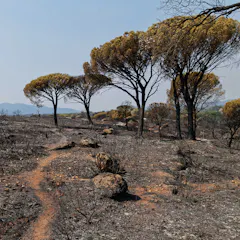
The ecological cost of the deadly fires in southern France will be enormous. Scientists and residents will have to find a way to rebuild together.

Large and out-of-control wildfires can seriously damage ecosystems, but Indigenous fire practices can keep ecosystems healthy and resilient, and even increase biodiversity.
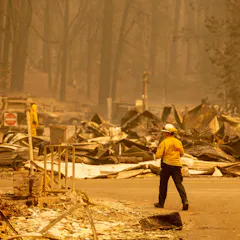
Hundreds of computer simulations point to a few best strategies for keeping homes safe from fire in a warming climate.
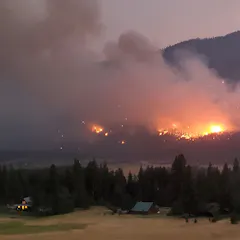
More than 40 fire scientists and forest ecologists in the US and Canada teamed up to investigate why wildfires are getting more extreme. Climate change is part of the problem, but there’s more.
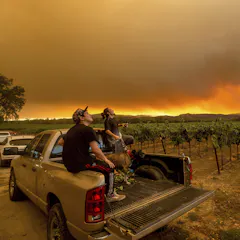
As wildfires continue to edge closer to towns and agricultural areas, grape producers and wine-makers in the Okanagan must once again deal with this increasingly frequent threat of smoke taint.
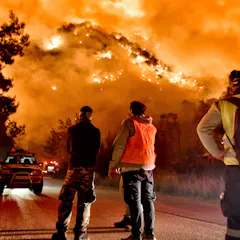
Scientists tend to study heatwaves and floods as discrete events – but this overlooks the crucial connections between them.
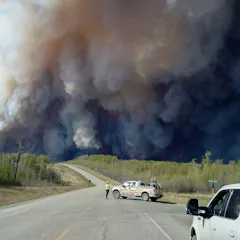
Efforts to predict wildfire risk and to prioritize mitigation efforts aren’t enough. We must prepare for fire disasters wherever possible and decide what we’ll do when they happen.
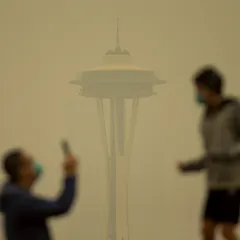
New research found that smoke from the Camp Fire in Paradise, California, carried high concentrations of lead. An environmental toxicologist explains what else you’re breathing and how to stay safe.
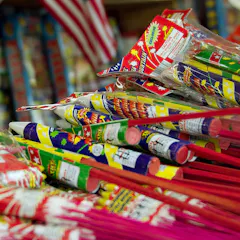
Every year, the number of wildfires caused by humans spikes on Independence Day. There are safer ways to celebrate amid the heat and drought.
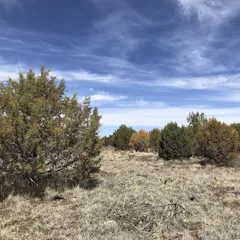
Without enough water, trees can develop embolisms, similar to blockages in human blood vessels, and they’re more likely to die from drought or fires.
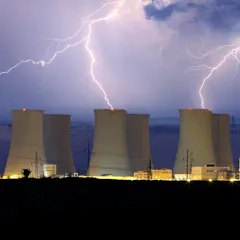
The world’s nuclear power plants are on the frontline of climate change – and not in a good way.
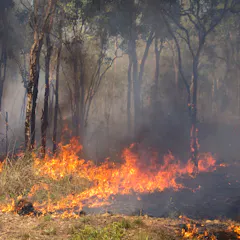
How to prevent future disasters by learning from the past. Listen to episode 21 of The Conversation Weekly podcast.
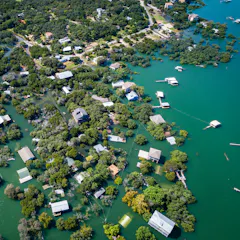
Managed retreat doesn’t always mean leaving. It’s about preserving the essential while redesigning communities to be better for everyone. Here’s what that can look like.
Top contributors
-

Professor of Pyrogeography and Fire Science, University of Tasmania
-
Associate Professor of Civil Engineering, Boise State University; United Nations University
-
Professor of Civil, Environmental and Ecological Engineering, Purdue University
-
Professor of Geography and Director of the Centre for Wildfire Research, Swansea University
-
Professor of Engineering, University of California, Merced
-
Assistant Professor of Environmental and Radiological Health Sciences, Colorado State University
-
Fellow, Queen's Institute for Energy and Environmental Policy, School of Policy Studies, Queen's University, Ontario
-
Tenured Scientist (IMB-CSIC, Spain) & Honorary Associate Prof. (SU, UK), Swansea University
-
Wildfire Specialist, University of California Cooperative Extension; Adjunct Professor at the Bren School, University of California at Santa Barbara, University of California, Santa Barbara
-
Emeritus Professor of Life Sciences, Arizona State University
-
Professor of Geology and Environmental Geosciences, University of Dayton
-
Professor, Disaster & Emergency Management, Faculty of Liberal Arts & Professional Studies & Director, CIFAL York, York University, Canada
-
Professor of Fire Ecology, University of Montana
-
Research Fellow in Environmental Science, University of Tasmania
-
Reader in Cultural Geography and Communication, University of Westminster