
The people who manage America’s aquifers, wetlands, shorelines and recreation areas rely on federal science as they face new and rising risks in a changing climate.
Articles on Wildfires
Displaying 81 - 100 of 575 articles

The disaster should raise questions about how we fund, manage and protect these vulnerable habitats when climate change is outpacing conservation efforts.
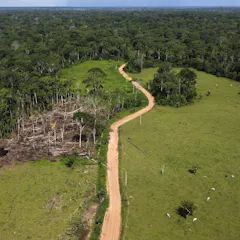
The Tropical Forest Forever Facility is designed to reward countries for preventing deforestation. Charts show the magnitude of the problem.
We are living in a hotter, more chaotic world, with more emissions, fires and fossil fuel consumption.
Paying attention to the sticker price doesn’t always result in the best insurance coverage.
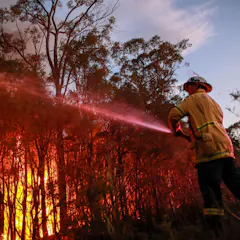
It’s clear – climate change is supercharging the world’s wildfires in unpredictable and devastating ways.

Wildfires are not just environmental events. They are public health crises that demand stronger, more resilient health systems.

From drought to soil degradation and environmental pollution, why does society overlook the most impactful disasters?

A new AI-powered simulation model allows researchers and architects to design well-ventilated indoor spaces that keep harmful smoke away.
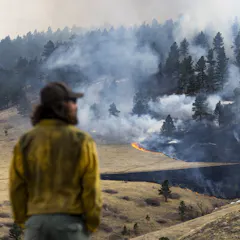
Increasing awareness can help close the gap on the number of people signed up for emergency alerts, but that won’t happen without increased accessibility.

Indigenous forest management practices can help control wildfires’ frequency and severity, while also restoring people’s connections to the land.

Evacuations do not impact everyone the same way, and Indigenous evacuees can be re-traumatized and treated poorly.

The challenge is not firefighting capacity nor convincing people to help; it is coordinating efforts to prioritize safety and efficiency.
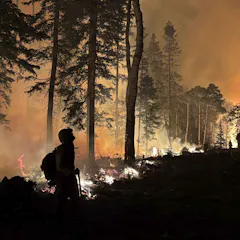
The Trump administration and members of Congress propose cutting environmental reviews and public involvement to boost logging. But data show reviews aren’t the problem.
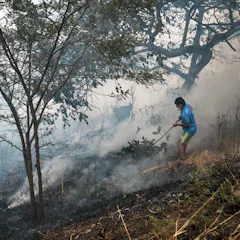
Even though you may mostly hear about fires in the US, Canada, Europe and Australia, it’s Africa that has far and away the most acreage burned and people exposed to fire.

Researchers highlight the experiences of workers across Canada whose livelihoods and communities have been impacted by climate change.

Fire isn’t the enemy. Poorly timed, unmanaged fire is.

AI-generated images of wildfires have been circulating online, leading the British Columbia government to issue an online warning.

Water systems are vulnerable to melting plastic components, toxic contamination and failures that can leave firefighters without flowing water.

As climate change worsens extreme weather events, people in rural areas will increasingly seek refuge in urban areas. Cities must prepare to host and care for them.
Top contributors
-

Professor of Pyrogeography and Fire Science, University of Tasmania
-
Associate Professor of Civil Engineering, Boise State University; United Nations University
-
Professor of Civil, Environmental and Ecological Engineering, Purdue University
-
Professor of Geography and Director of the Centre for Wildfire Research, Swansea University
-
Professor of Engineering, University of California, Merced
-
Assistant Professor of Environmental and Radiological Health Sciences, Colorado State University
-
Fellow, Queen's Institute for Energy and Environmental Policy, School of Policy Studies, Queen's University, Ontario
-
Tenured Scientist (IMB-CSIC, Spain) & Honorary Associate Prof. (SU, UK), Swansea University
-
Wildfire Specialist, University of California Cooperative Extension; Adjunct Professor at the Bren School, University of California at Santa Barbara, University of California, Santa Barbara
-
Emeritus Professor of Life Sciences, Arizona State University
-
Professor of Geology and Environmental Geosciences, University of Dayton
-
Professor, Disaster & Emergency Management, Faculty of Liberal Arts & Professional Studies & Director, CIFAL York, York University, Canada
-
Professor of Fire Ecology, University of Montana
-
Research Fellow in Environmental Science, University of Tasmania
-
Reader in Cultural Geography and Communication, University of Westminster